Category: Technology

  • GetMed: Revolutionizing healthcare in the Philippines

    GetMed: Revolutionizing healthcare in the Philippines

    We have all experienced the difficulties of finding a doctor and quickly get an appointment. More importantly, on emergency situations, we might not even have an idea where the nearest hospital is or which doctor to call.

    For Arthur John Abarquez, one of the founders of UNA I.T. SOLUTIONS, it was on a Maundy Thursday a few years ago when his wife suffered a serious fall, which resulted to shattered bones in her left forearm and hand that compelled him to recognize this need. “We rushed my wife to the hospital but the ER Doctors couldn’t do anything to relieve her pain. They needed a specialist who, at that time, since it was a holiday, was not available. It took them several hours to locate a doctor who had to travel from Calatagan, Batangas to Manila. It was grueling hours of waiting for my wife and myself. I wanted so much to help her but I was helpless, we were at the mercy of the capabilities and the reaction time of the hospital where we brought her,” he shared.

    “Had a medical directory, at the very least, been available then, it would have helped us locate the nearest available doctor, not necessarily from the hospital we brought her to but still within immediate reach,” Arthur added.

    UNA I.T. SOLUTIONS, the company behind the Health Lifestyle app called GetMed, envisions the product to revolutionize healthcare in the Philippines. The company was built in collaboration with some of the country’s profile experts in pharma, information technology, and consumer marketing – all coming together for one direction – to develop a product that would give everybody an upperhand in managing their healthcare, emergency or otherwise.

    GetMed simplifies patient experience in just one touch of a button. Just as how we use online tools to book a restaurant or request for a cab service, patients will certainly demand the same experience in self-booking a doctor’s appointment.

    “You would not even want to entertain the idea of waiting,” says Paolo Castaño, a reputable pharma and marketing expert, “so GetMed capitalizes on convenience. With the app, you can conveniently book appointments with MDs, find out nearest hospitals or clinics. The app can immediately give you a directory of doctors grouped geographically and according to specialization.” It is also linked to Waze so you get to manage traffic as you proceed with your respective appointments.

    Unlike the many medical apps which are limited to information base, GetMed is highly interactive. “The app is not just an information base, but engages the doctors, patients, and helps build a better lifestyle on day-to-day basis,” shares Chris Hatton, an I.T. expert who had professional stints with a leading global software company in Europe & the Middle East and specialized in Government contracts.

    A free download, GetMed Version 1 is available in Android and IOS version. Initially, Version 1 has over 17,000 registered doctors on the database, covering the majority of the country. It also has over 3,000 Hospitals, Clinics & Barangay Health Centres located in Luzon, Visayas & Mindanao. All listings for both doctors and hospitals are 95% accurate.

    “A lot of things are coming for the app,” says Chris, “but we do not want to rush things. Importance of the app right now, with Version 1, is the simplicity and usefulness. We just want to make sure we are doing it the correct manner.”

    GetMed is aimed at making the Philippines a major player in the app-business, a product that is made in the Philippines that will make us proud. Its mission is to bring healthcare at the touch of a button, manage your healthcare more efficiently, conveniently and more precise.

    From L-R- Arthur John Abarquez, Paolo Castaño and Chris Hatton

    “We believe in the project. And Philippines is the right place to launch this kind of product and that’s important. We have such great faith in the Philippines. Great technology skills. We’re very Filipino. We have Filipino staff. We use Filipino developers. We are proud that this is a Filipino-made product. It’s the first time that we are consolidating the data of doctors and patients into one big picture. We’re bringing quality life.”

    REFERENCE:

    Jerome G. Samson
    Event and Activation
    09167861568
    jerome.g.samson@gmail.com

  • Infographic: What will your house look like in 10 years?

    Infographic: What will your house look like in 10 years?

    Smart home technology gaining traction in emerging markets.

    From the moment you wake up in the morning, the house reacts to your needs. The automated lights turn on slowly to wake you up at a scheduled time. From the comfort of your bed, you switch on your coffee machine so your morning cup is fresh and hot by the time you arrive downstairs for breakfast.

    You enter the bathroom and stand in front of your intelligent mirror. The mirror’s reflective surface springs to life with all the information you need to kick-start your day, including the weather and the morning’s top news. The device also plays your favourite music so you are always guaranteed to start the day in a good mood.

    After getting ready, you go to the kitchen for breakfast where your smart refrigerator alerts you that you are nearly out of milk. With the tap of a finger on the fridge’s touch screen, you can restock your fridge and order all your groceries for the week through an online store.

    The infiltration of technology to assist with these small daily tasks may just be the beginning. The fully-connected home is designed to boost energy efficiency, protect against intruders and even monitor your family’s health. With the rapid growth in the home automation industry, so-called smart home systems have already hit the mainstream – although the high cost of such devices keeps them out of reach for many. But there are signs that this is about to change.

    This year, revenue from the smart home market is expected to exceed $US48 billion, according to recent Strategy Analytics forecasts. By 2019, the sector’s market revenue will increase to $115 billion. By the end of this decade, nearly 12 percent of global households will have at least one type of smart system installed. In fact, Tony Fadell, the CEO of Nest – the connected homes product company that was bought by Google earlier this year – has predicted that within a decade, every electrical device in your home will be connected to the internet.

    While the smart home market is quickly gaining traction in developed countries, there are now signs that the trend is spreading to the emerging markets. Consumers in the Asia Pacific region has been particularly keen to embrace the new connected technologies, as tech companies begin to acknowledge the opportunities in this sector.

    Connected home firm Icontrol Networks expanded to Asia in October, with the company partnering with a Japanese cable provider to offer a smart home system that consumers can install themselves. This month, Chinese electronics firm Xiaomi invested 1.26 billion yuan (about $200 million) in home appliance company Midea, as it looks to expand into the smart homes market.

    Lamudi’s Global Co-Founder and Managing Director, Kian Moini, said: “The smart home concept is all about making living much more comfortable, as well as more efficient, which means that the concept has universal appeal. As prices come down in the coming years and people worldwide begin to focus more on issues such as energy saving, we expect to see this trend sweep the emerging markets as well.”

    REFERENCE & MEDIA CONTACT

    Rodel Ambas
    Head of Content and PR, Lamudi Philippines
    Email: rodel.ambas@lamudi.com.ph
    Phone: +63 917 3015127

  • Introducing Quattron Pro, Another Engineering Marvel from Sharp

    Introducing Quattron Pro, Another Engineering Marvel from Sharp

    Elevate Your Home Entertainment with a Beyond UHD Experience

    The evolution of the television set has already come a long way, from the traditional wood-enclosed ones that offer monochromatic pictures and then moving to color, from the cathode ray tubes to LCD to plasma, and now with LED.

    Never content with just following the trend, Sharp (Phils.) Corp. has decided to take it up a notch by helping change the way we see pictures on TV. A few years ago, Sharp introduced Quattron Technology, a proprietary color technology which adds the sub-pixel Yellow to the traditional Red-Green-Blue color setup, for a more natural reproduction of colors, making it more brilliant and lifelike.

    Now, Sharp is going even further with the game-changing Quattron Pro Technology. Simply put, Quattron Pro uses the 4-Color Technology and heightens it with the Quattron Pro Drive Engine. The Quattron Pro Engine is a built-in upscaler which transforms the quality of Full HD TV, making it comparable to 4K-Ultra HD picture quality. It is a great improvement on the usual Full HD resolution, adding 10 million subpixels to the 6 million subpixels that Full HD normally has.

    Sharp Quattron Pro offers stunning resolution that is better than the other Full HD TV products available in the market today. This means more detail, more depth, and more color. And with the addition of the Quattron Pro Drive Engine, everything looks better when seen on this TV. It upscales any content and makes full HD content almost equivalent to Ultra HD quality.

    Quattron Pro is also future-ready in the sense that it allows you to play 4K content without discernible loss in quality. It is a viable and more practical solution, compared to buying a 4K TV today when there is not enough 4K materials available in the market to justify buying one. So, instead of buying a 4K TV hoping to use it in the future when there is more 4K content, you can buy a Quattron Pro now, enjoy Full HD content that is as close to Ultra HD quality as possible, and be ready for the future when 4K content is more readily available. Complementary to the visual precision of Quattron Pro is its sound quality. It has been awarded the THX Certification, a globally accepted standard for sound reproduction. THX was founded by world-renowned Star Wars director George Lucas, who initially created THX to make sure that cinemas could recreate the sound – all the nuances and subtleties – the way filmmakers intended. THX Certification has since then been adapted into home entertainment, with televisions going through 30 test categories, 400 bench tests and 1,000 data points to make sure that only the best of the best are approved and awarded. Because of these rigorous tests, a THX Certification is an instant guarantee that your TV has the highest cinema-house standards for both visuals and sound.

    There is no doubt that the television is a ubiquitous part of every household. But Sharp understands that in today’s world, your home-viewing standards are higher than ever. Trust Sharp to provide quality enjoyment and leisure time with the breakthrough Quattron Pro Technology. This commitment is made clear through Sharp’s “Our Brand, Our Pride” philosophy, a pledge to uplift the quality of Filipinos’ lives with exceptional products.

    For more details about Quattron Pro, visit www.aquos-world.com

    For Reference:

    Jerome Samson- 09167861568

    Ana Manansala- (02) 706-1971

    AMPR Publicity & Communications Inc.

  • Affordability Key Deterrent from Buying Property: Report

    Global property portal releases new research on real estate in the Philippines.

    Affordability is top of mind for Filipinos who choose not to buy property, with more than 60 percent of renters in a recent survey of online house-hunters citing cost constraints as the primary reason they leased their home.

    The findings are contained in new research from global property website Lamudi, which today released its first report on real estate in the emerging markets. The report, Real Estate in the Emerging Markets, provides a comprehensive overview of the property sector in 16 emerging countries, including the Philippines.

    The report is based on a series of online surveys conducted with house-hunters and real estate agents in each country, as well as onsite data from Lamudi’s global network of websites. The research examines the habits of online property-seekers, while offering insights into the future of the property sector based on interviews and surveys with local property experts.

    The customer survey examined house-hunting habits among buyers and renters. For renters, affordability emerged as the key reason why many Filipinos choose not to buy their own home. More than 60 percent of renters surveyed said they could not afford to buy property. For buyers, the main driver for owning property is security. Nearly three-quarters of buyers cited security as their primary motivation for purchasing a home.

    According to the survey of real estate agents, the country’s economic outlook is seen as the top constraint on the property market, reflecting current concerns about a potential slowdown. However, agents and brokers remain overwhelmingly optimistic about the future of the market. More than 90 percent describe their outlook for the next 12 months as positive.

    Lamudi’s Global Co-Founder and Managing Director, Kian Moini, said: “The primary conclusion that we have drawn from our research is that the future for the Philippine property sector is extremely bright. In fact, two-thirds of the real estate agents we surveyed are expecting growth of eight percent or higher in the property market this year. The country’s real estate market has emerged as one of the most promising in the Asia Pacific region.”

    The report features a series of in-depth interviews with key figures from the property industry of each country, including Jose Romarx Salas, Head of Research and Consulting at Pinnacle Real Estate Consulting Services.

    Mr Salas said the key challenge for the Philippine property market was finding enough land to accommodate development. “In Metro Manila, that’s the challenge: looking for suitable land. Some developers are even willing to bid high, which pushes up already skyrocketing land prices in the capital,” he told Lamudi.

    The 16 countries covered in the report are: Indonesia, the Philippines, Myanmar, Bangladesh, Pakistan, Sri Lanka, Jordan, Saudi Arabia, Nigeria, Kenya, Tanzania, Morocco, Ghana, Ivory Coast, Mexico and Colombia.

    The full report is presented in an easy-to-read online format, available for viewing on the Lamudi website. Visit www.lamudi.com.ph/research.

    ABOUT LAMUDI

    Launched in 2013, Lamudi is a global property portal focusing exclusively on emerging markets. The fast-growing platform is currently available in 28 countries in Asia, the Middle East, Africa and Latin America, with more than 750,000 real estate listings across its global network. The leading real estate marketplace offers sellers, buyers, landlords and renters a secure and easy-to-use platform to find or list properties online. For more information, please visit http://www.lamudi.com.ph

    Visit Lamudi Philippines on Facebook, Twitter, Google+ and LinkedIn.

    REFERENCE & MEDIA CONTACT

    Rodel Ambas
    Content Editor, Lamudi Philippines
    Email: rodel.ambas@lamudi.com.ph
    Phone: +63 917 3015127

  • Lamudi rolls out iOS App to Global Network

    Fast-growing property portal’s iOS app now available in 27 countries.

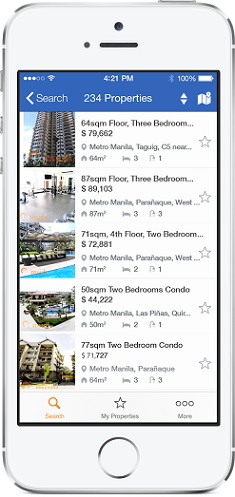
    International property portal Lamudi has rolled out its iOS app for property seekers in a further 11 countries, making the popular mobile application available across the company’s global network.

    The iOS app has been progressively rolled out in countries across Asia, Africa, the Middle East and Latin America since it was launched in June. The app, Lamudi: Real Estate for Sale & Rent, is now available for iOS users in 27 countries in the emerging markets.

    With the release of version 1.5, the Lamudi iOS app has been made available in the Middle East for the first time. The app is now available with right-to-left orientation for Arabic speaking house-hunters in Jordan and Saudi Arabia. Countries which already have the app will also benefit from improved speed and security for easier browsing.

    The iOS app was this week launched in: Algeria, Cameroon, Ethiopia, Madagascar, Mauritius, Mozambique, Rwanda, Zambia, Sri Lanka, Jordan and Saudi Arabia. Lamudi’s Android app was rolled out to 28 countries in the emerging markets earlier this year.

    Lamudi’s Global Co-Founder and Managing Director, Antonius Salis, said: “Our website now hosts more than 750,000 property listings around the world. All of these have been made available to iOS users through the updated Lamudi app.

    For existing users, we have also made several improvements to the overall experience. The app is now more secure and faster to use, making searching for real estate on the go even more convenient than before.”

    The app provides the perfect platform for house-hunters to rent, buy or sell property on the go. A key feature of the Lamudi app is its customised search function, which allows users to easily switch between the 27 countries available in the app.

    The app also provides match alerts, with users receiving a notification as soon as a property that suits their needs hits the market. House-hunters can bookmark their favourite properties to access at any time and on any device.

    All listings on the app feature high-quality photo galleries, detailed property information, maps, and multiple contact details for property owners or agents. Users can also share their favourite properties with family and friends via Facebook, Twitter or email.

    ABOUT LAMUDI

    Launched in 2013, Lamudi is a global property portal focusing exclusively on emerging markets. The fast-growing platform is currently available in 28 countries in Asia, the Middle East, Africa and Latin America, with more than 600,000 real estate listings across its global network. The leading real estate marketplace offers sellers, buyers, landlords and renters a secure and easy-to-use platform to find or list properties online. For more information, please visit http://www.lamudi.com.ph

    Visit Lamudi Philippines on Facebook, Twitter, Google+ and LinkedIn.

    REFERENCE & MEDIA CONTACT
    Rodel Ambas
    Content Editor, Lamudi Philippines
    Email: rodel.ambas@lamudi.com.ph
    Phone: +63 917 3015127

  • Lamudi App Now Available On iOS

    Lamudi App Now Available On iOS

    Global property portal makes mobile app available for Apple users.

    Leading property portal Lamudi today, July 24, 2014, launched its iOS app in the Philippines as the company seeks to capture the growing smartphone market in the country. The launch of Lamudi’s iOS app follows the successful roll out of the company’s Android app in the Philippines last month. The app, Lamudi: Real Estate for Sale and Rent, is now available on
    iOS devices in 16 countries across Asia, the Middle East, Africa and Latin America.

    Lamudi’s Co-Founder and Managing Director, Antonius Salis, said: “The launch of Lamudi’s Android app last month was a great success. We saw huge demand from our customers in the Philippines and beyond, so we decided to keep the momentum going by moving our services on
    to iOS straight away.”

    The Lamudi app provides the perfect platform for house-hunters to rent, buy or sell property on the go. Both the iOS and Android apps are designed to meet the growing demand for mobile internet services in the emerging markets. In the Philippines iOS is the second most popular mobile operating system, with Apple devices accounting for nearly 25% of the local smartphone market, according to figures from Statcounter.

    A key feature of the Lamudi app is its customized search function, which allows users to easily filter results by country. The app also provides match alerts, with users receiving a notification as soon as a property that suits their needs hits the market. House-hunters can also bookmark their favorite properties to access at any time and on any device.

    Jacqueline van den Ende, Co-Founder and Managing Director of Lamudi Philippines, said: “The new iOS app puts thousands of global property listings from 16 countries in your pocket. It means your dream home is now just a tap away.”

    All listings on the app feature high-quality photo galleries, detailed property information, maps, and multiple contact details for property owners or agents. Users can also share their favorite properties with family and friends via Facebook, Twitter or email.

    The Lamudi iOS app is now available in Bangladesh, Pakistan, Indonesia, the Philippines, Peru, Mexico, Colombia, Morocco, Ghana, Kenya, Nigeria, Tunisia, Uganda, Ivory Coast, Tanzania and Zimbabwe.

    Lamudi.com.ph, which started operations in January this year, has over 57,000 residential and commercial property listings from developers and PRC-licensed brokers. The company has active offices in Manila, Cebu and Davao.

    Download the Lamudi iOS app in the App Store today!

    ABOUT LAMUDI

    Launched in 2013, Lamudi is a global property portal focusing exclusively on emerging markets.

    The fast-growing platform is currently available in 28 countries in Asia, the Middle East, Africa and Latin America, with more than 500,000 real estate listings across its global network. The leading real estate marketplace offers sellers, buyers, landlords and renters a secure and easyto-use platform to find or list properties online.

    Visit Lamudi Philippines on Facebook, Twitter, Google+ and LinkedIn.

    REFERENCE AND MEDIA CONTACT:

    Elsie Cansino
    PR Manager, Lamudi Philippines
    Email: elsie.cansino@lamudi.com.ph
    Phone: +63 927 3313501

    NOTES: Top 8 Mobile Operating Systems in the Philippines: Statcounter, June 2013-14 figures

  • Five Smartphone Trends that may change the Filipino Real Estate Market in 2015

    The rise of smartphones will change the real estate game is played in the Philippines in 2015.

    It goes without saying that the Philippines’ mobile Internet landscape is fast evolving. Smartphone penetration, although relatively low at 15 percent, has been growing over the last couple of years. It is expected to leap to 50 percent in 2015.

    Filipinos do not leave home without their smartphones. We book taxis, check road traffic conditions, and purchase gadgets and shoes using our smartphones. Mobile apps even proved very useful when Typhoon Haiyan (Yolanda) struck the Visayas Region in late 2013, mobilizing an army of volunteers and a massive relief drive.

    Indeed, smartphones have become the place where Filipinos research everything, including real estate. This presents a huge opportunity for the industry.

    With these developments, Lamudi has compiled a list of smartphone trends that could stand to change Filipino real estate in 2015.

    1. Half of Smartphone Users Have Spending Power

    Research conducted by mobile market research firm On Device Research found that 44 percent of all mobile Internet users in the Philippines are between 25 and 44 years. This age bracket is when people have stable incomes, start to think about settling down, and are strongly considering purchasing a property for their families.

    This is a huge opportunity for the real estate industry. Not only are these people determined to finally own a home, more and more of them are starting their research on their smartphones, making mobile presence a must for any real estate player.

    2.Almost Half Are Women

    The same research found that 44 percent of Filipino smartphone users are female, higher than Southeast Asia’s average of 37 percent. This is exciting news for the real estate industry, as research conducted by Lamudi earlier this year found that women in emerging countries, including the Philippines, are driving the house-hunting process. Mobile advertising targeted at female home-buyers may make or break a successful real estate marketing campaign.

    3. Filipinos Are on Their Smartphones Longer

    We use our smartphones everywhere and for longer durations. In fact, 40 percent of all Filipino smartphone users spend more than five hours per day on their phone, according to On Device Research. This is approximately 30 percent of our waking hours.

    This means people sitting in a restaurant or waiting at the supermarket checkout are highly likely to be browsing for properties using their smartphones. Hence, targeting these potential buyers at the Zero Moment—the precise moment when they have a need, an intent, or a question they want answered—will be crucial for the industry.

    4. Filipinos Spend More Time on Social Media

    The Philippines is the world’s social media capital. Filipinos spend four hours per day on social media, and a whopping 94 percent of Filipino Internet users have Facebook accounts. Compared this to 54 percent in the United States, the birthplace of Facebook. Therefore, marketing utilizing Facebook (or any social networking site for that matter) will effectively complement any offline campaign.

    5. Apps Are Extremely Popular

    Thirty-two percent of Filipino smartphone users download six or more apps per month, and 45 percent of these people have shelled out some money for these app installs or made purchases using any of these apps.

    But what’s more noteworthy is the popularity of mobile messaging apps. Eighty-two percent of mobile users have Facebook Messenger app, 27 percent use Viber, and 27 percent have Skype. The latter two offer free international calls, which Filipinos utilize fully to call immediate family members working abroad. Since up to a third of OFW remittance to the Philippines is spent on real estate, there is a huge opportunity for the industry to target OFW families looking into buying their first home.

    ABOUT LAMUDI

    Launched in 2013, Lamudi is a global property portal focusing exclusively on emerging markets. The fast-growing platform is currently available in 28 countries in Asia, the Middle East, Africa and Latin America, with more than 600,000 real estate listings across its global network. The leading real estate marketplace offers sellers, buyers, landlords and renters a secure and easy-to-use platform to find or list properties online. For more information, please visit http://www.lamudi.com.ph

    Visit Lamudi Philippines on Facebook, Twitter, Google+ and LinkedIn.

    REFERENCE / MEDIA CONTACT:
    Rodel Ambas
    Content Editor, Lamudi Philippines
    Email: rodel.ambas@lamudi.com.ph
    Phone: +63 917 3015127

  • Christmas Decorations Around The World

    Take a world tour of how different countries prepare for Christmas.

    Trees covered in tinsel and baubles. Stockings hanging from the fireplace. Elaborate outdoor light displays popping up all over the neighborhood.

    Think of decorating your home for Christmas and at least one of these traditions will likely spring to mind. Yet all over the world, countries celebrating Christmas have their own set of customs for decorating their homes for the holidays.

    In Mexico, nativity-themed Christmas decorations are carved from radishes. In chilly Antarctica, fish heads hang in doorways to replace mistletoe. And in Ghana, palm trees decorated with candles replace traditional Christmas trees to suit the tropical climate.

    As the festive season approaches, global real estate portal Lamudi takes you on a tour of Christmas decorations to be found in houses the world over.

    Africa

    In Africa, Christmas dinners after the church ceremony are prepared on tables out the front of homes, inviting people’s family and close friends to share a meal together. For this reason, outdoor decorations are more important than the interior. You may see fake snow decorating store fronts in Nairobi, oil palms loaded with bells in Liberia, or palm trees laden with candles in Ghana.

    In Zimbabwe, Christmas is far from being a casual celebration. It is tradition for people to set up their biggest speakers in front of their house and play their favourite music as loud as they can. But don’t expect only Christmas tunes. You will likely hear everything from the latest pop tunes to more traditional African favourites.

    Latin America

    Christmas is the most important holiday of the year for most countries in Latin America. Cities are loaded with spectacular, colourful decorations, including lots of fairy lights. In Colombia, December 7 is Dia De Las Velitas (Day of the Little Candles) where the night is spent decorating all public spaces with paper lanterns and candles. Each household lights approximately 100 candles and places them outside their home in honour of the Virgin Mary.

    On December 23, just before Christmas, farming folk in Mexico celebrate Noche de rábanos, or the Festival of the Radishes. They carve the vegetables into human figures, including those from nativity scenes. On Christmas Day, children can be found in Mexican living rooms attempting to and break apart decorated clay piñata using a stick – while blindfolded. Inside are small presents and sweets.

    Asia

    Because fir trees are not common in India, mango trees are often decorated instead. In addition, the whole house is decorated with mango leaves in order to brighten up homes. Large star-shaped paper lanterns are also very popular.

    In the Philippines cities shine in colorful lights during Christmas. People decorate their homes with buntings, candles, and wreaths. The most popular decoration in the Philippines is parol (pah-role). This is a bamboo pole with a bright star on top. The pole represents the guiding star of Bethlehem. People also put numerous Christmas cards in the living room for family and friends.

    But one of the most original Christmas traditions comes from Antarctica. With mistletoe being in seriously short supply, residents will often hang up a fish head instead.

    ABOUT LAMUDI

    Launched in 2013, Lamudi is a global property portal focusing exclusively on emerging markets. The fast-growing platform is currently available in 28 countries in Asia, the Middle East, Africa and Latin America, with more than 750,000 real estate listings across its global network. The leading real estate marketplace offers sellers, buyers, landlords and renters a secure and easy-to-use platform to find or list properties online. For more information, please visit http://www.lamudi.com.ph

    Visit Lamudi Philippines on Facebook, Twitter, Google+ and LinkedIn.

    ABOUT ASIA PACIFIC INTERNET GROUP

    Asia Pacific Internet Group (APACIG) is a joint venture of Rocket Internet and Ooredoo. The group’s network consists of 11 e-commerce and online marketplace companies, operating across 15 countries. Since it was founded in 2014, APACIG has become the leading online platform in Asia, building top internet companies in the region. For more information, please visit www.asiapacificinternetgroup.com

    REFERENCE & MEDIA CONTACT

    Rodel Ambas
    Content Editor, Lamudi Philippines
    Email: rodel.ambas@lamudi.com.ph
    Phone: +63 917 3015127