Category: Technology

  • Brave New World – How AI Will Impact Work and Jobs

    Brave New World – How AI Will Impact Work and Jobs

    There’s no doubt that the advent of broadly-available Artificial Intelligence (AI) offers businesses the prospect of increased productivity and accelerated innovation, whilst also enabling society to help solve some of its toughest – and most persistent – challenges: disease, famine, climate control and natural disasters.

    AI is already delivering tangible economic benefits for many organisations across Asia Pacific. For example, leading global container shipping company OOCL reports that applying AI to their business is already saving them $10m annually, whilst Apollo Hospitals in India are using AI to help predict heart disease amongst its patients.

    While the benefits of Artificial Intelligence are undeniable, AI is a disrupter, especially when it comes to the displacement of jobs. The ramifications of AI on the workforce is a regular topic of discussion among CEOs and government leaders across Asia Pacific.

    That said, it is also pertinent to examine the far-reaching implication that AI brings to the workforce. Will the social disruptions that AI can potentially create ultimately overshadow its benefits?

    The Evolution of Jobs in the AI-Shaped Future

    To put things in perspective: large-scale disruption is a challenge with every industrial revolution. Technology will always have profound implications on the creation, elimination, or evolution of jobs. For example, just a few years ago, it was common for offices to have a pool of typists. Clearly, this role is no longer relevant in today’s modern office, thanks to the proliferation of personal computing. The advent of AI will reshape jobs in a similar way.

    Microsoft recently partnered with the leading technology advisory firm IDC to assess the digital transformation landscape across the region. Titled “Unlocking the Economic Impact of Digital Transformation in Asia Pacific”, the study surveyed 1,560 business and IT leaders from 15 Asia Pacific

    economies[i]. It showed that 85% of jobs in Asia Pacific will be transformed in the next three years. (See chart below)

    [i] Microsoft partnered with leading IT industry analyst firm IDC to study the state of digital transformation in Asia Pacific. The “Unlocking the economic Impact of Digital Transformation in Asia Pacific” was conducted with 1,560 business and IT leaders in 15 markets, including Australia, China, Hong Kong, Indonesia, India, Japan, Korea, Malaysia, New Zealand, Philippines, Singapore, Sri Lanka, Taiwan, Thailand and Vietnam. These respondents were from medium- to large-sized organizations with  more than 250 staff and above.

    About Microsoft

    Microsoft is the leading platform and productivity company for the mobile-first, cloud-first world, and its mission is to empower every person and every organization on the planet to achieve more

    Microsoft Philippines, the local subsidiary of Microsoft Corporation, has been constantly bringing innovation and making its technology available to Filipino businesses and individuals since 1995. As a committed and trusted partner in nation-building, Microsoft Philippines has made it its mission to fuel growth and healthy communities, as well as transform locally-based businesses and empower them to compete in the global economy.

    For more information, please contact:

    Microsoft Philippines
    Yna Maclang
    Communications Lead
    v-marmac@microsoft.com
    M2.0 Communications
    Cathy Llanes
    Media Relations Manager
    +639209091990
    cathy.llanes@m2comms.com

    Diving deeper into the results, the respondents said that over 50% of jobs will be redeployed to a new position and/or retrained and upskilled for digital transformation. What’s interesting is that the Study shows that 26% of jobs will be newly created roles from digital transformation, which will offset the 27% of jobs that will he outsourced or automated. In other words, the overall workforce effect will be broadly neutral.

    These are clear indications that how businesses organize work, how people find employment and the skills people need to prepare for the workforce are changing dramatically. These changes are likely to accelerate in the decade ahead.

    As AI continues to transform the nature of work, education, skills, and training will have to transform as well in order to ensure that people are prepared for the jobs of the future and businesses have access to the talent they need to succeed. And as traditional models of employment transform, there will be a need to modernize legal frameworks to recognize new ways of working, provide adequate worker protections, and maintain social safety nets.

    Building a Better Future Together

    The recently published, ‘The Future Computed, Artificial Intelligence and its Role in Society’, makes sense of this AI conundrum as it offers three conclusions on AI and the impact on work and jobs:.

    • First, the organizations and countries that will fare best in the AI race will be early adopters. The reason is straightforward: AI will be useful wherever intelligence is needed and it helps us to be more productive in nearly every field of human endeavor, which can lead to economic growth. Put simply, new jobs and economic progress will favor those that embrace the technology, not those that resist it.

    • Second, while AI will help improve daily life in many ways and help solve big societal problems, its important to remain critical when examining the issues that it can bring. Beyond AI deployment, what’s equally important is to prepare society and the workforce for the impending changes that AI will catalyze by addressing the need for strong ethical principles, the evolution of laws, the importance of training for new skills, and even labor market reforms. These aspects must all come together in order to make the most of this new technology.
    • Third, to fully realize the benefits of AI, and to minimize the negative outcomes, technology companies, private and public organizations need to come together with a sense of shared responsibility — AI must be democratized.

    The AI building blocks that Microsoft is developing today, such as computer vision, speech, and knowledge recognition, should be made available to all so that they can create their own AI-based solutions. AI should not be controlled by just a few organizations. The AI future should be built by everyone with a vision on how AI can benefit economies and societies as well as how we can tackle AI issues and their implications.

    The future of AI can burn brightly or dimly. Disruption is a norm, and the ability to adapt to disruptions is what defines all of us. And to adapt to the fast-approaching, rapidly evolving AI future, all parties – from workers to enterprises to governments – will need to spend more time listening to each other, collaborate and constantly learn new knowledge and skills.

    AI

    Microsoft Philippines, the local subsidiary of Microsoft Corporation, has been constantly bringing innovation and making its technology available to Filipino businesses and individuals since 1995. As a committed and trusted partner in nation-building, Microsoft Philippines has made it its mission to fuel growth and healthy communities, as well as transform locally-based businesses and empower them to compete in the global economy.

    For more information, please contact:

    Microsoft Philippines
    Yna Maclang
    Communications Lead
    v-marmac@microsoft.com
    M2.0 Communications
    Cathy Llanes
    Media Relations Manager
    +639209091990
    cathy.llanes@m2comms.com
  • Tips How To Save Your Money During Summer

    Tips How To Save Your Money During Summer

    Who else wants to save money and enjoy the summer without breaking your wallet?

    Everyone of us no matter what the differences and status of the people are officially experiencing summer in the country and as the temperature rises, it’s time to level up your gears as you enjoy Sun, Sea and Sand.

    If the sudden closure of Boracay got your plans wayward, there are other worthy and beautiful beaches in the country to save the day, in fact, some of these beaches are far better and cleaner than the ones we are used to and not to mention way cheaper in terms of cost of stay.

    1. Resist the urge to fly – Look for beaches that are within your region. Road trips are way more enjoyable and gets you more bonding time with family and friends as you sing and swap stories along the way.

    Camping Lantern

    2. Camp – Instead of booking those high-priced resorts, why not bring out your tent and enjoy the compliments of outdoor.

    Water Proof Power Bank

    3. Some water activities like Scuba diving and Surfing may require hefty fees, you may substitute these activities with snorkeling, swimming and island hopping in groups.

    Floater

    4. Protect your gears. You might want to protect your gadgets from the water, using waterproof gears is the wise way to go.
    CD-R King, you one-stop media provider has got these summer ready items that matches your endless activities this summer.

    Water Proof Gadget case

    Get up and get going and let’s plan those summer escapades. Visit CD-R King branches near you or better yet, shop online thru http://www.cdrking.com/shoponline and enjoy nationwide delivery.

  • Microsoft Draws Over 900+ delegates In The First Ever Azure Summit In The Philippines

    Microsoft Draws Over 900+ delegates In The First Ever Azure Summit In The Philippines

    Microsoft Philippines recently showcased how Microsoft Azure services enables organizations to: open new possibilities, accelerate innovation, future proof their business, and stay compliant and secure. Several Microsoft partners and clients – including Crayon, Philcare, and the Department of Budget and Management – shared their own stories of, and insight into digital transformation (DT).

    Attendees also heard from several Microsoft executives who shared actionable insights from their latest DT study. Microsoft also gave a glimpse of what to expect from Azure as they help organizations navigate their Digital Transformation journeys. Hans Bayaborda, Microsoft Philippines Country Manager, even gave a glimpse of Microsoft’s own inspiring DT journey as a company.

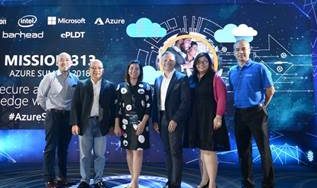
    (from L-R) Microsoft Philippines COO Christian Lim, James Indino – VP-IT of Philcare, Marian Lontoc – IT Sales Director – Crayon, Andres Valencia – Global VP of ISV and Verticals, Crayon, Dir Angel Magtalas – ICTSS, Dept of Budget and Management, and Microsoft Philippines Managing Director Hans Bayaborda.

    The first ever Azure Summit in the Philippines was given a warm Filipino welcome as it was attended by over 900+ IT/Data Pros delegates, eager to see how organizations are using technology to change the game. Microsoft also gave away 25 Azure certifications to enable even more organizations through the cloud.

  • Microsoft Celebrates International Women’s Month  by Encouraging Young Women in the Philippines to #MakeWhatsNext

    Microsoft Celebrates International Women’s Month by Encouraging Young Women in the Philippines to #MakeWhatsNext

    Over 200 female learners from various schools get inspired to pursue careers in science, technology, engineering and math.

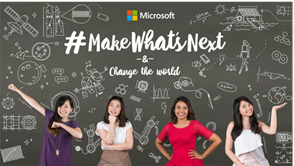
    To celebrate the International Women’s Month, Microsoft launched the #MakeWhatsNext campaign, a campaign that aims to encourage young women to pursue careers in Science, Technology, Engineering and Math (STEM).

    “We want to change the way young women view STEM by letting them envision how technology, science, engineering can be tools used to solve global challenges; how their interests today could turn into a job of the future. We’re inviting girls to explore their passions further and gain insights from LinkedIn on how to make their dream job a reality. To make it happen, we are introducing all girls, including those from underserved communities, to female role models from different industries as well as hands-on, purpose-driven experiences where STEM concepts are linked to real-life situations,” said Dr. Daiana Beitler, Philanthropies Director, Microsoft Asia.

    In the Philippines, Microsoft gathered over 200 female learners from various schools for DigiGirlz 2018 — an initiative to inspire young women to pursue careers in the field of Science, Technology, Engineering, and Math (STEM).

    “The Philippines is one of the most gender equal countries in the world and is in fact the only Asian country in the top ten of the World Economic Forum’s Global Gender Gap report in 2017. With DigiGirlz, Microsoft seeks not just to further improve gender equality in the country, but also to empower women to do and achieve more with technology,” said Hans Bayaborda, Managing Director, Microsoft Philippines.

    The program aimed to:

    • Increase awareness about what we, together with our partners, are doing to reduce the gender gap in STEM.
    • Influence audience to believe that STEM can lead to exciting and meaningful career paths, by enabling them to tackle big challenges impacting people and the world.
    • Empower audience with resources to learn about computer science and STEM career paths.

    Making Herstory

    The 200 female learners in attendance had the chance to hear the stories of prominent female figures in various fields at the Asia Pacific College. Among the invited speakers were Deputy Speaker of the House of Representative Sharon Garin and Isabel Sieh, founder of Girls Will Code.

    DS Sharon Garin enlightened and inspired young girls as she shared her experiences working in a male-dominated environment. She reminded the students to be brave, to talk louder, study harder and never let gender become a barrier in achieving more. “Education is the key to make women free,” she said.

    Isabel Sieh, at 15 years old is considered as the youngest programmer of the country, and is already proficient in Java, C++ and is starting out Python. She shared the story of how she founded her company at 11 and how her love for coding opened the door for more young girls to break the barrier and pursuit a career in STEM. Her company, Girls Will Code, is one that encourages young women to code, while debunking most of the myths surrounding the field.

    Women from Microsoft also shared their own personal stories of empowerment. Microsoft Philippines’ OCP director Eileen Ong encouraged more girls to not be bound by gender stereotypes and pursue a career in STEM. Clarissa Segismundo, Microsoft Education Programs Lead, shared the value of taking risks, of the difference between learning-it-all and knowing-it all, and of the importance of finding your purpose.

    The plenary also covered the importance of inclusion and diversity; how technology is making waves to equalize people with disability. The message? DigiGirlz of today who will become the women of tech tomorrow, will carry the torch to invent something that will eventually benefit the world.

    In addition to the plenary, the young women were invited to envision their careers, acquire new skills, and see the jobs of tomorrow related to STEM through coding sessions, soft skill workshops, and interactive demos on AI, Coding, and HoloLens. They experienced hands on coding by doing Minecraft’s Hour of Code with most learners finishing the coding session in less than hour!

    “The stereotype that only men can excel in the tech and engineering industries is wrong. In this digital age, the future career opportunities will be in STEM, and we have a responsibility to encourage and support young women to follow this path. By choosing a career in STEM, young women and men will achieve their true potential and help change the world.” said Wendy Johnstone, Microsoft General Manager, Marketing and Operations.

    To learn more about #MakeWhatsNext, visit http://www.makewhatsnext.com/. To find out more about Microsoft Philanthropies’ initiatives in the Philippines, visit https://news.microsoft.com/apac/tag/microsoft-philanthropies/.

  • Recruitment Automation: A best asset any company in the Philippines may have this 2018

    Recruitment Automation: A best asset any company in the Philippines may have this 2018

    “Any ambitious or established business would want to be more effective and efficient in getting the right people on board. Automating recruitment processes is one of the single most beneficial things one organization can do to search for talent more widely and screen them faster. Thought leader in Recruitment Automation engageSPARK talks about the benefits for volume recruitment in the Philippines.”

    For many, it is such a threat that machines and computers are now able to clone processes once thought to be sole preserver of the human brain. One of the major reasons is losing job opportunities, but not realizing that it’s not about losing work for many, but it is making workload easier and more efficient making employees more effective. Having a great note on the Information Technology – Business Process Outsourcing (IT – BPM) Industry, it is one of the fastest growing and most dynamic sectors in the Philippines. Boasting steady growth and covering about 10% of global market share. The industry which has eight sub-sectors: contact centers, knowledge process outsourcing and back offices, software development, animation, game development, medical transcription and engineering design, where the bulk of employment is in contact centers.

    To find out exactly how cloud based recruitment system solutions can be the new “Galileo Galilei” of the Recruitment world, especially here in the Philippines, engageSPARK, shares us.

    Recruit from all 7,000 islands

    In the past, businesses have had to restrict their recruitment to only local areas because it’s too expensive to send recruiters to remote parts of the country. With engageSPARK’s solution, anyone interested in a job can simply send in a text to trigger an automated interview phone call to their phone – without leaving their home – 24×7.

    Improve decision-making

    Automating recruitment makes hiring and onboarding processes seamless, low-involvement events. There are far more essential things that employee in the company could get done – one activity here is spending more time on analyzing data, so that the hiring decisions that you make from here on in are even better.

    Gaining more value from employees

    Instead of doing donkey work software solution could manage, it frees up time to let specialists specialize. engageSPARK estimates that 70% of all candidates are eliminated during the first interview; why not let an automated platform do that so that specialists can spend more time on the 30% of candidates that are qualified?

    Financial conservation

    It can assist in saving more tick of the clock, and therefore costings, leaving businesses open to instead to spend that cash on things that really matter.

    Prioritizing Privacy and Security

    Self-contained automated recruitment process is safer and more private. There’s less scope for human error – things like confidential documents being sent to the wrong person, paper documents getting lost or destroyed, or the people accessing information that they’re not supposed to be party to.

    Long Term Corporate Benefits

    Ultimately, an automated system is where a company is advised to look at in the long-term. HR multi-faceted and composite area of business that is vital in discovering and engaging talent, a main key of making the business grow. By leaving it on paper or a dissonant group of rag-tag software solutions, people, opportunities, time and money will slip through the cracks. “Talent is the key foundation for a company’s success.” Noted by Ravi Agarwal, CEO and Founder of engageSPARK. engageSPARK’s applicantENGAGE will assist in enabling businesses to automate recruitment processes to find significantly better talent from a larger pool, faster, and at lower cost.” He concluded.


    Recruitment Automation will bring company benefits making the business leaner, smarter and more efficient. In a world that has fast paced economy we live in, Philippines included, where job opportunity ecosystem is on the rise, old-style manual recruitment is time-consuming, uses valuable intellectual resources on rise, tedious, routine tasks, and is open to privacy breaches.

    Media Contact
    Shelly Busque
    Public Relations
    +63 9213989617
    ShellyB@engageSPARK.com

    About engageSPARK

    EngageSPARK launched in 2015 and since then has been able to acquire clients worldwide, including Facebook, Google, Intel, and UNICEF. Through its product, it promises access to a larger audience and increased engagement.a social enterprise dedicated to helping organizations interact with anyone, via any phone, in any part of the world. The company believes that everyone should have access to information, education, services, products, jobs, and more; and that they should be able to express their voice freely. Anyone, anywhere – the company’s customers provide critical information to rural farmers in Kenya, Philippines, Colombia and many other countries; increase access to call center jobs for urban and rural citizens across Asia; create awareness about HIV and mobilize HIV-positive citizens in Lesotho & Papua New Guinea; and much more. Making this is all possible because all of those people have access to a phone, regardless of the type of phone.
    .

    The company’s vision is a world where social change programs are effective in their impact on the lives of the poor. A world where any motivated person has the economic opportunities they need to step out of poverty and reach for their dreams and mission to enable organizations around the world to quickly, easily and affordably execute their messaging programs. Through the use of great tools and support, we will enable social change programs to be more effective and build a conglomerate of not for profit businesses that directly or indirectly impact the lives of the poor. These businesses will sell products, provide services, and/or create fair jobs. All profits will be used to increase our impact globally.

    Led by Ravi Agarwal, building off the vast expertise he’s developed from founding and building three companies in Boston. Two of those companies today employ over 3,000 people, and one is public on NASDAQ. In 2001, Ravi was chosen by Entrepreneur Magazine in their “3rd Annual 10 under 30” – top 10 business people under the age of 30 years old. Ravi Agarwal co-founded engageSPARK to help businesses and non-profits provide services, information, and education to the 5 Billion people globally who have no (or limited) Internet access.

  • Military-bound Kwon Ji Yong (GD) Bids Farewell to Southeast Asia Fans with Floral Parting Gift on Lazada

    Popular South Korean pop icon and leader of boyband Big Bang, Kwon Ji Yong (GD), bid farewell and paid tribute to his fans in Southeast Asia with a parting gift as he reported for military duty yesterday, February 27.

    The singer-songwriter and rapper has designed a gift package which will be exclusively available  in a one-of-its-kind GD Official Store on Southeast Asia’s leading ecommerce company, Lazada.

    Dubbed “The Floral Pathway”, the package comprises of a premium coffee drip, a GD hand-printed mug, and a bracelet. These items come wrapped in a fancy floral-motif box that is also specially designed by GD. The floral motif is GD’s tribute to his fans, whom he refers to as his flowers, wishing that they will walk down the road to happiness. More than 7,000 gift boxes are up for grabs beginning today (February 28) in the Philippines, Malaysia and Singapore; March 1 in Indonesia; and March 13 in Thailand.

    To fan the excitement across the region, Lazada got fans to join their various social media contests and live streaming videos as they bid their beloved idol farewell.

    Making shopping fun and entertaining!

    The latest collaboration with GD is part of Lazada’s efforts to mix entertainment with shopping and to create a fun and enriching experience for the younger generation of shoppers across Southeast Asia.

    “K-pop has led to an increased interest in Korea among Southeast Asian customers. To satisfy customer needs, Lazada will expand strategic partnerships with Korean entertainment companies to offer high-value K-artist merchandise.” says Will Ross, Chief Executive Officer of Lazada Crossborder.

    About Lazada Group

    Launched in 2012, Lazada is the number one online shopping and selling destination in Southeast Asia – present in Indonesia, Malaysia, the Philippines, Singapore, Thailand and Vietnam. As the pioneer of the eCommerce ecosystem in Southeast Asia, Lazada helps more than 135,000 local and international sellers as well as 3,000 brands serving the 560 million consumers in the region through its marketplace platform, supported by a wide range of tailored marketing, data, and service solutions.

    With over 210 million SKUs available, Lazada offers the widest range of products in categories ranging from consumer electronics to household goods, toys, fashion, sports equipment and groceries. Focused on delivering an excellent customer experience, it offers multiple payment methods including cash-on-delivery, comprehensive customer care and hassle-free returns through its own first and last mile delivery arm supported by more than 100 logistics partners. Lazada Group is majority owned by Alibaba Group Holding Limited (NYSE: BABA).

  • Learning To Love AI

    Learning To Love AI

    February is the month of love, and millions of people across the Philippines – and around the world – will express their feelings and celebrate the special relationships they have with their loved ones, through the exchange of cards and gifts in a tradition that can be traced back to the medieval era.

    Also this year, in China, many more are likely to say ‘I love you’ to a girl named ‘Xiaoice’, and she is an Artificial Intelligence-powered chatbot.

    Thanks to AI, we are currently witnessing a paradigm shift in technology, moving from a world where we have to understand computers to one where they now understand us and our intent. And this is not only revolutionizing how we live, work and play; it is upending our entire relationship with technology.

    This disruption is brought about by the next big shift in computing, one that is fueled by advances in AI and built around a behavior that is the most natural of all to humans — conversations. Conversational AI, such as chatbots, heralds a new era where digital experiences can now mirror the way people interact with fellow humans. And there is much to love about this new development.

    First Love: Microsoft’s AI Journey

    For Microsoft, the vision of enabling computers that can see, hear, talk and understand us really began 25 years ago when founder Bill Gates created Microsoft Research. And on that journey, they have recently passed some significant milestones that, only a few years ago, would have seemed impossible to imagine.

    Such milestones are vital to the adoption and use of computers for everyone; because when computers can speak “human”, every human can speak with computers.

    These kind of advancements are the result of the deep engineering skills and unique technical capabilities of the team at Microsoft Research, who have received many prestigious national and international honours, including the Turing Award, considered the highest distinction in computer science.

    Growing Love: Chatbots Around the World

    Microsoft’s work with chatbots expanded rapidly with the launch of Xiaoice in China. This intelligent, natural-language bot is programmed to behave like an 18-year-old girl who is emphatic, humorous and affable. The conversations that she has with users range from advice about what activities to do during the day to relationship feedback. Using advanced machine learning algorithms, her responses mirror what a teenage girl would tell her friend, sometimes with sarcasm included.

    Xiaoice can also speak with people over the phone and use streaming video to detect emotions and engage in conversations based on the person’s expressions. Today, she has conversed with more than 100 million users, averaging approximately 23 exchanges per session. This is nearly 10 times the industry average. In fact, it has been estimated that 25% of users have already declared their love to Xiaoice.

    But that is not all. Xiaoice is also the first AI chatbot to have a real TV broadcasting job on Dragon TV, one of China’s biggest TV stations, with a viewer population exceeding more than 800 million.

    Building on the success of Xiaoice, local variations are now available in four other countries — Rinna in Japan and Indonesia, Ruuh in India, and Zo in U.S.

    Microsoft launched Rinna in Japan in 2015. Modelled after a school girl, Rinna has today spoken with 25% of the country’s population. She is also powering a chatbot that is serving an entire town in Japan.

    Modelled after a smart and adorable 7-year-old boy, Shibuyu Mirai is currently helping residents of, and visitors to, Tokyo’s busy Shibuya district access local services and information. Shibuyu-kun is serving the community so well that the Shibuya municipal government has recently granted him residency status, a world’s first.

    Much to Love: AI as a Force for Good

    Today, many of the conversations revolving around AI are mired in trepidation and alarm – ranging from job displacements to the widening of social inequalities. However, it is evident from these chatbots that there is much to love about AI, and it has brought about both functionality and emotional connection to millions of people around the world.

    Beyond conversations and companionship, AI also has immense potential to offer lasting, positive impact on the world by driving global economic and social progress. From the front lines of education to environmental advocacy to healthcare, AI will be vital in creating technological breakthroughs for humanity and facilitating inclusive solutions that will enable every person and organization on the planet to achieve more.

    For example, Microsoft’s recent AI for Earth initiative builds on the commitment to use AI technology to amplify human ingenuity and advance sustainability around the globe. Through ongoing projects and partnerships, Microsoft is striving to solve some of the most pressing challenges of our time, including the health of our planet.

    One of these projects is Farmbeat, which strives to address soaring food demands while dealing with limited amount of arable land. This initiative leverages existing connectivity infrastructure as well as the power of the cloud and machine learning to enable data-driven farming. This provides farmers with easily interpretable insights to help improve agricultural yield, lower overall cost, and reduce the environmental impact of farming.

    AI can also be used to create a more inclusive future by empowering people with disabilities.  Seeing AI is a free app designed by Microsoft to make the visual world around us more accessible for the 285 million people in the world with low vision. By harnessing the power of AI, this app is able to perceive and recognize a wide spectrum of visual cues – from people to emotions, from barcodes to handwriting – and translate them into audible descriptions. By turning the visual world into an audible experience, this app is making the world more navigable and richer for those with low vision.

    Trust: Fundamental to Our Relationship with AI

    These examples are just a few of the positive applications of AI; the benefits it can bring to our world and our lives are multifaceted and countless.

    Microsoft has been investing in the promise of AI for more than 25 years, and they are optimistic about the opportunities that AI creates, and how it can amplify human ingenuity to create a better future for all.

    However, the road to a future powered by a partnership between intelligent machines and people will be a long, and sometimes, challenging one. There will be complex questions and broad societal concerns that need to be addressed, including the ethical usage of AI and its impact on employment.

    Addressing these challenges will require trust, integrity, faith and listening to one another – the same fundamental building blocks that are needed to create a lasting and positive partnership with another person.

  • Welcome to 2018, the year of AI

    Welcome to 2018, the year of AI

    If the history of human advancement has taught us one thing it is this: genuine step-change progress does not occur because of a single technology breakthrough, but a combination of multiple complementary factors coming together at the same time.

    The Industrial Revolution, which began around 1760, was driven by an amalgamation of steam power, improvements in iron production and the development of the first machine tools.  Similarly, the PC revolution of the early 1970’s was the outcome of simultaneous advancements in micro-processing, memory storage, software programming and other factors.

    Now, as we enter 2018, we are at the cusp of a new revolution, one that will ultimately transform every organisation, every industry and every public service across the world. 2018 is the year of Artificial Intelligence – or AI – as it will be the year that it will start to become mainstream, to begin to impact many aspects of our lives in a truly ubiquitous and meaningful way.

    AI: Over 65 Years In The Making

    The concept of AI is not new. In fact, it stretches back to 1950 when early computing pioneer Alan Turing famously posed the question “Can Machines Think?” and it would be another 6 years, in 1956, before the term “artificial intelligence” was first used.

    So it has taken nearly 70 years for the right combination of factors to come together to move AI from concept to an increasingly ubiquitous reality. And there are three innovation trends driving its acceleration and adoption right now.

    • The first is Big Data. The explosion of Internet-connected devices, sensors and objects has expanded exponentially the amount of data the world is now producing. In this increasingly digital era, data is the “new oil”– a source of value and sustainable competitive advantage.
    • The second factor is ubiquitous and powerful Cloud computing. Today, anyone with an idea and a credit card can access the same computing power that, traditionally, only global multinationals or governments have possessed. Cloud computing is democratizing technology and accelerating innovation on a global scale.
    • The third factor driving AI capabilities is breakthroughs in software algorithms and Machine Learning that can identify sophisticated patterns implicit within the data itself. If data is the new oil, Machine Learning is, perhaps, the new combustion engine.

    So, it is this combination of powerful industry trends, all maturing at the same time, that is accelerating – and democratizing – AI today.


    AI Everywhere

    Industry experts refer to the way in which AI will impact our lives as an “invisible revolution”. This refers to its ubiquity. AI will be everywhere—powering your online recommendation engine, acting as a virtual assistant chatbot for your bank account or travel agent, personalizing your newsfeed or guarding your credit card against fraud. AI will be more pervasive – and yet less invasive – than any previous technology revolution.

    In particular, AI will be embedded seamlessly into existing, well-established products and services to enhance their capabilities. For example, with a small piece of AI tech called Microsoft Presentation Translator, anyone can help overcome any language barriers as PowerPoint can show real-time subtitles in more than 60 languages, simultaneously as they speak, during their presentations.

    In business, AI will be used by most companies for at least some part of the value chain either in research and development, design, logistics, manufacturing, servicing or customer engagement. In fact, leading IT industry analyst IDC believes that by next year, 40% of digital transformation initiatives globally will be supported by AI capabilities.

    And you do not need to be a start-up or hi-tech company to embrace the possibilities of AI, just have the vision and commitment to make it happen. Take, for example, Mitsubishi Fuso Truck and Bus Corporation (MFTBC), an 85-year-old Japanese auto manufacturer, which has given itself just two years to become a “100% digital operation” – complete with cloud-based capabilities in AI, the Internet of Things (IoT), and Mixed Reality (MR).

    One of the initiatives they have recently implemented is an AI-powered chatbot where all its 10,000 employees can access information and assistance they need in a faster, more intuitive and reliable way. This significantly reduces the time employees spend on learning the Intranet site navigation, searching for information or calling each other for help. The company is now planning to extend chatbot technology to boost customer services, productivity, and maintenance across the whole company.

    AI in 2018

    As we stand at the cusp of the new year, there are four key AI developments happening over the next 12 months:

    Mass adoption of AI starts from 2018: AI adoption is set to soar in 2018 and beyond when organizations start to see clear benefits being reaped by AI innovators such as MFTBC. IDC forecast that worldwide AI revenues will surge past US$46 billion in 2020[2]. Closer to home, AI investment in Asia Pacific is predicted to grow to US$6.9 billion by 2021, expanding rapidly by 73% (CAGR).

    1. Ubiquitous Virtual Assistants: We will begin to see the adoption of broad-scale AI in the form of conversational AI chatbots in both consumer and business scenarios. In fact, Gartner predicts that by 2020 more than 85% of customer interactions with the enterprise will be managed without a human interaction and AI will be the key technology deployed for customer service.
    1. Democratizing data and decision-making: In a world where more data exists than ever before, the ability to deliver meaningful business insights from that data to the maximum number of relevant employees becomes of paramount importance. AI will be the key technology for making that happen by bringing together data from employees, business apps, and the world.
    1. Building trusted foundations for AI: There will be increasingly more discussions at governmental and industrial levels to create formal governance and regulations in the usage of AI. We saw these discussions with the onset of eCommerce and the advent of cloud technologies. It is critical for transparent public-private conversations to take place as they will shape how AI can benefit economies and societies in a fair, transparent and trusted way.

    The future of AI burns brightly and 2018 is the year that will establish a solid foundation for the mass adoption of this exciting and vital technology.