Category: Technology

  • Cybersecurity in APAC: The art of simplicity and being on the right side of history

    Cybersecurity in APAC: The art of simplicity and being on the right side of history

    Michael Montoya, Chief Cybersecurity Officer, Microsoft Asia

    We all have “a-ha” moments when that lightbulb above our heads is just too bright to ignore. One came to me when I was in a previous IT operations role.  It happened on a day when I had two meetings: first with an endpoint agent team and another with a security operations team.

    The endpoint team gave me detailed guidance on the possible performance degradation and alerts we could expect from another agent we were placing on user devices in the pursuit of greater security. Later, the security operations team asked for more resources to address an increasing number of incoming alerts caused by our large security footprint.

    The irony raised by these back-to-back meetings struck me, and so I asked myself: “How many security tools do we have to protect our environment?”

    Finding the answer was not as simple as I had hoped. But when I was eventually told the approximate number, it was clear to me that we had a problem – and I was part of that problem. People like me have been in the industry long enough to have dealt with server sprawl and application sprawl. Now, we were witnessing security sprawl.

    It seems very logical in this world of rapid digital transformation – where businesses and organizations face constant and evolving digital threats – to deploy as many defenses as possible to ward off cyberattacks. The more barriers in place, the more protected you are, right?

    Well, I don’t believe I am alone when I say that it is a logical fallacy to think that having more security tools means better security. In fact, they could have the opposite effect, according to new research by IT analyst firm, Frost & Sullivan.

    “Understanding the Cybersecurity Threat Landscape in Asia Pacific: Securing the Modern Enterprise in a Digital World” surveyed 1,300 respondents from 13 countries. This Microsoft-commissioned study drilled down into how organizations in our region view, approach, and practice cybersecurity.

    One facet of the Study examined the experiences of organizations with different levels of security in place. What it found might, at first glance, seem counter-intuitive: Those that had gone to a lot of expense and trouble to put a wide array of security measures in place often encountered more security incidents than those with fewer defenses.

    Moreover, they often took longer to recover from attacks. Of the surveyed organizations set up with more than 50 cybersecurity solutions, only 23% said they had been able to bounce back within an hour of a breach. For the organizations with less than 10 cybersecurity solutions, the figure was 40%.

    The truth of the matter is simple: The number of security solutions you have won’t necessarily guarantee the safety of your data or protect your business reputation. The reasons can vary, but often over-complicated layers of complexity can make cybersecurity issues too hard for some companies to handle effectively.

    Organizations with a multitude of deployed security solutions can find it difficult and expensive to have full visibility across all environments. And, that leads to ineffective detection and response. It can also result in a “passive defense posture” where complexity replaces agility and effectiveness. In an ocean of alerts, which can easily overwhelm us, we risk not taking fundamental security measures – such as basic cyber resilience among employees, patch updates, poor password management, and movement of files to insecure thumbdrives.

    These are just a few of the things that can open the door to threats, including the four this Study identified as being high-impact in Asia Pacific:

    • fraudulent wire transfers;
    • data corruption;
    • online brand impersonation, which is when a cyber fraudster creates a bogus webpage or a social media account, either to harm your brand or simply to gain the confidence of your trusting customers;
    • and data exfiltration, whereby cybercriminals use various malicious ways to copy, transfer, or retrieve data from computers or servers.

    Most of the Study’s respondents knew about the dangers out there and regarded them as real threats – with 59% saying cybercrime threats had hindered them on their digital transformation journeys. But it is problematic to learn what many were doing, or not doing, to manage the risks and why.

    Firstly, let’s look at the reasons why the organizations surveyed thought it was a good idea to have a cybersecurity strategy in place. Only 20% regarded cybersecurity as a powerful enabler of digital transformation and the key to future business growth and success. In contrast, 41% simply cited traditional and tactical reasons, like protection from attacks and differentiating themselves from their competitors.

    Most also said that when it came to creating new projects, security issues were usually considered after – not before – launch.

    In this regard, the Study supports an uncomfortable notion that many of us know to be true: Many business decision-makers in our region still cling to outmoded ways of managing risks, and this is leaving them ill-informed and unprepared for mounting cybersecurity challenges that can ultimately erode their growth prospects.

    Digital transformation has made the need for safe and trusted technology a front-and-center factor for business success. But too many organizations still regard security as an add-on, or even an afterthought. Some businesses resist the need to tackle security issues – even as cybercriminals become more sophisticated and as traditional IT boundaries disappear with new devices, apps, and data entering the workplace.

    To succeed and thrive as digital enterprises in the years to come, organizations must make security part of the natural flow of their business processes and cycles. And, to ensure security, privacy, and compliance, the protection of company data requires a new approach.

    That is why Microsoft has a platform that looks holistically across all the critical end-points of today’s cloud and mobile world. It acts on the intelligence that comes from our security-related global threat monitoring and insights. And, we have a vibrant ecosystem of partners who help us raise the bar across the industry – helping to securely enable our customers’ digital transformations.

    Finally, there is the need for cultural change. The boards of too many companies still pick up most of their information about what is happening in cyber from what they read in the media. That’s just not detailed enough to inform them of their specific risks and the mitigation strategies they should be supporting. Increasing the dialogue on this topic amongst board members and IT executives is critical for businesses to thrive in the era of digital transformation and the inevitable consequences of cyberattacks.

    The value proposition of cyber defense is changing. Traditionally, it has been regarded as a cost. Now it should be seen as an asset, simply because customers are demanding a level of security and trust. The more companies digitize, and the more an economy becomes digitally led, the more cybersecurity becomes a business enabler.

    As security professionals, our jobs continue to get more complicated and vital to our company’s survival. Use this study as a reminder to ask you yourself two questions: How many security tools do I have to protect my company? And, what role should security play in my company’s digital transformation?


    As Microsoft CEO Satya Nadella so eloquently states: “right now Microsoft is probably on the right side of history”. Well, I believe we security and IT professionals are also on the right side of history.

    Catherine Llanes
    Media Relations Manager
    m: +63 917 5820573
    t: +632 332 1031 loc. 108
    http://www.m2comms.com/

  • 5 Ways AI Is Building A Better, Brighter Future For Asia

    5 Ways AI Is Building A Better, Brighter Future For Asia

    All across Asia, a hotly-debated topic amongst business leaders, government policymakers, academics and industry experts is the potential impact that Artificial Intelligence (AI) will have on society.

    Understandably, some take a cautious view when it comes to AI development, sometimes painting a grim, dystopic future where large swathes of the population are rendered jobless, access to AI is not evenly distributed amongst citizens, and privacy and civil liberties are increasingly under threat from AI’s insatiable need for data.

    There is no denying that AI will present a new set of societal challenges that will need to be navigated thoughtfully and carefully and, in particular, it will be critical for all organizations to build trust in AI amongst their customers and stakeholders.

    However, these concerns should not overshadow the enormous potential that AI offers society.

    Here are five key areas where AI has created remarkable developments and improvements in Asia.

    1. Accessibility

    Asia-Pacific is currently home to 690 million people with disabilities. AI can help people with vision, hearing, cognitive, learning, and mobility disabilities perform daily tasks more independently, lead a richer, more productive life and participate more fully in society.

    For example, Seeing AI is a free app that leverages AI capabilities to identify a broad range of visual cues – including faces, emotions and handwriting. That data is then converted into audio descriptions for the visually-impaired. This enables the 285 million people in the world with low vision to better navigate their day, making the visual world more accessible.

    Seeing AI app turns the visual world into an audible experience for the low vision community.
    1. Agriculture

    Today, Asia is the world’s most populous region with more than 4.5 billion inhabitants, approximately 60% of the global population, and this number is forecasted to grow to over 5 billion by 2030. This will put incredible strain on the region’s already-challenged food supply chains unless farmers can find new ways to keep up with demand, such as leveraging AI and analytics to greatly improve their yields.

    In India, Microsoft has partnered with a non-profit organization, International Crop Research Institute for the Semi-Arid Tropics (ICRISAT), to develop an AI Sowing App that sends advisories to farmers on the optimal date to sow their crops, based on weather conditions, soil, and other indicators.

    The solution predicts the optimal sowing period by using AI to analyze 30 years of historic climate data and calculate the adequacy of rainfall and soil moisture using real-time data and weather forecasting models. In addition, the program does not require farmers to incur capital expenditure, such as installing sensors in their fields, making this optimal for emerging markets.

    1. Climate Change

    One of the most pressing challenges of the 21st century is the changing climate, and how it threatens human health, infrastructure, and natural systems. A leading cause of climate change is carbon emissions.

    Microsoft is embracing the responsibility to operate sustainably and reduce the environmental impact of its business. One of the ways it doe this is by enlisting AI’s help to manage the operations and infrastructure of our data centers. As a result, less electricity is needed to fuel data centers’ computing and cooling requirements. In fact, cloud services are 93% more energy efficient and up to 98% more carbon efficient than traditional enterprise data centers.

    AI technologies are also being applied beyond the data center to improve the energy efficiency of entire buildings. In Singapore, approximately one-third of the nation’s electricity is consumed by buildings. JTC, a government agency responsible for the developing the nation’s industrial infrastructure, is taking a proactive approach to address this voracious demand for electricity by centralizing its operations on the Microsoft Cloud to monitor, analyze and optimize its buildings. Using sensor data and AI-driven analytics, JTC can now identify and rectify faults before breakdowns occur through a predictive model, resulting in a 15 percent drop in energy cost avoidance.

    1. Education

    Education is one of the building blocks for creating a better future, and AI is being leveraged to enhance the education experience for students and improve outcomes in schools.

    In Andhra Pradesh, a state in southern India, Microsoft is partnering with the government to launch a new app that predicts which students are most likely to drop out of school. Powered by machine learning, AI capabilities, and the cloud, this solution processes complex data sets that include enrolment information, student performance, gender and socio-economic demographics, school infrastructure, and teacher skills, to look for predictive patterns.

    This enables administrators and educators to intervene early and target the most at-risk students with programs and counseling to prevent dropouts. The app is already being used successfully by more than 10,000 schools in Andhra Pradesh, covering more than five million students in 2017.

    With the help of AI, more students can complete their education and graduate as employable new workers who will help grow the future economy.

    With the help of AI, more students can complete their education and graduate as employable new workers who will help grow the future economy.

    1. Healthcare

    Lastly, AI technology has the potential to assist healthcare providers in their quest to tackle some of the most prevalent diseases we face today, as well as improve the quality of life for Asia’s growing population.

    In India, Microsoft is collaborating with one of the largest health organizations in the country, Apollo Hospitals, to develop anAI-focused network aimed at tackling cardiovascular disease, which contributes to nearly one-third of deaths worldwide. In India alone, nearly three million heart attacks happen annually, and it is estimated that 30 million Indians suffer from coronary disease.

    By bringing together Microsoft’s AI expertise and Apollo Hospitals’ experience and knowledge in the field of cardiology, this partnership aims to develop new machine learning models to predict patient risk for heart diseases and assists doctors with treatment plans.

    These are just some of the amazing benefits that AI is bringing to society, though it’s clear that it is still in a nascent stage of its development. The story of AI is still unfolding, and future chapters will be supported by positive, impactful anecdotes. After all, with AI, we are not just amplifying human ingenuity, but the qualities that make us human: Our caring. Our curiosity. Our collective desire to create a better tomorrow.

    Catherine Llanes

    Media Relations Manager

    m: +63 917 5820573

    t: +632 332 1031 loc. 108

    http://www.m2comms.com/

  • Cybersecurity Threats To Cost Organizations In The Philippines US$3.5 Billion In Economic Losses

    Cybersecurity Threats To Cost Organizations In The Philippines US$3.5 Billion In Economic Losses

    Microsoft and Frost & Sullivan Study reveals that:

    • A large-sized organization in the Philippines can possibly incur an economic loss of US$7.5 million, more than 200 times the average economic loss for a mid-sized organization
    • Cybersecurity attacks have led to job losses in seven in ten (72%) organizations over the last year
    • Cybersecurity concerns delay Digital Transformation plans
    • Organizations are increasingly leveraging Artificial Intelligence to enhance their cybersecurity strategy

    A Frost & Sullivan study commissioned by Microsoft revealed that the potential economic loss in the Philippines due to cybersecurity incidents can hit a staggering US$3.5 billion. This is 1.1 percent of the Philippines’ total GDP of US$305 billion.

    The study, titled “Understanding the Cybersecurity Threat Landscape in Asia Pacific: Securing the Modern Enterprise in a Digital World”, aims to provide business and IT decision makers with insights on the economic cost of cybersecurity breaches in the region and identify the gaps in organizations’ cybersecurity strategies. The study involved a survey of 1,300 business and IT decision makers ranging from mid-sized organizations (250 to 499 employees) to large-sized organizations (>than 500 employees).

    The study reveals that more than half of the organizations surveyed in the Philippines have either experienced a cybersecurity incident (18%) or are not sure if they had one as they have not performed proper forensics or data breach assessment (34%).

    “As companies embrace the opportunities presented by cloud and mobile computing to connect with customers and optimize operations, they take on new risks,” said Hans Bayaborda, Managing Director, Microsoft Philippines. “With traditional IT boundaries disappearing the adversaries now have many new targets to attack.

    Companies face the risk of significant financial loss, damage to customer satisfaction and market reputation — as has been made all too clear by recent high-profile breaches.”

    The True Cost of Cybersecurity Incidents – Economic, Opportunity and Job Losses.

    The study revealed that:

    • A large-sized organization in the Philippines can possibly incur an economic loss of US$7.5 million, more than 200 times higher than the average economic loss for a mid-sized organization (US$35,000); and
    • Cybersecurity attacks have resulted in job losses across different functions in seven in ten (72%) organizations that have experienced an incident over the last 12 months.

    To calculate the cost of cybercrime, Frost & Sullivan has created an economic loss model based on macro-economic data and insights shared by the survey respondents. This model factors in three kinds of losses which could be incurred due to a cybersecurity breach:

    • Direct: Financial losses associated with a cybersecurity incident – this includes loss of productivity, fines, remediation cost, etc;
    • Indirect: The opportunity cost to the organization such as customer churn due to reputation loss; and
    • Induced: The impact of cyber breach to the broader ecosystem and economy, such as the decrease in consumer and enterprise spending.

    “Although the direct losses from cybersecurity breaches are most visible, they are but just the tip of the iceberg,” said Edison Yu, Vice President and Asia Pacific Head of Enterprise for Frost & Sullivan. “There are many other hidden losses that we have to consider from both the indirect and induced perspectives, and the economic loss for organizations suffering from cybersecurity attacks can be often underestimated.”

    In addition to financial losses, cybersecurity incidents are also undermining the Philippines organizations’ ability to capture future opportunities in today’s digital economy, with more than half (57%) respondents stating that their enterprise has put off digital transformation efforts due to the fear of cyber-risks.

    Key Cyberthreats and Gaps in the Philippines Organizations’ Cybersecurity Strategies

    Although high-profile cyberattacks, such as ransomware, have been garnering a lot of attention from enterprises, the study found that for organizations in the Philippines that have encountered cybersecurity incidents, data exfiltration and data corruption are the biggest concern as they have the highest impact with the slowest recovery time.

    Besides external threats, the research also revealed key gaps in organizations’ cybersecurity approach to protect their digital estate:

    • Security an afterthought: Only 44% of organizations consider cybersecurity before the start of a digital transformation project. Majority of respondents (56%) either think about cybersecurity only after they start on the project or do not consider it at all. This limits their ability to conceptualize and deliver a “secure-by-design” project, potentially leading to insecure products going out into the market;
    • Creating a Complex Environment: Negating the popular belief that deploying a large portfolio of cybersecurity solutions will render stronger protection, the survey revealed that 17% of respondents with more than 50 cybersecurity solutions could recover from cyberattacks within an hour. In contrast, more than twice as many respondents (38%) with fewer than 10 cybersecurity solutions responded that they can recover from cyberattacks within an hour; and
    • Lacking cybersecurity strategy: While more and more organizations are considering digital transformation to gain competitive advantage, the study has shown that 46% of respondents see cybersecurity strategy only as a means to safeguard the organization against cyberattacks rather than a strategic business enabler. A mere 25% of organizations see cybersecurity strategy as a digital transformation enabler.

    “The ever-changing threat environment is challenging, but there are ways to be more effective using the right blend of modern technology, strategy, and expertise,” added Hans. “Microsoft is empowering businesses in the Philippines to take advantage of digital transformation by enabling them to embrace the technology that’s available to them, securely through its secure platform of products and services, combined with unique intelligence and broad industry partnerships.”

    Artifical Intelligence (AI) is the Next Frontier in Cybersecurity Defense

    In a digital world where cyberthreats are constantly evolving and attack surface is rapidly expanding, AI is becoming a potent opponent against cyberattacks as it can detect and act on threat vectors based on data insights. The study reveals that more than almost four in five (79%) organizations in the Philippines have either adopted or are looking to adopt an AI approach towards boosting cybersecurity.

    AI’s ability to rapidly analyze and respond to unprecedented quantities of data is becoming indispensable in a world where cyberattacks’ frequency, scale and sophistication continue to increase.

    An AI-driven cybersecurity architecture will be more intelligent and be equipped with predictive abilities to allow organizations to fix or strengthen their security posture before problems emerge. It will also grant companies with the capabilities to accomplish tasks, such as identifying cyberattacks, removal of persistent threats and fixing bugs, faster than any human could, making it an increasingly vital element of any organizations’ cybersecurity strategy.

    Recommendations for securing the modern enterprise in a digital world

    AI is but one of the many aspects that organizations need to incorporate or adhere to in order to maintain a robust cybersecurity posture. For a cybersecurity practice to be successful, organizations need to consider People, Process and Technology, and how each of these contributes to the overall security posture of the organization.

    To help organizations better withstand and respond to cyberattacks and malware infections, here are five best practices that they can consider in improving their defense against cybersecurity threats:

    • Position cybersecurity as a digital transformation enabler: Disconnect between cybersecurity practices and digital transformation effort creates a lot of frustration for the employees. Cybersecurity is a requirement for digital transformation to guide and keep the company safe through its journey. Conversely, digital transformation presents an opportunity for cybersecurity practices to abandon aging practices to embrace new methods of addressing today’s risks;
    • Continue to invest in strengthening your security fundamentals: Over 90% of cyber incidents can be averted by maintaining the most basic best practices.  Maintaining strong passwords, conditional use of multi-factor authentication against suspicious authentications, keeping device operating systems, software and anti-malware protection up-to-date and genuine can rapidly raise the bar against cyberattacks. This should include not just tool-sets but also training and policies to support a stronger fundamental;
    • Maximize skills and tools by leveraging integrated best-of-suite tools. The best tools are useless in the hands of the amateur. Reduce the number of tools and the complexity of your security operations to allow your operators to hone their proficiency with the available tools. Prioritizing best-of-suite tools is a great way to maximize your risk coverage without the risk of introducing too many tools and complexity to the environment. This is especially true if tools within the suite are well-integrated to take advantage of their counterparts;
    • Assessment, review and continuous compliance: The organization should be in a continuous state of compliance. Assessments and reviews should be conducted regularly to test for potential gaps that may occur as the organization is rapidly transforming and address these gaps. The board should keep tab on not just compliance to industry regulations but also how the organization is progressing against security best practices; and
    • Leverage AI and automation to increase capabilities and capacity: With security capabilities in short supply, organizations need to look to automation and AI to improve the capabilities and capacity of their security operations. Current advancements in AI has shown a lot of promise, not just in raising detections that would otherwise be missed but also in reasoning over how the various data signals should be interpreted with recommended actions. Such systems have seen great success in cloud implementations where huge volumes of data can be processed rapidly. Ultimately, leveraging automation and AI can free up cybersecurity talents to focus on higher-level activities.


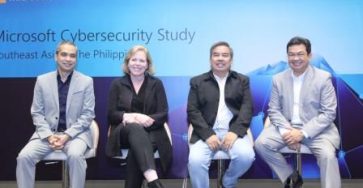
    Security experts discuss the economic impact of cybersecurity in the PH during Microsoft’s study launch. From L-R Hans Bayaborda, Managing Director

    For more information on the study, please visit:
    https://news.microsoft.com/apac/features/cybersecurity-in-asia/ ‎

    To better understand the cyberthreats happening globally and in Asia Pacific, please download the Microsoft Security Intelligence Report Volume 23 here: https://info.microsoft.com/ww-landing-Security-Intelligence-Report-Vol-23-Landing-Page-eBook.html

    About the “Understanding the Cybersecurity Threat Landscape in Asia Pacific: Securing the Modern Enterprise in a Digital World” Study

    This study involved a survey conducted with 1,300 respondents from 13 markets – Australia, China, Hong Kong, Indonesia, India, Japan, Korea, Malaysia, New Zealand, Philippines, Singapore, Taiwan and Thailand.

    All respondents are business and IT decision-makers involved in shaping their organizations’ cybersecurity strategies. 44% of them being business decision-makers, including CEOs, COOs and Directors, while 56% are IT decision-makers, including CIOs, CISO and IT Directors. 29% of participants are from mid-sized organizations (250 to 499 staff); and 71% are from large-sized organizations (more than 500 staff).

    About Microsoft

    Microsoft (Nasdaq “MSFT” @microsoft) enables digital transformation for the era of an intelligent cloud and an intelligent edge. Its mission is to empower every person and every organization on the planet to achieve more.

    For more information, please contact:

    Microsoft Philippines
    Yna Maclang
    Communications Lead
    v-marmac@microsoft.com

    M2.0 Communications
    Cathy Llanes
    Media Relations Manager
    +639175820573
    cathy.llanes@m2comms.com

  • Microsoft Build 2018 – The Forces that will Shape The Future

    Microsoft make big announcements on what’s next in AI, cloud computing, and machine learning.

    Build is Microsoft’s big annual developer conference where they share their vision for technology and seek to empower everyone to be more productive. First held in 2011, Microsoft Build is an event aimed towards enabling software engineers and web developers using Windows, Windows Phone, Microsoft Azure, and other Microsoft technologies.

    At Build 2018, Microsoft continues to pursue its mission to empower more people and organizations through the forces that will shape the future—particularly AI, Machine Learning, Cloud Computing, and App Development.

    Satya Nadella, Microsoft’s CEO, opened the conference with a view on opportunity and responsibility. “When we talk about limitless opportunity, it’s about truly figuring out how to empower more people and more organizations. We have a real responsibility as we think about the impact of technology…to ensure that technology is reaching everyone.”

    Technology is weaved into every fabric of our modern lives while software is now also a major driver of economies. While personal computing continues to evolve, the cloud provides global infrastructure, scale and intelligence. Computing is everywhere and this is a huge opportunity for developers

    AI for Accessibility

    Microsoft continues to utilize technology to impact and improve the quality of human life. With AI, they are opening the door to a new wave of possibilities to break down barriers in communication and really impact the lives of people with disabilities.

    At Build 2018, Satya Nadella announced the company’s new initiative: AI for Accessibility. It is a $25 million, five-year program to encourage the development of AI technology aimed towards helping the disabled community. The program will provide grants and support to research organizations, NGOs, and developers as they set out to empower and enable the more than 1B people with disabilities around the world.

    Re-Inventing Meetings and Collaboration

    The conference was a showcase of several technologies that greatly improved the quality of human life. This included AI-powered productivity solutions for the workplace.

    Modern Meetings was Microsoft’s approach to the good old meeting. They showed developers how real-time AI services, Microsoft 365, and Cortana promote active collaboration in meetings. From real-time transcription to immediate data access in Power BI, integrated tools are bringing coworkers and content together in new ways.

    The meeting room used hardware that features a 360-degree camera and microphone array that can detect anyone in a meeting room, greet them, and transcribe what they say in any language. It’s also capable of real-time translation.

    It further uses AI to follow up on what meeting participants say in a meeting. So, if a participant says “I’ll call you tomorrow,” they’ll get a notification in Microsoft Teams. Modern Meetings promises to make meetings and conferences more manageable.

    And speaking of Microsoft Teams, improved collaboration tools for the platform were also announced. Companies can now bring a line of business apps into a dedicated section of the Store just for their organization.

    By bringing line of business apps to a hub of communication and collaboration, companies can reduce unnecessary friction that allows them to build upon the contributions of their colleagues.

    Project Kinect for Azure

    One of Microsoft’s major anouncements at Build 2018 was the move of Kinect to the cloud. Kinect may sound familiar for gamers as it was first used as a motion-and-voice control system for the Xbox 360 console.

    “Kinect, when we first launched it in 2010, was a speech-first, gaze-first, vision-first device. It was used in gaming, and then, later on, it came to the PC, and it was used in many applications: medical, industrial, robotics, education… We’ve been inspired by what developers have done, and since Kinect, we’ve made a tremendous amount of progress when it comes to some of the foundational technologies in HoloLens. So we’re taking those advances and packaging them up as Project Kinect for Azure,” said Satya Nadella.

    Project Kinect for Azure brings together important advances in AI-enabled edge devices with object sensing, skeletal tracking technology. And combined with a cloud platform, the possibilities are truly endless.

    About Microsoft

    Microsoft is the leading platform and productivity company for the mobile-first, cloud-first world, and its mission is to empower every person and every organization on the planet to achieve more
    Microsoft Philippines, the local subsidiary of Microsoft Corporation, has been constantly bringing innovation and making its technology available to Filipino businesses and individuals since 1995. As a committed and trusted partner in nation-building, Microsoft Philippines has made it its mission to fuel growth and healthy communities, as well as transform locally-based businesses and empower them to compete in the global economy.

    For more information, please contact:

    Microsoft Philippines
    Yna Maclang
    Communications Lead
    v-marmac@microsoft.com


    M2.0 Communications
    Cathy Llanes
    Media Relations Manager
    +639175820573
    cathy.llanes@m2comms.com

  • Slow Internet – When You Can’t Work And You Can’t Play

    Slow Internet – When You Can’t Work And You Can’t Play

    Everyone hates slow internet connection – it’s a pain to watch video-on-demand services, listen to music, download files from Dropbox, and chat on Messenger, Hangouts, and Skype. Add to that multiplayer and eSport games (on PC, mobile, and console) that require stable connection to be playable, and websites that take forever to load. SMEs, corporations, and those in the enterprise sector hate this even more: unreliable and slow internet connectivity leads to missed opportunities, takes a toll on revenue, and pulls down productivity.

    But there is an alternative to hate. No one loves traditional, costly DSL plans with poor customer service, inconsistent speeds, and data capping. That’s why Converge ICT is a welcome game-changer: it rose in mindshare, from last year’s barely-known, and became today’s serious option if you want internet connectivity. Converge ICT disrupts the ISP landscape by providing value-for-money, reliable, solid end to end pure fiber optic-based internet for home, office, SME, and enterprise needs.

    Consumers want value-for-money, fast internet connection

    The consumer landscape is changing: video-on-demand services are now widely used, multiplayer games (popularized by eSports) are gaining traction, video calls among family and friends are the new normal, and more freelancers and employees now require fast, reliable internet connectivity to be able to work at home. And then there are social media apps, which allow people to “share more” (message and call each other and comment on posts) are elbowing out text messaging.

    Converge ICT has the plans that fit your needs

    The Converge ICT high-speed plans like Fiber X 1500, with up to 25 Mbps connectivity (for more than 10 devices), or the Fiber X 2500 plan, with up to 50 Mbps (to connect more than 20 devices at home) guarantee exceptional internet connectivity. You binge watch on your favorite streaming services without lags that ruin the mood. And this comes with unlimited bandwidth or no data caps: browse, stream, upload, download, or game on as you like. This last feature is the definitive offer that made Converge ICT an industry disruption – enough that competitors offered their own “unli” offers but a high cost.

    Pure Fiber Optic-Based Internet for the needs of businesses

    Converge ITC’s mantra of “our customers deserve better” extends to what they can offer the enterprise sector. Expensive, lagging, unreliable, non-secure internet connectivity can be a barrier to do doing business. Converge has carefully crafted its pure fiber optic-based internet connectivity packages for the varying needs of businesses. The outcome, when you partner with Converge, is increased productivity, savings in time and money, and maximization of output.

    Converge Enterprise offers the following:

    • Direct Access Internet. This provides a premium and dedicated connection to the global public internet backbone delivered via multiple route and diverse fiber optic submarine cable. With this you can build your critical and real-time applications.
    • Multi-Protocol Label Switching allows you to combine video, data application and voice without the complexities with secure “one-to-many-point” network connection (whether to your branches, business partners or suppliers).
    • International Private Line is a cost-effective and secure point-to-point or point-to-multipoint connectivity solution.
    • Converge Colocation provides a reliable data center environment to store your data and applications. Runs on a resilient pure fiber network that ensures consistent and uninterrupted service, and guaranteed security.
    • Converge Fast is a robust connectivity solution wherein the delivery of private information over a shared network is secured, reactive, and adaptive.
    • Carrier Ethernet lets you easily connect with your satellite offices across the Metro in a cost-efficient intranet that supports all your bandwidth-consuming business applications.

    Converge Enterprise offers secure and dynamic pure fiber solutions for Enterprise needs. This is a clear opportunity to partner with the leader in ISP disruption and an emerging contender in the internet connectivity service sector.

    Remember, nothing should prevent you from enjoying and benefiting from what the hyper-connected, searchable, sharable, immersive internet can provide. Converge ICT is here for your needs – whether it’s for entertainment or for the enterprise.

    Find out more about Converge ICT Solutions, Inc. visit www.convergeict.com

  • Brave New World – How AI Will Impact Work and Jobs

    Brave New World – How AI Will Impact Work and Jobs

    There’s no doubt that the advent of broadly-available Artificial Intelligence (AI) offers businesses the prospect of increased productivity and accelerated innovation, whilst also enabling society to help solve some of its toughest – and most persistent – challenges: disease, famine, climate control and natural disasters.

    AI is already delivering tangible economic benefits for many organisations across Asia Pacific. For example, leading global container shipping company OOCL reports that applying AI to their business is already saving them $10m annually, whilst Apollo Hospitals in India are using AI to help predict heart disease amongst its patients.

    While the benefits of Artificial Intelligence are undeniable, AI is a disrupter, especially when it comes to the displacement of jobs. The ramifications of AI on the workforce is a regular topic of discussion among CEOs and government leaders across Asia Pacific.

    That said, it is also pertinent to examine the far-reaching implication that AI brings to the workforce. Will the social disruptions that AI can potentially create ultimately overshadow its benefits?

    The Evolution of Jobs in the AI-Shaped Future

    To put things in perspective: large-scale disruption is a challenge with every industrial revolution. Technology will always have profound implications on the creation, elimination, or evolution of jobs. For example, just a few years ago, it was common for offices to have a pool of typists. Clearly, this role is no longer relevant in today’s modern office, thanks to the proliferation of personal computing. The advent of AI will reshape jobs in a similar way.

    Microsoft recently partnered with the leading technology advisory firm IDC to assess the digital transformation landscape across the region. Titled “Unlocking the Economic Impact of Digital Transformation in Asia Pacific”, the study surveyed 1,560 business and IT leaders from 15 Asia Pacific

    economies[i]. It showed that 85% of jobs in Asia Pacific will be transformed in the next three years. (See chart below)

    [i] Microsoft partnered with leading IT industry analyst firm IDC to study the state of digital transformation in Asia Pacific. The “Unlocking the economic Impact of Digital Transformation in Asia Pacific” was conducted with 1,560 business and IT leaders in 15 markets, including Australia, China, Hong Kong, Indonesia, India, Japan, Korea, Malaysia, New Zealand, Philippines, Singapore, Sri Lanka, Taiwan, Thailand and Vietnam. These respondents were from medium- to large-sized organizations with  more than 250 staff and above.

    About Microsoft

    Microsoft is the leading platform and productivity company for the mobile-first, cloud-first world, and its mission is to empower every person and every organization on the planet to achieve more

    Microsoft Philippines, the local subsidiary of Microsoft Corporation, has been constantly bringing innovation and making its technology available to Filipino businesses and individuals since 1995. As a committed and trusted partner in nation-building, Microsoft Philippines has made it its mission to fuel growth and healthy communities, as well as transform locally-based businesses and empower them to compete in the global economy.

    For more information, please contact:

    Microsoft Philippines
    Yna Maclang
    Communications Lead
    v-marmac@microsoft.com
    M2.0 Communications
    Cathy Llanes
    Media Relations Manager
    +639209091990
    cathy.llanes@m2comms.com

    Diving deeper into the results, the respondents said that over 50% of jobs will be redeployed to a new position and/or retrained and upskilled for digital transformation. What’s interesting is that the Study shows that 26% of jobs will be newly created roles from digital transformation, which will offset the 27% of jobs that will he outsourced or automated. In other words, the overall workforce effect will be broadly neutral.

    These are clear indications that how businesses organize work, how people find employment and the skills people need to prepare for the workforce are changing dramatically. These changes are likely to accelerate in the decade ahead.

    As AI continues to transform the nature of work, education, skills, and training will have to transform as well in order to ensure that people are prepared for the jobs of the future and businesses have access to the talent they need to succeed. And as traditional models of employment transform, there will be a need to modernize legal frameworks to recognize new ways of working, provide adequate worker protections, and maintain social safety nets.

    Building a Better Future Together

    The recently published, ‘The Future Computed, Artificial Intelligence and its Role in Society’, makes sense of this AI conundrum as it offers three conclusions on AI and the impact on work and jobs:.

    • First, the organizations and countries that will fare best in the AI race will be early adopters. The reason is straightforward: AI will be useful wherever intelligence is needed and it helps us to be more productive in nearly every field of human endeavor, which can lead to economic growth. Put simply, new jobs and economic progress will favor those that embrace the technology, not those that resist it.

    • Second, while AI will help improve daily life in many ways and help solve big societal problems, its important to remain critical when examining the issues that it can bring. Beyond AI deployment, what’s equally important is to prepare society and the workforce for the impending changes that AI will catalyze by addressing the need for strong ethical principles, the evolution of laws, the importance of training for new skills, and even labor market reforms. These aspects must all come together in order to make the most of this new technology.
    • Third, to fully realize the benefits of AI, and to minimize the negative outcomes, technology companies, private and public organizations need to come together with a sense of shared responsibility — AI must be democratized.

    The AI building blocks that Microsoft is developing today, such as computer vision, speech, and knowledge recognition, should be made available to all so that they can create their own AI-based solutions. AI should not be controlled by just a few organizations. The AI future should be built by everyone with a vision on how AI can benefit economies and societies as well as how we can tackle AI issues and their implications.

    The future of AI can burn brightly or dimly. Disruption is a norm, and the ability to adapt to disruptions is what defines all of us. And to adapt to the fast-approaching, rapidly evolving AI future, all parties – from workers to enterprises to governments – will need to spend more time listening to each other, collaborate and constantly learn new knowledge and skills.

    AI

    Microsoft Philippines, the local subsidiary of Microsoft Corporation, has been constantly bringing innovation and making its technology available to Filipino businesses and individuals since 1995. As a committed and trusted partner in nation-building, Microsoft Philippines has made it its mission to fuel growth and healthy communities, as well as transform locally-based businesses and empower them to compete in the global economy.

    For more information, please contact:

    Microsoft Philippines
    Yna Maclang
    Communications Lead
    v-marmac@microsoft.com
    M2.0 Communications
    Cathy Llanes
    Media Relations Manager
    +639209091990
    cathy.llanes@m2comms.com
  • Tips How To Save Your Money During Summer

    Tips How To Save Your Money During Summer

    Who else wants to save money and enjoy the summer without breaking your wallet?

    Everyone of us no matter what the differences and status of the people are officially experiencing summer in the country and as the temperature rises, it’s time to level up your gears as you enjoy Sun, Sea and Sand.

    If the sudden closure of Boracay got your plans wayward, there are other worthy and beautiful beaches in the country to save the day, in fact, some of these beaches are far better and cleaner than the ones we are used to and not to mention way cheaper in terms of cost of stay.

    1. Resist the urge to fly – Look for beaches that are within your region. Road trips are way more enjoyable and gets you more bonding time with family and friends as you sing and swap stories along the way.

    Camping Lantern

    2. Camp – Instead of booking those high-priced resorts, why not bring out your tent and enjoy the compliments of outdoor.

    Water Proof Power Bank

    3. Some water activities like Scuba diving and Surfing may require hefty fees, you may substitute these activities with snorkeling, swimming and island hopping in groups.

    Floater

    4. Protect your gears. You might want to protect your gadgets from the water, using waterproof gears is the wise way to go.
    CD-R King, you one-stop media provider has got these summer ready items that matches your endless activities this summer.

    Water Proof Gadget case

    Get up and get going and let’s plan those summer escapades. Visit CD-R King branches near you or better yet, shop online thru http://www.cdrking.com/shoponline and enjoy nationwide delivery.

  • Microsoft Draws Over 900+ delegates In The First Ever Azure Summit In The Philippines

    Microsoft Draws Over 900+ delegates In The First Ever Azure Summit In The Philippines

    Microsoft Philippines recently showcased how Microsoft Azure services enables organizations to: open new possibilities, accelerate innovation, future proof their business, and stay compliant and secure. Several Microsoft partners and clients – including Crayon, Philcare, and the Department of Budget and Management – shared their own stories of, and insight into digital transformation (DT).

    Attendees also heard from several Microsoft executives who shared actionable insights from their latest DT study. Microsoft also gave a glimpse of what to expect from Azure as they help organizations navigate their Digital Transformation journeys. Hans Bayaborda, Microsoft Philippines Country Manager, even gave a glimpse of Microsoft’s own inspiring DT journey as a company.

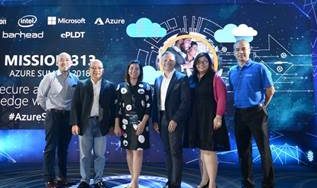
    (from L-R) Microsoft Philippines COO Christian Lim, James Indino – VP-IT of Philcare, Marian Lontoc – IT Sales Director – Crayon, Andres Valencia – Global VP of ISV and Verticals, Crayon, Dir Angel Magtalas – ICTSS, Dept of Budget and Management, and Microsoft Philippines Managing Director Hans Bayaborda.

    The first ever Azure Summit in the Philippines was given a warm Filipino welcome as it was attended by over 900+ IT/Data Pros delegates, eager to see how organizations are using technology to change the game. Microsoft also gave away 25 Azure certifications to enable even more organizations through the cloud.