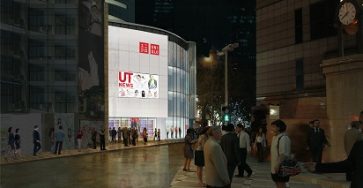
UNIQLO announces on March 3, 2013 that its newest global flagship store, the UNIQLO Lee Theatre Store, is set to open its doors to stylish and discerning Hong Kong shoppers on 26 April 2013. This impressive new store will span three floors and boast over 37500 ft2 of shopping space in the Lee Theatre, located in the centre of Causeway Bay’s fashionable shopping district.
UNIQLO first launched in Hong Kong in September 2005 and currently operates sixteen stores in the city. The brand enjoys a particularly strong presence in the local market thanks to consumers’ strong enthusiasm for UNIQLO’s exceptional quality at competitive prices. Situated in Causeway Bay, Hong Kong’s most esteemed fashion district, UNIQLO’s new global flagship store will showcase the latest and greatest from the brand’s basic wear culture. Shoppers will be able to experience a distinct and satisfying shopping journey at this impressive UNIQLO location.
As a brand, UNIQLO is dedicated to designing functional clothing that comes in a wide variety of selections, all of which feature exceptional quality and fresh styles. The Lee Theatre Store will serve as a giant leap forward for the brand in the region and will certainly benefit its continuous global growth.
One of the country’s reputable Chef, Lifestyle Columnist and Business Entrepreneur Ms. Stephanie Zubiri recently inked a contract of endorsement for Zinven International Corporation, the exclusive distributor of HUROM Slow Juicer in the Philippines. A woman of style and substance, Stephanie’s reputation complements the endorsement for HUROM Slow Juicer, on how it is to get the best, natural nutrition for maintaining the balance in your lifestyle.
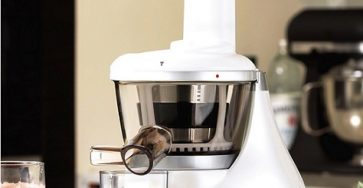
The new paradigm in juicers, HUROM Slow Juicer has the patented Low Speed Technology System. Unlike blenders and traditional juicers which rips the nutrients, HUROM Slow Juicer’s Low Speed Technology System allows slow and gentle pressing out of the juice, preserving most of the nutritious enzymes, minerals, vitamins and flavors alive and well.
HUROM Slow Juicer has continuous extraction system, operates on low-noise and is easy to clean and maintain. HUROM Slow Juicer is available at Rustans, The Landmark, S&R, Wilcon Builders and Shop TV.
Photo shows: (L) Cathy S. Dy, General Manager, ZInven International Corporation, and Ms. Stephanie Zubiri.
Like us on Facebook http://www.facebook.com/HuromPhilippines For Hurom Slow Juicer product inquiries, call 9268009.
As it symbolizes a lot of aspects of love, wine has become a common sight in romantic occasions, the most popular of which is Valentine’s. Whether given as a gift paired with chocolates and flowers or as a special drink for the dinner date, having a bottle of wine on Valentine’s sparks passion, romance, and love.
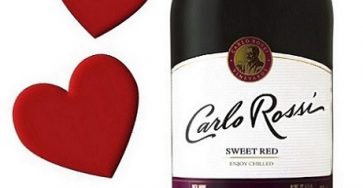
Of all the kinds of wine, sweet red wine is the most apt symbol of love. Its color expresses passion and its taste evokes enchantment, making it feel a lot like love. Akin to every sip of sweet red, love is full of surprises and delight. Such charm is experienced in every sip of Rossi Sweet Red.
Crafted from grapes grown in California’s sun-drenched vineyards, Rossi Sweet Red is bursting with flavor and aroma, creating a different kind of sweet. According to Von De Torres, Managing Director of Emperador Distillers, it is what a real sweet red wine should be.
“All the flavors of vanilla, bright cherry and wild raspberry come together in a deliciously sweet complement of fresh fruit and a velvety soft finish. This is real sweet red wine that suits Filipinos’ preference for sweet wine. ”
Every year, couples look forward to Valentine’s, thinking of creative ways to celebrate the special day. Crafting a different celebration from the years past has become a regular challenge. But with Rossi Sweet Red, a memorable Valentine’s is easy — it’s your perfect choice for every sweet moment of the Heart’s Month.
“Rossi Sweet Red is perfect for every sweet moment specially this month of love. Whether you are at home watching a movie or having a fancy dinner, popping a bottle of Rossi Sweet Red surely makes the moment unforgettable. Surprise your love more by serving a different kind of sweet, with a stem-less wine glass, some ice, and Rossi Sweet Red,” suggests De Torres.
‘On the rocks’ is said to be a cool way to enjoy this sweet red wine. The ice brings out the flavor and makes for a smoother finish. “It doesn’t compromise the taste and actually makes it even better. Even if the ice melts, the taste stays perfect – you can savor all the sweetness and real wine flavor,” she assures. Because of its flavor, Rossi Sweet Red can be easily paired with any kind of food. From popcorn and chips, to special home-made dinners, to medium-rare steak, the flavors of this sweet red wine complement the savor of these dishes.
Every relationship should be like good wine: the older it gets, the better it becomes. Having Rossi Sweet Red this month of love is perfect – rekindle your passion and let love grow.
Because “I love you” should go beyond words, spend a great time with that special someone and make sure to enjoy every special moment. In this Month of Hearts, perfect combination is you, me, and Rossi Sweet Red on the rocks – a different kind of sweet for a different kind of Valentine’s.
Reference: AMPR Publicity and Communications Inc. 706.1971
The 21st Century Slow Juicer- HUROM, will be featured in the forthcoming episodes of UNTV’s “Cook, Eat Right”. Known for making use of the world’s first patented low-speed technology, Hurom Slow Juicer maintains the nutrients and enzymes of fruits and vegetables- unlike with traditional juicers where high speed grinding destroys vitamins and nutrients and results in less juice yield. Hurom is also easy to clean, noise-free and durable.
Catch more of the exciting, healthy recipes by Hurom starting Feb 3, Sunday from 9:30am-10:30am at UNTV’s “Cook, Eat Right”. The Anak TV seal program is hosted by young and professional Chef REDJ Baron, (L) and well-known TV Actor/Nutritionist Mr. Ricardo Cepeda (R). “Cook Eat Right” airs every Sunday, from 9:30 -10:30 am. Please like us on facebook: www.facebook.com/HuromPhilippinesOfficial. Promo contest will be announced on the show.
UNIQLO’s “One Piece” UT line is finally coming to UNIQLO stores in the Philippines.
Starting January 18, 2013, UNIQLO’s “One Piece” UT, based on the popular Japanese animated series, will be available at the UNIQLO SM Mall of Asia and also at UNIQLO SM North EDSA The Block.
Retail price for the UNIQLO “One Piece” is P790.00
In line with this, exciting One Piece activities are also set at the SM Mall of Asia for One Piece fans in the Philippines. These activities are happening on January 18-20, 2013. Just buy a “One Piece” UT and this entitles you to a “meet-and-greet” and photo session opportunities with One Piece characters and mascots who will make surprise appearances.
The UNIQLO store at the SM Mall of Asia in Pasay City is open from 10 a.m. to 10 p.m. while the UNIQLO store at the 2nd floor of the SM City North EDSA The Block in Quezon City is open from 10 a.m. to 10 p.m. on weekends and 10:00 a.m. to 9:00 p.m. on weekdays.
For more information about UNIQLO and other FR brands, please visit www.uniqlo.com or www.fastretailing.com.
For media inquiries, please contact: Irish Santos-Lorenzo AMPR Publicity Inc. Tel: 632-706-1971
Gano iTouch Philippines, part of the worldwide presence of one of the established and leading direct selling companies in the industry of wellness, has been siring a persevering breed of professional networkers—highly successful at what they do, and raring to share their formula for success. One of these is its Ambassador Crown Diamond Director (ACDD) named Nathaniel “Nat” Falla, a former OFW (overseas Filipino worker) who attained financial stability the Gano way.
Nat Falla has worked so hard to have gotten to where he is now. After 12 years of hardships, he can confidently say that all the hard work and sacrifices had truly paid off. Now, it’s time to enjoy what he worked hard for all these years. It’s time to share his formula for success.
But what is success, and how does one attain it? There are a hundred and one answers to these questions, and among the best quoted answers came from the lips of Nat, a hardworking networker who rose from the ranks.
Success to Nat means never resting on one’s laurels. “One should not give up in the face of trials because it is normal to encounter these things on the road to success,” he shares. Nat’s one person who does not hold back in sharing his experiences and past struggles with those under him. In fact, he has not stopped supporting his colleagues and downlines. It is important for him to be able to impart to his downlines the lessons that he has learned in the business.
Nat believes that one can achieve success in multi-level marketing as long as one is truly determined. He follows three key virtues of success that kept him going all these years. Nat’s 3 Key Virtues of Success:
Stay Focused – Understand the business and learn it by heart. Love what you do. Don’t be distracted and don’t get sidetracked because you have a dream to achieve for yourself and for your loved ones.
Be Humble – Don’t put yourself on a pedestal just because you are ranked higher than your peers. Show to others that there is a natural process of climbing the ladder to success. Be generous and share with others the lessons and tips you have learned in your own journey.
Keep the Faith – Never forget that God exists and that He is always there for you. Thank Him for the success and even the trials that come your way.
Looking back, Nat remembers the discouragements and bad experiences he had when he was just starting. He was among those who would dream of being able to escape the world of debt. He was among many who wanted to fulfill their obligations in life. Now, he has finally reached what many only dream of: financial freedom. He heaved a sigh of relief that he has finally made it this far, saying “Wow grabe, sabi nga nila, eto na. Eto na ang napakasarap na parte ng business na ito.” (“Wow, this is amazing, as they say, this is it. This is what they call the sweetest part of this business.”)
One of GANOiTOUCH’S Ambassador Crown Diamond Director (ACDD) named Nathaniel “Nat” Falla, (left, top photo) a former OFW (overseas Filipino worker) attained financial stability the Gano way. He has worked his way up to where he is now. After years of facing life’s challenges, now he can confidently say that all the hard work and sacrifices had truly paid off. He is shown in photo with wife Evelyn (right). Nat Falla shares his success and gives tips to help his members down the line to achieve what he has reached.
Nat always keeps in mind that in this business, with his hard work he is not the only one who succeeds but he is also helping others get to where they are now. He is passionate in being an instrument to help others. The result is, like him, they, too, are enjoying the fruits of their labor.
Being an Ambassador Crown Diamond Director means enjoying what the company has promised, such as additional incentives besides the earnings received every month. He and his fellow ACDD now receive a 3% incentive from the total sales of the company. They enjoy a bonus payout every month.
Sandra Wee is one of the people that Nat inspired. Sandra described Nat as kind and very supportive to his downlines. She said that Nat is very generous in teaching and guiding others. And that he wants to see more people succeed in the company, “the more, the merrier”. Sandra is very grateful to Nat Falla for all the guidance and support he is giving to his peers. Her words of thanks, “Sir, I salute you, salamat sa iyong guidance, sa iyong walang sawang pag- supporta sa amin sa lahat ng aming mga kasama. At lahat ng achievements mo ay talagang pinaghirapan po.” (“Sir, I salute you, thank you for your guidance and unwavering support to me and my peers. All your achievements you have truly worked hard for.”)
Now a fellow ACDD, Billy Quiñones owes a great deal of gratitude to Nat. He started with Gano iTouch in January 2010. In a very short span of time, with Nat’s help, he became an ACDD. Billy shares that Nat is very dedicated to helping his downlines. “Isa ako sa mga taong tinulungan niya. Isa ako sa mga taong nagbago ang buhay dahil sa kanyang mga payo na ibinigay sa akin, kaya ako ay talagang masasabi natin na isa sa mga tao na nakakuha ng mga pangarap dito sa Gano itouch” (“I’m one of those people he helped. I’m one of those people who have a changed life now because of his advice. I can be considered as one of the people who have flourished with Gano iTouch.”)
Nat’s ultimate advice to those aspiring to be like him, “Kapag hindi mo ginawa ngayon may ibang gagawan d’yan. Kaya kung ako sa iyo, ngayon pa lang, umpisahan mo na. Umpisahan mo, pangarapin mo na maging Ambassador Crown Diamond Director. Kung hindi, iba ang gagawa niyan.” (“If you don’t do it, others will. So if I were you, start now. Set out and aspire to be an Ambassador Crown Diamond Director. If not, others will do it ahead of you.”)
A Gano iTouch officer dovetailed to Nat’s inspired sharing: “Gano’s ‘once-in-a-lifetime life-changing experience’ should not miss. Our investment offer just might be the road that can lead you to success.”
Read more about Gano iTouch corporate and product information by visiting their websites, www.ganoitouch.com and, www.ganoexcel.com with contact numbers, (02) 7063152, 7063137.
The Villar Foundation is continuing its partnership with DZRH’s ‘Makabagong Bayanihan Manila Bay Clean Up.” Last year, MISIS Cynthia Villar, Managing Director of the foundation, inked a Memorandum of Agreement (MoA) with Manila Broadcasting Company (MBC) represented by radio station DZRH in its Manila Bay Clean up drive.
“The Villar Foundation together with students and other volunteers conduct weekly clean up also. This clean up with DZRH is in addition to those. The more partners we work with, the better it will be for the environment,” said Villar. The last clean up of the foundation with DZRH was on August 25 last year.
The clean up covers the entire stretch of Manila Bay. The Villar Foundation will take charge of the Las Piñas-Parañaque Critical Habitat & Eco-Tourism Area (LPPCHEA), the same site where they do their regular clean up.
Also known as the Freedom Island, LPPCHRA is accessible from the Coastal Road. The target area will be the open beach areas facing out to the Manila Bay.
“We are pleased with the improvement that we are seeing at LPPCHEA. The number of truckloads of garbage that we are getting here has considerably decreased and we attribute that to our consistent clean up efforts,” cited Villar.
The Villar Foundation will be joined by at least 1,000 volunteers from schools, barangays, NGOs, socio-civic organizations, and other private individuals and groups.
According to her, the days following a typhoon, are usually the period when most garbages have been collected from the area since wastes from as far away as Cavite are being dragged by the storm surge in the area. And the garbage takes weeks or even more than a month to be collected.
“Clean up plays a big factor but in the long run, we really need to discipline the people and make them aware of the consequences of their indiscriminate throwing and dumping of garbage. The immense flooding that we have experienced in recent years should send a clear signal already of the environmental degradation of Manila Bay and other waterways in our country,” added Villar.
As per the MoA, MBC or DZRH will lead the Manila Bay Cleanup project along the coastline of Manila Bay from Navotas to Bacoor, Cavite “to help promote any and all efforts in relation to the promotion of sustainable ecosystem of Manila Bay”.
The clean up activities will take place from 7am to 11am onwards and the garbage collected will be turned over to appropriate government solid waste collector in the area.
“The Villar Foundation and DZRH agree that this is a joint cooperative undertaking, but more importantly, it is a major public service activity that shall help contribute to the promotion of a livable, healthier and ecological sustainable Manila Bay,” cited the MoA.
Villar has been vocal about her strong support for the protection of Manila Bay. To recall on March 16 last year, she filed a petition for Writ of Kalikasan against a Manila Bay reclamation project that is seen to cause catastrophic flooding in the area. The Supreme Court granted her petition and issued a Writ of Kalikasan on April 10.
“We will continue to support campaigns or drives to protect Manila Bay and neighboring areas including LPPCHEA. Moreover, we will continue to oppose projects that will cause damage and destruction to the bay and nearby cities,” cited Villar. If carried out, the Manila Bay reclamation project that Villar is opposing is seen to cause severe flooding in numerous barangays — 11 in Parañaque, 37 in Bacoor and 17 in Las Piñas.
For more details about the projects and programs of the Villar Foundation, please visit www.villarfoundation.org or follow www.twitter.com/VFoundationInc.
UNIQLO, a global apparel brand known for its philosophy of not following trends yet allowing people to express themselves through its unique clothing line, announced recently the names of the winners of its recent “Wish Tree” holiday treat for its loyal shoppers.
The complete list of winners of the UNIQLO “Wish Tree” holiday promo can now be viewed at UNIQLO Philippines’ Facebook page, www.facebook.com/uniqlo.ph.
The promo started last November 30 and allowed shoppers at UNIQLO’s two stores in the Philippines—SM Mall of Asia and SM City North EDSA—to choose their desired “wish list” and hang them at the specially-designed UNIQLO tree located at each store.
To win their wish list, shoppers only need to purchase any UNIQLO item such as the Ultra Light Down, Heattech, Heattech Micro Fleece or Micro Fleece products.
The special “wish list” created by UNIQLO for the “Wish Tree” campaign promo includes a free buffet meal for a family of 4 at Vikings Buffet Restaurant located at SM Mall of Asia, IMAX movie tickets, and a shopping spree at UNIQLO worth P5,000 for a family of 4 people.
A total of Ten (10) winners of Vikings family buffet meal and IMAX movie tickets were drawn from both the SM Mall of Asia and SM City North EDSA stores while 8 winners were drawn from both stores who will win the UNIQLO shopping spree.
Present during the raffle draw were Assistant Marketing Manager of Fast Retailing Philippines, Inc., Ms. Jasmin Cruz; Trade and Industry Development Analyst of the Department of Trade and Industry-National Capital Region (DTI-NCR), Mr. Jheric Saracho, who supervised the draw, and Mr. Tanaka Takatoshi, UNIQLO SM Mall of Asia Store Manager.
Photo shows (from left): Jasmin Cruz, Assistant Marketing Manager of Fast Retailing Philippines, Inc.; DTI representative Jheric Saracho; and UNIQLO SM Mall of Asia Store Manager Tanaka Takatoshi during the draw held at the UNIQLO SM Mall of Asia.
UNIQLO first store in the Philippines is located at the 2nd Floor, Main Mall of SM Mall of Asia, Pasay City, while the second store is located at the SM City North EDSA The Block in Quezon City. UNIQLO SM Mall of Asia store is open from 10 a.m. to 10 p.m. while UNIQLO SM City North EDSA The Block is open from 10 a.m. to 10 p.m. on weekends and 10 a.m. to 9 p.m. on weekdays.
Per DTI-NCR Permit No. 9111 Series of 2012.
For more about UNIQLO, visit www.uniqlo.com.ph or the UNIQLO Philippines Facebook page at www.facebook.com/uniqlo.ph.
About UNIQLO and Fast Retailing
UNIQLO is a brand of Fast Retailing Co. (FR), a leading global Japanese retail holding company that designs, manufactures and sells clothing under six main brands: Comptoir des Cotonniers, g.u., Helmut Lang, Princesse tam.tam, Theory, and UNIQLO. With global sales of 928 billion yen for the 2012 fiscal year ending August 31, 2012, FR is the world’s fourth largest apparel retail company and UNIQLO is Japan’s leading specialty retailer.
Today UNIQLO has more than 1,100 stores in 13 markets, namely Japan, China, France, Hong Kong, Korea, Malaysia, Philippines, Russia, Singapore, Taiwan, Thailand, U.K. and U.S. UNIQLO continues to open large-scale stores in some of the world’s most important cities and locations, as part of its ongoing efforts to solidify its status as a truly global brand. UNIQLO operates an integrated business model under which it designs, manufactures, markets and sells high-quality, casual apparel in line with its ‘Made for All’ philosophy.
With a corporate statement committed to changing clothes, changing conventional wisdom and change the world, FR is dedicated to creating great clothing with new and unique value to enrich the lives of people everywhere.
For more information about UNIQLO and other FR brands, please visit www.uniqlo.com or www.fastretailing.com.
Reference:
For media inquiries, please contact:
Irish Santos-Lorenzo
AMPR Publicity Inc.
Tel: 632-706-1971