Tag: Lamudi

  • HLURB Partners With LAMUDI, Aims To Increase Transparency

    HLURB Partners With LAMUDI, Aims To Increase Transparency

    HLURB and property website Lamudi join forces to push for transparency in real estate this 2018.

    The Housing and Land Use Regulatory Board (HLURB) and online real estate marketplace Lamudi Philippines come together for a partnership aimed at improving real estate practices in the country and encouraging transparency in the industry.

    A ceremonial signing was held in Makati on January 24, and was attended by HLURB Chief Executive Officer and Commissioner Atty. Lloyd Christopher A. Lao, HLURB Commissioner Atty. Melzar P. Galicia, Lamudi Philippines Managing Director and CEO Bhavna Suresh, and Lamudi Philippines Director for Brand and Communication Ken Lerona.

    A more visible HLURB

    Under the one-year partnership, readers of the Lamudi: Real Estate Magazine should expect thought leadership pieces from none other than Atty. Lao, with topics ranging from the rights of buyers of real estate, to the verification of brokers, projects, and developers.

    HLURB will also use the Lamudi platform to address frequently asked questions, including those about options for financing, procedures and remedies afforded to aggrieved buyers and developers, and even who to approach or look for when paying a visit to their office.

    Consistent with its aim to increase transparency in the industry, HLURB also has revamped and upgraded its website, which now comes with a user-friendly online inquiry feature. This shall be integrated in the Lamudi website which receives around 1.5M visits per month, so property seekers will find it easy and hassle-free to search for registered brokers, as well as projects that have been issued License to Sell numbers.

    All of these form part of HLURB’s efforts to keep up with the times by embracing digital, and to be more visible to the public and serve them better.

    Transparency through technology

    In the 2016 Global Real Estate Transparency Index (GRETI) by JLL, a leading real estate and investment management firm, the Philippines ranked 46th out of 109 countries and fell under the semi-transparent market. This tier, according to JLL, is where the most rapid progress in real estate transparency can be found.

    Rising expectations from citizens as well as technological advancements serve as drivers for improving real estate transparency. Innovations in the prop-tech industry, JLL says, “offer the opportunity for a quantum leap in data access to support a rising culture of ‘open data.’”

    Aside from high-quality accessible market data, ingredients of a transparent real estate market include: strong corporate governance, stringent regulatory enforcement, high ethical standards, and international best practice.

    For Atty. Lao, responsible real estate practice is the key to the sustainability of the housing sector. He also maintained that although HLURB is a regulatory body, they are very much willing to help and cooperate with those under their jurisdiction.

    Ms. Suresh, for her part, shared that Lamudi is one with HLURB in its aim to push for transparency as this shall open many doors in the future. As seen in JLL’s 2016 GRETI, higher real estate transparency is linked to new business and investment, and even plays a role in community well-being and inclusiveness.

    “As the authority in the prop-tech industry in the country, Lamudi is thrilled to be partnering with HLURB for this,” she added. “We are here to support HLURB, and look forward to more partnerships like this one.”

  • Infographic: What will your house look like in 10 years?

    Infographic: What will your house look like in 10 years?

    Smart home technology gaining traction in emerging markets.

    From the moment you wake up in the morning, the house reacts to your needs. The automated lights turn on slowly to wake you up at a scheduled time. From the comfort of your bed, you switch on your coffee machine so your morning cup is fresh and hot by the time you arrive downstairs for breakfast.

    You enter the bathroom and stand in front of your intelligent mirror. The mirror’s reflective surface springs to life with all the information you need to kick-start your day, including the weather and the morning’s top news. The device also plays your favourite music so you are always guaranteed to start the day in a good mood.

    After getting ready, you go to the kitchen for breakfast where your smart refrigerator alerts you that you are nearly out of milk. With the tap of a finger on the fridge’s touch screen, you can restock your fridge and order all your groceries for the week through an online store.

    The infiltration of technology to assist with these small daily tasks may just be the beginning. The fully-connected home is designed to boost energy efficiency, protect against intruders and even monitor your family’s health. With the rapid growth in the home automation industry, so-called smart home systems have already hit the mainstream – although the high cost of such devices keeps them out of reach for many. But there are signs that this is about to change.

    This year, revenue from the smart home market is expected to exceed $US48 billion, according to recent Strategy Analytics forecasts. By 2019, the sector’s market revenue will increase to $115 billion. By the end of this decade, nearly 12 percent of global households will have at least one type of smart system installed. In fact, Tony Fadell, the CEO of Nest – the connected homes product company that was bought by Google earlier this year – has predicted that within a decade, every electrical device in your home will be connected to the internet.

    While the smart home market is quickly gaining traction in developed countries, there are now signs that the trend is spreading to the emerging markets. Consumers in the Asia Pacific region has been particularly keen to embrace the new connected technologies, as tech companies begin to acknowledge the opportunities in this sector.

    Connected home firm Icontrol Networks expanded to Asia in October, with the company partnering with a Japanese cable provider to offer a smart home system that consumers can install themselves. This month, Chinese electronics firm Xiaomi invested 1.26 billion yuan (about $200 million) in home appliance company Midea, as it looks to expand into the smart homes market.

    Lamudi’s Global Co-Founder and Managing Director, Kian Moini, said: “The smart home concept is all about making living much more comfortable, as well as more efficient, which means that the concept has universal appeal. As prices come down in the coming years and people worldwide begin to focus more on issues such as energy saving, we expect to see this trend sweep the emerging markets as well.”

    REFERENCE & MEDIA CONTACT

    Rodel Ambas
    Head of Content and PR, Lamudi Philippines
    Email: rodel.ambas@lamudi.com.ph
    Phone: +63 917 3015127

  • The Top 10 Haunted Places Around The World

    The Top 10 Haunted Places Around The World

    Prepare to be scared this Halloween

    From presidential palaces in Colombia to film centers in the Philippines, the most normal places are not always as they seem.In honor of Halloween, global real estate marketplace Lamudi guides you through the world’s top 10 haunted properties.

    1. Lawang Sewu, Indonesia

    A landmark of Semarang, Central Java, Lawang Sewu (which translates as “Thousand Doors”) is a former Dutch colonial era building, rumored to be haunted by headless ghosts. This large, deserted structure is open to the public 24 hours a day, so if you’re looking for a scare this Halloween, why not take a midnight visit?

    Image via Shutterstoc

    2. Manila Film Center, the Philippines

    A national building in Pasay City, Metro Manila, the Manila Film Center was built in 1981. During construction, on November 17th 1981, the construction collapsed, burying over 150 workers in quick-drying cement. It was believed that some of these workers were entombed alive in the concrete. However, records show that all bodies were retrieved from the site. Ghostlore says that those who died roam the film center to this day, making mysterious sounds.

    © Mike Gonzalez (TheCoffee) via Wikimedia Comm

    3. Mohatta Palace, Pakistan

    Located in Karachi, the Mohatta Palace is an elaborate, pink, and yellow stone building, consisting of 18,500 square yards. Legend has it that there is a superhuman presence at the palace, with guides believing the building is haunted. While on guard, workers are rumored to have felt the presence of spirits, and experienced objects moving without human touch.

    © Shahid A. Siddiqi via Wikimedia Commons

    4. The Tower of London, United Kingdom

    The former prison of some of England’s most renowned historical figures, the Tower of London is one of the most haunted places in the UK. Reportedly, the headless ghost of Anne Boleyn, one of the wives of King Henry VIII, still resides within the tower, following her execution in 1536. The oldest part of the building, the White Tower, is also home to the White Lady, who is said to have been seen standing at the window, waving to children in the opposite building.

    Image via Shutterstock

    5. Bhangarh Fort, India

    Legend has it that a black magic wizard named Singhiya, in love with the Princess of Bhangarh, cursed the fort with the death of all who lived there, following the Princess’s rejection of his love. The year following the curse, both war and famine broke out, leading to the death of the Princess. Tourists are unable to enter the building after sunset and before sunrise, so not to disturb the ghosts of Singhiya and other locals who haunt Bhangarh Fort.

    © Amlan Mathur via Shutterstock

    6. The Island of the Dolls, Mexico

    Xochimilco, a district just south of Mexico City, is home to a number of artificial islands and canals, one of which was owned by a caretaker named Julian Santana Barrera. When Barrera discovered the body of a young girl in one of the canals near his island, he began to collect dolls to hang around the island to ward off any evil spirits, and to make the young girl happy. The island, known as Isla de las Munecas (Island of the Dolls), is now visited by thousands of tourists a year, who bring dolls to carry on Barrera’s work.

    © Cordella Person via Flickr

    7. Eltz Castle, Germany

    A medieval castle hidden away in the hills of Western Germany, Eltz Castle is one of just a few haunted castles in Germany. Allegedly, ghosts of medieval knights roam the grounds of the great 12th century castle, which has been owned—and haunted—by the same family for 33 generations. One of the more famous ghosts, Agnes, apparently died defending her honor, and her specter remains in the castle to this day.

    Image via Shutterstock

    8. Edinburgh Castle, United Kingdom

    The vaults of Edinburgh Castle are famous for the unsettling noises and movements that come from within. Constructed in the 15th century, the underground maze makes up 120 rooms, which were used to quarantine and entomb victims of the plague. Visitors can expect to see Lady Janet Douglas, who was burned at the stake following accusations of witchcraft, the spirit of a headless drummer, dogs wandering around the cemetery, and numerous prisoners roaming the labyrinth.

    Image via Shutterstock

    9. Marroquín Castle, Colombia

    This stunning mansion, built in 1904 near the Colombian city of Chía, was an asylum for several years. Allegedly, the castle is haunted by the ghost of a nun who once worked there, numerous patients who met their demise in the asylum, and “La Zancona,” a mysterious woman dressed in all black, who roams the building.

    © Brian Daniel Leon Machado via Wikimedia Commons

    10. Port Arthur, Australia

    Port Arthur is allegedly the most haunted place in Tasmania. During its almost 50-year history as a convict settlement, hundreds of men died at Port Arthur. Furthermore, the massacre in 1006 led to the death of 35 men, women and children. Tourists visit the port with the hope of catching a glimpse of the Lady in Blue—the crying ghost of a young woman, who reportedly died in childbirth—as well as over 2,000 ghosts that have apparently been seen over the past 20 years.

    Image via Shutterstock

    ABOUT LAMUDI

    Launched in 2013, Lamudi is a global property portal focusing exclusively on emerging markets. The fast-growing platform is currently available in 28 countries in Asia, the Middle East, Africa and Latin America, with more than 600,000 real estate listings across its global network. The leading real estate marketplace offers sellers, buyers, landlords and renters a secure and easy-to-use platform to find or list properties online. For more information, please visit http://www.lamudi.com.ph

    Visit Lamudi Philippines on Facebook, Twitter, Google+ and LinkedIn.

    REFERENCE & MEDIA CONTACT

    Rodel Ambas

    Content Editor, Lamudi Philippines

    Email: rodel.ambas@lamudi.com.ph

    Phone: +63 917 3015127

  • Lamudi App Now Available On iOS

    Lamudi App Now Available On iOS

    Global property portal makes mobile app available for Apple users.

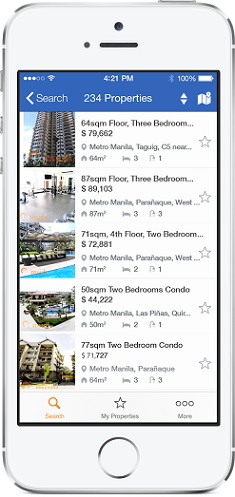
    Leading property portal Lamudi today, July 24, 2014, launched its iOS app in the Philippines as the company seeks to capture the growing smartphone market in the country. The launch of Lamudi’s iOS app follows the successful roll out of the company’s Android app in the Philippines last month. The app, Lamudi: Real Estate for Sale and Rent, is now available on
    iOS devices in 16 countries across Asia, the Middle East, Africa and Latin America.

    Lamudi’s Co-Founder and Managing Director, Antonius Salis, said: “The launch of Lamudi’s Android app last month was a great success. We saw huge demand from our customers in the Philippines and beyond, so we decided to keep the momentum going by moving our services on
    to iOS straight away.”

    The Lamudi app provides the perfect platform for house-hunters to rent, buy or sell property on the go. Both the iOS and Android apps are designed to meet the growing demand for mobile internet services in the emerging markets. In the Philippines iOS is the second most popular mobile operating system, with Apple devices accounting for nearly 25% of the local smartphone market, according to figures from Statcounter.

    A key feature of the Lamudi app is its customized search function, which allows users to easily filter results by country. The app also provides match alerts, with users receiving a notification as soon as a property that suits their needs hits the market. House-hunters can also bookmark their favorite properties to access at any time and on any device.

    Jacqueline van den Ende, Co-Founder and Managing Director of Lamudi Philippines, said: “The new iOS app puts thousands of global property listings from 16 countries in your pocket. It means your dream home is now just a tap away.”

    All listings on the app feature high-quality photo galleries, detailed property information, maps, and multiple contact details for property owners or agents. Users can also share their favorite properties with family and friends via Facebook, Twitter or email.

    The Lamudi iOS app is now available in Bangladesh, Pakistan, Indonesia, the Philippines, Peru, Mexico, Colombia, Morocco, Ghana, Kenya, Nigeria, Tunisia, Uganda, Ivory Coast, Tanzania and Zimbabwe.

    Lamudi.com.ph, which started operations in January this year, has over 57,000 residential and commercial property listings from developers and PRC-licensed brokers. The company has active offices in Manila, Cebu and Davao.

    Download the Lamudi iOS app in the App Store today!

    ABOUT LAMUDI

    Launched in 2013, Lamudi is a global property portal focusing exclusively on emerging markets.

    The fast-growing platform is currently available in 28 countries in Asia, the Middle East, Africa and Latin America, with more than 500,000 real estate listings across its global network. The leading real estate marketplace offers sellers, buyers, landlords and renters a secure and easyto-use platform to find or list properties online.

    Visit Lamudi Philippines on Facebook, Twitter, Google+ and LinkedIn.

    REFERENCE AND MEDIA CONTACT:

    Elsie Cansino
    PR Manager, Lamudi Philippines
    Email: elsie.cansino@lamudi.com.ph
    Phone: +63 927 3313501

    NOTES: Top 8 Mobile Operating Systems in the Philippines: Statcounter, June 2013-14 figures

  • Christmas Decorations Around The World

    Take a world tour of how different countries prepare for Christmas.

    Trees covered in tinsel and baubles. Stockings hanging from the fireplace. Elaborate outdoor light displays popping up all over the neighborhood.

    Think of decorating your home for Christmas and at least one of these traditions will likely spring to mind. Yet all over the world, countries celebrating Christmas have their own set of customs for decorating their homes for the holidays.

    In Mexico, nativity-themed Christmas decorations are carved from radishes. In chilly Antarctica, fish heads hang in doorways to replace mistletoe. And in Ghana, palm trees decorated with candles replace traditional Christmas trees to suit the tropical climate.

    As the festive season approaches, global real estate portal Lamudi takes you on a tour of Christmas decorations to be found in houses the world over.

    Africa

    In Africa, Christmas dinners after the church ceremony are prepared on tables out the front of homes, inviting people’s family and close friends to share a meal together. For this reason, outdoor decorations are more important than the interior. You may see fake snow decorating store fronts in Nairobi, oil palms loaded with bells in Liberia, or palm trees laden with candles in Ghana.

    In Zimbabwe, Christmas is far from being a casual celebration. It is tradition for people to set up their biggest speakers in front of their house and play their favourite music as loud as they can. But don’t expect only Christmas tunes. You will likely hear everything from the latest pop tunes to more traditional African favourites.

    Latin America

    Christmas is the most important holiday of the year for most countries in Latin America. Cities are loaded with spectacular, colourful decorations, including lots of fairy lights. In Colombia, December 7 is Dia De Las Velitas (Day of the Little Candles) where the night is spent decorating all public spaces with paper lanterns and candles. Each household lights approximately 100 candles and places them outside their home in honour of the Virgin Mary.

    On December 23, just before Christmas, farming folk in Mexico celebrate Noche de rábanos, or the Festival of the Radishes. They carve the vegetables into human figures, including those from nativity scenes. On Christmas Day, children can be found in Mexican living rooms attempting to and break apart decorated clay piñata using a stick – while blindfolded. Inside are small presents and sweets.

    Asia

    Because fir trees are not common in India, mango trees are often decorated instead. In addition, the whole house is decorated with mango leaves in order to brighten up homes. Large star-shaped paper lanterns are also very popular.

    In the Philippines cities shine in colorful lights during Christmas. People decorate their homes with buntings, candles, and wreaths. The most popular decoration in the Philippines is parol (pah-role). This is a bamboo pole with a bright star on top. The pole represents the guiding star of Bethlehem. People also put numerous Christmas cards in the living room for family and friends.

    But one of the most original Christmas traditions comes from Antarctica. With mistletoe being in seriously short supply, residents will often hang up a fish head instead.

    ABOUT LAMUDI

    Launched in 2013, Lamudi is a global property portal focusing exclusively on emerging markets. The fast-growing platform is currently available in 28 countries in Asia, the Middle East, Africa and Latin America, with more than 750,000 real estate listings across its global network. The leading real estate marketplace offers sellers, buyers, landlords and renters a secure and easy-to-use platform to find or list properties online. For more information, please visit http://www.lamudi.com.ph

    Visit Lamudi Philippines on Facebook, Twitter, Google+ and LinkedIn.

    ABOUT ASIA PACIFIC INTERNET GROUP

    Asia Pacific Internet Group (APACIG) is a joint venture of Rocket Internet and Ooredoo. The group’s network consists of 11 e-commerce and online marketplace companies, operating across 15 countries. Since it was founded in 2014, APACIG has become the leading online platform in Asia, building top internet companies in the region. For more information, please visit www.asiapacificinternetgroup.com

    REFERENCE & MEDIA CONTACT

    Rodel Ambas
    Content Editor, Lamudi Philippines
    Email: rodel.ambas@lamudi.com.ph
    Phone: +63 917 3015127