Tag: DOST

  • DOST – NCR FoodBitz Webinar on Sanitation Standard Operating Procedures (SSOP)

    DOST – NCR FoodBitz Webinar on Sanitation Standard Operating Procedures (SSOP)

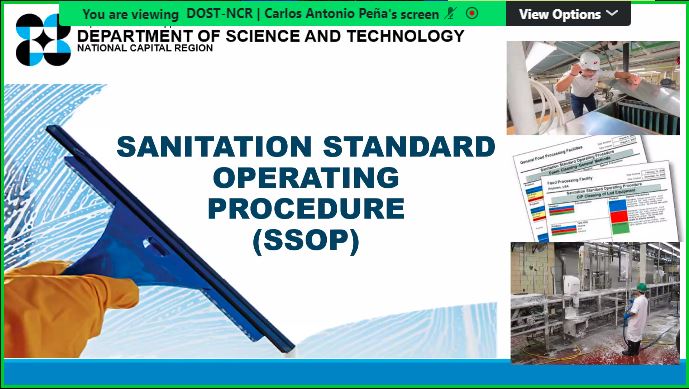
    Department of Science and Technology (DOST) – National Capital Region (NCR) has conducted a FoodBitz Webinar on Basics of Sanitation Standard Operating Procedures (SSOP) on February 11, 2025, Thursday, 9:00 AM to 12:00 PM., Virtual via Zoom Teleconference, with Resource Speaker, Mr. Carlos Antonio M. Pena, PFT, Science Research Specialist II, DOST-National Capital Region.

    I participated the DOST-NCR (Foodbitz Webinar) to gain insights and knowledge about the Basics of Sanitation Standard Operating Procedure (SSOP).

    The SSOP Learning Objectives are as follows:

    1. Understand basic principles of cleaning and sanitation.
    2. Appreciate the role of SSOP in food safety management systems.
    3. Enumerate sanitation controls.
    4. Draft a sample SSOP and SSOP plan.
    5. Identify and understand SSOP components.

    The Topic Outline includes:

    I. SSOP in food safety management system.

    II. Basic principles in cleaning and sanitation.

    III. Sanitation controls.

    IV. SSOP control checks and verification.

    V. SSOP development and SSOP plan.

    Sanitation Standard Operating Procedure (SSOP) is a detailed written procedures that describe cleaning and sanitation procedures and practices that an establishment develops and implements to prevent direct contamination or adulteration of products (USDA, 2023).

    In the webinar, I’ve learned the importance of cleaning and sanitizing in Food Establishments. Cleaning removes visible contamination such as food waste, dirt and grease from a surface. In sanitizing, Sanitation kills microorganisms, thereby reducing the numbers of microorganisms present on a surface.

    The DOST-NCR issued a Certificate of Participation for participating in “Sanitation Standard Operating Procedures” conducted on February 11, 2025 via Zoom Videoconferencing Application.

    #OneDOST4U #DOST #DOSTNCR #BagongPilipinas
  • Make No Room for Online Pirated Content:Protect Your Data, Report Suspicious Websites, Buy Original

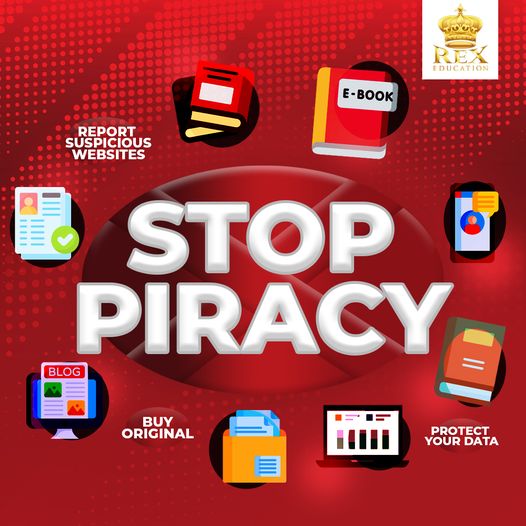
    Make No Room for Online Pirated Content:Protect Your Data, Report Suspicious Websites, Buy Original

    As we gear up for another school year, we face piracy threats with online publications at our fingertips. Books and other learning resources are becoming increasingly accessible, influencing how we study and learn. How safe are our learners, teachers, schools, publishers, and institutions in this environment? The recent cyberattack on the Department of Science and Technology (DOST) reveals the serious risks we face.

    On April 2, 2024 local hackers breached the DOST network, compromising two terabytes of data, including personal information of employees and research plans, designs, and schematics. This incident underscores the vulnerability of online platforms to data breaches, particularly when cybersecurity measures are not regularly maintained, monitored, updated, and enhanced.

    Protecting our online identity, fighting piracy, and supporting copyrighted content are crucial. Individually, we can secure online learning environments by teaching students to safeguard their personal data. This includes securing devices, avoiding public Wi-Fi, using strong passwords, enabling two-factor authentication, and accessing only licensed learning management systems. Schools can configure desktops and laptops to prevent downloading certain file formats, especially scanned PDFs of textbooks. Learners and school personnel should practice these precautions at home and report suspicious websites.

    Beyond data security and piracy risks, there is an important ethical aspect. Using pirated content infringes on copyright, undermines the hard work of content creators, jeopardizes their livelihood, and diminishes the recognition of their creativity and original work. Buying original content from legitimate sources shows respect for intellectual property rights, promotes integrity, and supports content creators.

    Moreover, opting for original content benefits users, given the rigorous book development processes that help ensure high-quality, accurate information. By sourcing textbooks from legitimate providers, we can contribute to the fight against piracy, and at the same time, secure better learning experiences.

    In addition to individual efforts, the government must advocate for and support content creators and book developers. Stronger anti-piracy laws and rigorous enforcement are essential, and public support and vigilance are crucial.

    We must unite in this fight—society needs to stand together against piracy and uphold integrity in education.

    As we start this new academic year, let us commit to being cybersafe and ethical in our use of online content. We can make smart, ethical choices. Say NO to piracy!

    In my opinion, it is important to coordinate with the authorized government or private agencies with regards to protection of property rights and anti-piracy in general.

    For a comprehensive lineup of legitimate educational resources, browse Rex Education’s 2024 Higher Education Catalog [here](https://online.flippingbook.com/view/956156329/2/).

    Reference:

    Richard C. Mamuyac