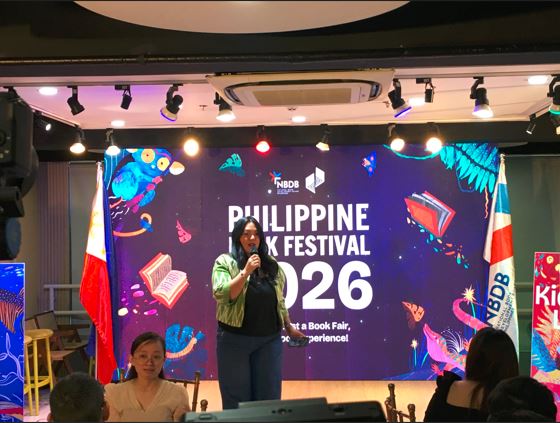
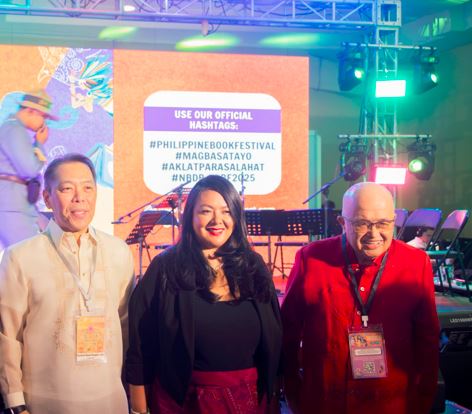
National Book Development Board (NBDB)’s Philippine Book Festival (PBF) 2026 Media Launch was held on February 26, 2026 at JRich Corporate Center, 16 Sto. Domingo Ave, Quezon City, 1114 Metro Manila,
During the event, Charisse Aquino-Tugade, Executive Director, NBDB, has shared an opening message regarding the PBF 2026. She is someone who deeply believes in the power of Filipino stories. She is not just a public servant, but as a storyteller, a mother, and a reader who has seen, firsthand, what books can do to a life.
She mentioned that the Philippine Book Festival is a marketplace – and we must celebrate that Authors deserve royalties. Illustrators deserve fair compensation. Editors, designers, printers, and booksellers deserve recognition and livelihoods. When books move, the industry thrives. And when the industry thrives, new voices get the chance to rise.
PBF is more than a marketplace. It is a third place – and in a world where most of our interactions are filtered through screens, where the boundaries between work, home, and school have all but dissolved, we all need a place where we can gather freely, without expectation or agenda. At PBF, you will find spaces for conversation, for creation, for curiosity.
PBF 2026 runs from March 12 to 15, 2026 at the Megatrade Hall, SM Megamall, in Mandaluyong City. FREE Entrance for ALL.
The Philippine Book Festival (PBF) is the country’s only book festival dedicated exclusively to Filipino-authored and published works. Powered by the National Book Development Board (NBDB), it brings together thousands of Filipino books, educational materials, and creative works in a single space for culture, learning, and conversation—and, more than a marketplace, a shared third place for readers, writers, teachers, illustrators, publishers, students, families, and literary enthusiasts, all under one roof.
Since its launch in 2023, the PBF has steadily grown in reach and scale across its first three editions. PBF 2026 runs from March 12 to 15, 2026 at the Megatrade Hall, SM Megamall, in Mandaluyong City.
Into the Gubat
This year’s PBF gathers under the theme Gubat ng Karunungan—The Rainforest of Knowledge. A gubat is alive, layered, and interconnected, and our literary ecosystem is no different. Featured as the festival’s four signature realms, each one represents a distinct corner of Philippine literature and learning: different audiences, different genres—one forest, thriving and alive.
Kid Lit is built for young readers, featuring picture books, learning materials, and titles that nurture a lifelong love of stories.
Komiks brings the universe of Filipino comics to life, honoring the legends of the form while spotlighting emerging visual storytellers.
Booktopia is a meeting ground for the many voices shaping the Filipino literary imagination—fiction, nonfiction, poetry, essays, and more.
Aral Aklat is dedicated to learning, featuring textbooks, teaching guides, and educational resources for classrooms, teachers, and library hubs across the country.
The Philippines is a nation of many languages, many regions, many voices—from Luzon to Mindanao, from the city streets to rural barangays, from fantasy novels to research publications. Every story strengthens this ecosystem. Maglakad. Maglibot. Maligaw. Every reader is an explorer, every page a forest.
Creative Corners of PBF
Alongside its four realms, the PBF stages exhibitions that connect the literary with contemporary creativity—from rare historical texts to art installations. Past editions have featured:
The Rare Books Collection from the National Library of the Philippines, including facsimiles of Noli Me Tangere and El Filibusterismo.
The Ang INK art installation, featuring the creative works of children’s book illustrators
The History of Komiks by Randy Valiente
Mundo ng Trese by Kajo Baldisimo
NCCA School of Living Traditions
NCCA-PVAS art installation and exhibition
For this year, five activation spaces complete the festival experience:
Lugar Lagdaan is your go-to spot for book signings. Meet the people behind the stories you love. Bahay Ilustrador is where illustrators, comic artists, and graphic storytellers show how images speak louder than words. Gubat ng Karunungan is a forest of learning, workshops, and masterclasses for curious minds of all ages. Fiesta Stage is the main stage, the heartbeat of PBF, where grand performances and epic panels unfold. Umpukan is the chill zone for intimate talks and idea-sharing sessions where conversations flow freely.
Together, these creative corners add new layers of visual and cultural depth to the PBF.
The Audience Pulse
From 2023 to 2025, the PBF drew more than 120,000 visitors and, through its partnership with the Department of Education (DepEd), helped generate PHP 946 million in institutional book sales in 2024 alone. Beyond retail, the festival has reshaped how books reach classrooms: through a coordinated review process between DepEd and the NBDB, regions can now identify and acquire books that reflect their local contexts and students’ needs.
The Vision of PBF
The PBF was launched as a national effort to improve access to quality, affordable Filipino-authored books, addressing long-standing gaps in distribution for both retail and institutional buyers. At the festival’s opening, welcome remarks from DepEd Secretary Juan Edgardo Sonny” Angara and NBDB Executive Director Charisse Aquino-Tugade will set the tone for discussions that will shape the future of educational resources in the country.
The PBF Experience
PBF 2026 brings together the full spectrum of Philippine literary life. The writers whose pages many of us grew up with—Ricky Lee, Virgilio Almario, Ambeth Ocampo—will be on hand alongside trade-book favorites Jonaxx and Ron Canimo, kidlit masters Eugene Evasco and Luis Gatmaitan, and komiks legends Manix Abrera and Pol Medina. Viral reads, poetry, pop fiction, indie zines, and award-winning titles: every kind of reader finds their people here.
Honoring Filipino Stories
On March 14, the Fiesta Stage will host the 43rd National Book Awards (NBA)—honoring the authors,illustrators, editors, translators, and publishers whose work has shaped and sustained Philippine literature. It is the festival’s day set aside entirely for the recognition of excellence and affirmation of the strength, creativity, and diversity of Filipino storytelling today.
The Philippine Book Festival is more than a gathering of books. It is a gathering of the nation’s voices—where writers meet readers, teachers meet students, and communities come together around stories that are unmistakably ours. Literature lives when it is shared, celebrated, and felt together.
Come witness Filipino literature in its grandest form, in its fullest expression.
We will see you at the Philippine Book Festival 2026!
REFERENCE:
NATIONAL BOOK DEVELOPMENT BOARD (NBDB) COMMUNICATIONS
During the 2026 Philippine Book Festival Media Launch that was held on February 26, 2026, the National Book Development Board (NBDB)has announced the Philippine Book Festival (PBF) 2026 – the country’s only book festival dedicated exclusively to Filipino-authored and published works.
The NBDB is all set for the 4th Philippine Book Festival (PBF)— the country’s only marketplace dedicated exclusively to all-Filipino books and published works, and a shared third place for publishers, writers, illustrators, readers, educators, and industry stakeholders.
The festival runs from March 12 to 15, 2026 at the Megatrade Hall, 5th Floor, SM Megamall in Mandaluyong City.
CHARISSE AQUINO-TUGADE is the Executive Director of the National Book Development Board (NBDB), a cultural worker, the primary mover behind CulturAid, the founder of The Manila Collectible Co., and the founding Director of Museo ng Muntinlupa. With interdisciplinary experience spanning the public and private sectors, she creates an environment that empowers and amplifies voices, connecting communities and organizations that might otherwise not cross paths. As the NBDB Executive Director, she envisioned and spearheaded The Book Nook, storytelling and reading communities that provide Pinoy books for kids and kids-at-heart from Ifugao to Tawi-Tawi, as well as the Philippine Book Festival, the country’s premier all-Filipino book fair.
“With the continued interest we saw in the last few years, we are encouraged by the growing appreciation for Filipino stories and content,” said NBDB Executive Director Charisse Aquino-Tugade.
“The strong public response affirms that there is a meaningful demand for books that reflect our own culture, languages, and lived experiences.”
Building on that momentum, the NBDB sees PBF 2026 as an opportunity not only to expand visitor turnout and exhibitor participation but also to strengthen access to locally produced books and learning materials. In a milestone for the festival, Day 1 (March 12) will be open to the general public for the first time, welcoming all readers alongside the Department of Education (DepEd) and its book evaluators from across the country.
Four Realms, One Rainforest
PBF 2026 reimagines its four signature realms within a rainforest-inspired setting. Aral Aklat highlights books as tools for learning and discovery, featuring textbooks and teaching guides. Booktopia invites visitors to explore the breadth of Filipino fiction and nonfiction. Kid Lit nurtures early readers through interactive, child-friendly experiences. Komiks celebrates the visual richness of Filipino comics and graphic storytelling.
This year’s lineup brings together the full spectrum of Philippine literary life. National Artist for Film and Broadcast Arts Ricky Lee, National Artist for Literature Virgilio Almario, and prominent historian Ambeth Ocampo will be on hand for book signings alongside trade-book superstars Jonaxx and Ron Canimo, kidlit masters Eugene Evasco and Luis Gatmaitan, and komiks legends Manix Abrera and Pol Medina. GMA Network, together with PaperKat Books, will also launch “Encantadia Chronicles: Sang’gre” at PBF 2026.
Beyond the realms, the festival offers a range of spaces for connection: Lugar Lagdaan for book signings and reader-author meetups; Bahay Ilustrador for a look into the world of visual storytellers; Gubat ng Karunungan for workshops, talks, and masterclasses; the Fiesta Stage for major programming and performances; and Umpukan for informal community conversations.
The NBDB, in cooperation with the National Library of the Philippines, will also feature facsimiles of Jose Rizal’s Noli Me Tangere, Doctrina Christiana, and Fr. Manuel Blanco’s Flora de Filipinas—rare works that anchor the festival in the Philippines’ deep literary heritage.
A highlight of the four-day run is the 43rd National Book Awards (NBA), to be held on March 14, 2026 at the Fiesta Stage. The NBA acknowledges the works of authors, illustrators, editors, translators, and publishers whose books have helped shape the country’s literary landscape.
Into the Gubat ng Karunungan
This year’s festival takes its theme from the richness underfoot and overhead: Gubat ng Karunungan,or Rainforest of Knowledge. The key visual, crafted by returning artist and designer Joffrey “Pepot” Atienza, follows two characters, Yaz and Ye-ey, as they journey through a teeming rainforest, taking in its flora, fauna, and falls.
Drawing on his daily life at the foot of Mount Banahaw in Lucban, Quezon, Atienza wove recycled paper into the artwork as a deliberate gesture: the same trees that give us paper carry the stories we tell. “Our stories, our books, and our karunungan all start here—in the biodiversity we need to protect,” he said.
A Festival Dedicated to Philippine Literature
“The Philippine Book Festival is positioned not only as a literary event but also as a third place that connects key players in the publishing and education sectors,” Aquino-Tugade said. “By convening publishers, institutional buyers, educators, and readers in a single venue, the festival supports broader efforts to improve access to quality Philippine books and sustain the local publishing industry.”
“Let’s make the Philippines not just a nation of readers, but a global powerhouse of authors and creators,” Aquino-Tugade concluded.
About the National Book Development Board
The National Book Development Board (NBDB) is the Philippines’ book authority mandated to develop and strengthen the local book publishing industry. It works to expand access to quality Philippine books, promote a culture of reading, and support the growth of local publishing, while ensuring that Filipino authorship and literary production remain visible, competitive, and sustainable in both national and international contexts.
Follow @nbdbphilippines (Facebook, Instagram, X, and TikTok) or visit books.gov.ph to learn more.
The Philippine Educational Publishers Association (PEPA) recognized its achievements and honored its partners during its 75th anniversary held last December 5, 2025 at the Marco Polo Hotel in Ortigas.
Highlights of the event entitled HONORING THE PAST, CELEBRATING THE PRESENT AND PUBLISHING IN THE FUTURE, were presentation of plaques to HONORABLE SENATOR SHERWIN GATCHALIAN, SENATOR RODANTE MARCOLETA, HONORABLE CONGRESSMEN ANTONIO CERILLES and RUFUS RODRIGUEZ, and ATTY RODELIO T. DASCIL who were instrumental in the legislation of the Book Industry Development Act (RA 8047). Plaques were likewise presented to government and private agencies like the DEPARTMENT OF EDUCATION, the NATIONAL BOOK DEVELOPMENT BOARD, the PRIVATE EDUCATION ASSISTANCE COMMITTEE and the CATHOLIC EDUCATIONAL ASSOCIATION OF THE PHILIPPINES.
Past PEPA presidents Dr. Ernesto Sibal, Jesus Ernesto Sibal, Jose Agaton Sibal, Atty. Dominador Buhain, Jose Maria “Toots” Policarpio and current president Jose Paolo Sibal were likewise given awards for their service and dedication to the Association.
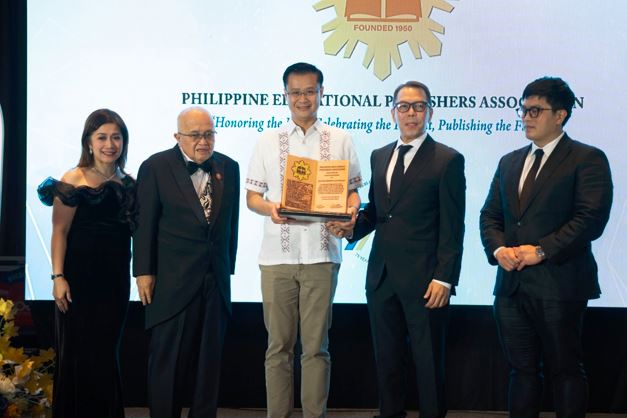
SENATOR SHERWIN GATCHALIAN, was recognized for his diligence in pushing for educational reforms as the then Chairman of the Senate Education Committee in the 19th Congress. In his acceptance speech, Senator Gatchalian reiterated his position that the public schools be permitted to select the textbooks best suited for their students and their conditions, citing the practice of private schools whose textbooks are chosen by the subject coordinators and teachers.
Speaking for PEPA, President Emeritus Dominador Buhain stated that the good senator’s proposed solution for providing each public school student with a set of textbooks through liberalized procurement is being adopted by advanced countries with high ratings in international assessments like China, Japan, Finland and Singapore, whose students score high in international assessments like PISA. Senator Gatchalian lamented the delays in textbook allocation for public schools which are caused by a centralized procurement process.
Senator Gatchalian,, a product of the private school system , even sees no opposition on the adoption of procurement program in the private schools due to their perceived accessibility and presumptive quality of textbooks to be adopted (brought out by competitive market forces where quality prevails) within a shorter time frame.
He believes that with the enhanced DEPED budget, his earlier estimated P28 billion peso allocation mentioned in 2024 would be sufficient to provide one textbook per subject per student. Possessing a textbook instead of having none due to bureaucratic delay could serve as a better proposition to improve our standing in the PISA.
Unfortunately, the procurement for textbooks for SY 2025-2026 in some grade levels has been delayed by new procurement guidelines under RA 12009.
Senator Sherwin Gatchalian receives a Plaque of Recognition during the 75th Anniversary Celebration of the Philippine Educational Publishers Association (PEPA). Joining him (from left) are Danda Crimelda Buhain and Atty. Dominador Buhain of Rex Education; Jose Paolo Sibal of Phoenix Publishing House; and John Emyl Eugenio of C&E Publishing Inc.
As PEPA looks forward to another seven decades of service to the Filipino learner, it is resolved to meet the rigorous demands of knowledge production for the diverse learning needs of Philippine schools.
From classrooms to communities, across institutions and islands—the COCOPEA–REX regional run gathers stakeholders and educators anew to lead, learn, and shape a better future for the Filipino learners.
As a new school year begins, educators are presented with an important opportunity to improve their teaching practices, serve their students more effectively, and ultimately, contribute to elevating the quality of education in our country. This year, with the Revised K–10 Curriculum taking root in our classrooms, that opportunity has never felt more urgent and meaningful.
This is the spirit behind the 2025 COCOPEA–REX regional run.
Organized by the Coordinating Council of Private Educational Associations (COCOPEA), the Catholic Educational Association of the Philippines (CEAP), and Rex Education, in partnership with the Department of Education, this initiative aims to equip educators with the tools and knowledge needed to effectively implement the Revised K–10 Curriculum, particularly for Grades 2, 3, 5, and 8.
A Transformative 2-Day Learning Journey Across the Archipelago
This year’s regional run, themed “Capacitating the Private Education Sector for the Effective Implementation of the Revised K–10 Curriculum,” aims to ensure that every Filipino learner has access to quality, relevant, and responsive education. The run began in Davao City on February 27–28, hosted by the University of the Immaculate Conception, Bajada Campus, welcoming educators from Regions 11, 12, SOCCSKSARGEN, and parts of BARMM. From there, the initiative traveled across the country through five more major legs: Baguio City – St. Louis University for Regions I, II, CAR, and parts of Region III, Cebu City – Cebu Institute of Technology for Regions VII, VIII, and parts of Region IX, Iloilo City – Angelicum College for Region VI, Cagayan de Oro – Xavier University – Ateneo de Cagayan for Region X, parts of BARMM and Region IX and Muntinlupa City – San Beda College Alabang for Regions NCR, IV-A, and IV-B
Over the 2-day program, participants were provided with the tools and platform to unpack the revised curriculum—not just in theory, but in practical, tangible ways. The first day opened with a plenary session that set the tone for the training—bringing together educators, administrators, and stakeholders to align on the goals and significance of the Revised K–10 Curriculum.
Following this, the second plenary session titled “General Updates on the Revised K–10 Curriculum” provided participants with an overview of the recent changes and developments, focusing on curriculum content and structural updates for the priority grade levels.
From there, participants moved into concurrent breakout sessions, grouped per learning area, for a curriculum walkthrough, where they engaged in two core activities:
● An In-depth Exploration of Learning Standards for Grades 2, 3, 5, and 8, clarifying what students are expected to know and do at each grade level
● Curriculum Unpacking of Learning Competencies for Grades 2, 3, 5, and 8, which involved breaking down each competency into practical, actionable teaching objectives
As the run transitioned into the second day, the focus shifted from understanding the curriculum to implementing it effectively in the classroom. It began with the third plenary session, titled “Evidence-Based Intervention: Focus on Pedagogical Practices and the Importance of Assessment,” highlighting how research-based teaching methods and meaningful assessments can drive better student learning outcomes.
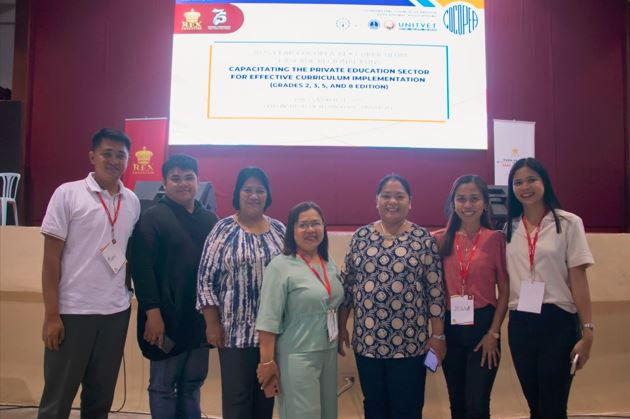
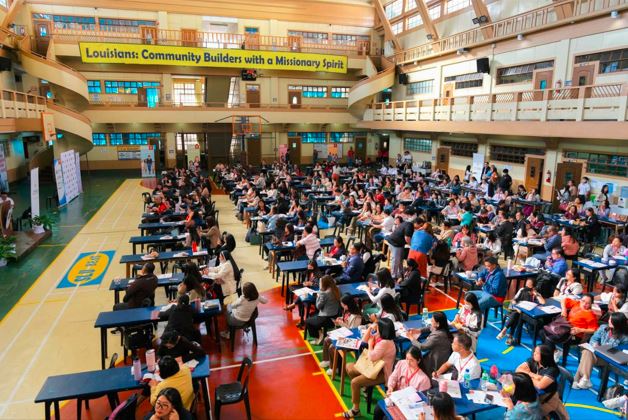
School leaders, stakeholders, and educators nationwide take part in the 2025 COCOPEA-REX Regional Run—deepening their understanding and strengthening their readiness for the effective implementation of the Revised K–10 Curriculum, particularly for Grades 2, 3, 5, and 8.
This was followed by morning breakout sessions, again organized per learning area, that explored the Pedagogical Practices that Integrate and Develop Literacy and 21st-Century Skills through theoretical discussions and strategy-sharing. Educators shared strategies and discussed how to incorporate these essential skills into their teaching methods.
In the afternoon, educators participated in a series of hands-on workshops, still within their respective learning areas. These included:
● A workshop on pedagogical practices to further strengthen instruction that fosters literacy and 21st-century competencies
● A theoretical discussion and a workshop on effective assessment and feedback strategies, guiding educators in using assessment not only for grading but also for supporting student growth and reflective teaching.
Anchored in Purpose, Rooted in Legacy
This year’s run is especially meaningful as it coincides with REX’s 75th anniversary—a milestone that honors decades of commitment to supporting Filipino learners, educators, and institutions.
For 75 years, REX has stood not only as a learning solutions provider, but as a katuwang sa buhay—a partner for life, in learning, growth, and transformation. The regional run serves as a continuation of this legacy, reaching out to private schools, listening to their needs, and assisting them in navigating the evolving educational landscape through collaboration and shared learning.
Moving Forward, Together
With COCOPEA, CEAP, REX, DepEd, and countless Edukampyons at the forefront, this movement proves that progress is possible when we lead with collaboration, compassion, and courage. Even in the face of shifting systems and emerging challenges, we can always rise—grounded in legacy, driven by purpose—Para sa bata. Para sa mamamayan. Para sa bayan.
What a fiesta! Over 40,000 visitors captivated this year’s Philippine Book Festival (PBF) and energized the 4-day event at the Megatrade Hall in SM Megamall, Mandaluyong City. PBF 2025 was held recently and was powered by the National Book Development Board (NBDB).
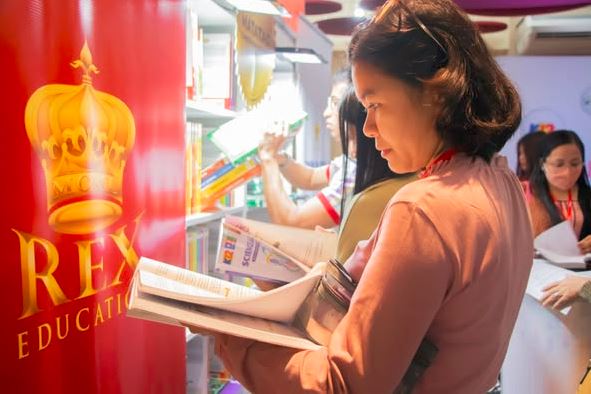
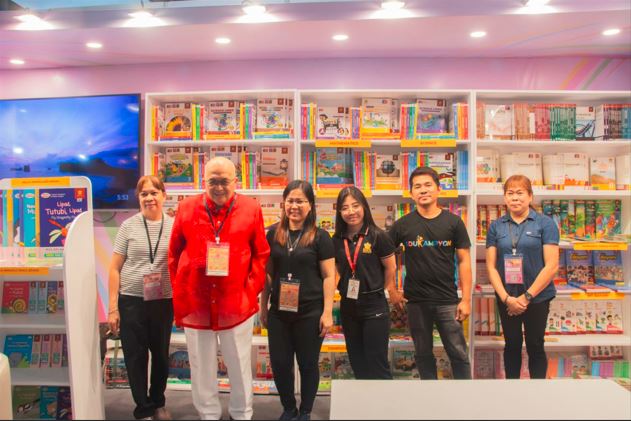
Rex Education the leading book publisher and education solutions provider in the Philippines, participated joyfully and showcased its latest titles by Filipino authors, including Filipiniana titles. REX’s main booth unveiled academic titles from basic, college, and law education, with every offering thoughtfully developed by various experts in the field.
NBDB aptly chose the fiesta theme to make the event merry and fun-filled. Some of the country’s most famous celebrations, such as the Dinagyang Festival, were highlighted during the occasion. In keeping with the festive and celebratory mood, REX offered exclusive deals and big discounts and joined in the fun with exciting games and prizes.
Moreover, REX held a stamp-collecting activity at its Lakbay Aklat booth to give guests an immersive experience. Those who completed the activity received prizes. Additionally, REX organized a Scavenger Hunt where the participants learned more about the company’s offerings while also exploring the event in a fun, engaging way. Those who joined the Scavenger Hunt also received prizes and tokens or REX keepsakes.
What’s more, REX also brought out its Photoman to give guests and learners alike unique photo opportunities to celebrate their learning journey at PBF 2025. This was a great way to capture the event, preserved in a photograph. All these activities and more were a hit with PBF patrons.
REX’s booths demonstrate the company’s commitment to authors, learners, and all book lovers, providing quality Filipino-made books, learning materials, and a dynamic platform for educators and publishing professionals. This year’s PBF, with its fiesta theme, striking and vibrant visuals, and interactive aspects, truly appealed to young children and the young-at-heart. It was a fusion of engaging, experience-based settings with entertainment, education, and shopping convenience.
The Philippine Book Festival 2025, through NBDB, was also an excellent opportunity for the Department of Education (DepEd) and the country’s publishers to connect and strengthen year-long relationships, just as REX and DepEd did during the event. This collaboration enabled DepEd to make large-scale institutional purchases of various learning materials at competitive prices, with the goal of promoting the love of reading to Filipinos and help resolve issues of access and literacy.
As NBDB and DepEd continue the ever-evolving and challenging task of uplifting education in the Philippines through fairs such as the Philippine Book Festival 2025, rest assured that Rex Education will remain a steadfast ally and will provide support in every way possible.
Today’s learners face considerable challenges; their learning journey was set back several years by the global pandemic that halted face-to-face classes from March 2020 (the first implementation of community quarantines) to November 2022 (when the Department of Education, or DepEd, ordered a full return to school-based learning). According to UNICEF, Filipino learners missed more learning opportunities compared to their global counterparts, as the Philippines was among the last countries to reopen in-person classes—effectively putting Filipino learners at a significant disadvantage.
This situation is concerning, with Filipino learners collectively ranking 77th among 81 countries in the Programme for International Student Assessment (PISA) 2022 rankings released in December 2023—an indication that many have been left behind. However, this disheartening situation of the Filipino learner also presents an opportunity for education stakeholders—parents, teachers, school leaders, and academic publishers—the whole learning community, to unite and give the country’s millions of learners (18,370,310 in the public school system alone, according to DepEd’s data for school year 2024–2025) the support they need to overcome this disadvantage and so they can thrive and succeed.
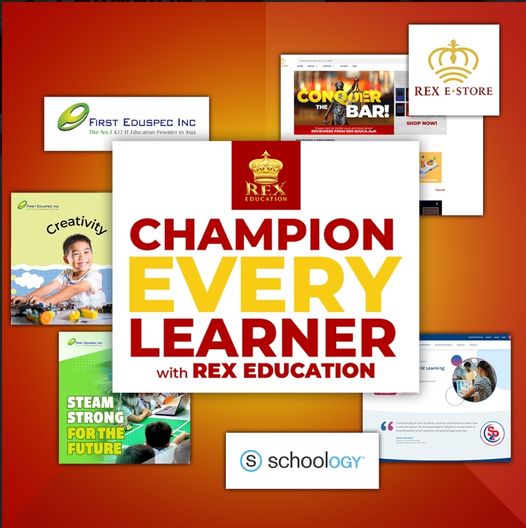
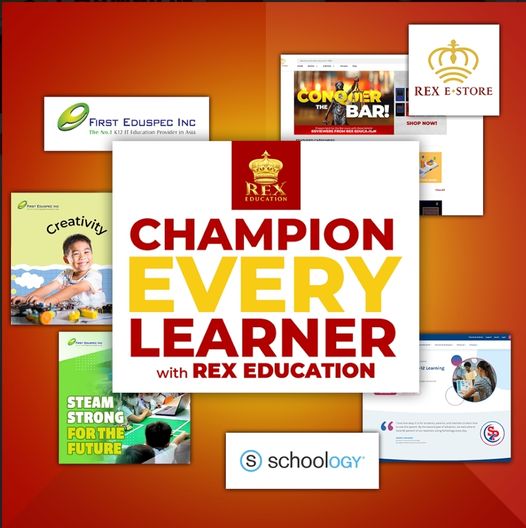
Rex Education, the country’s leading academic publisher for over seven decades and a vital stakeholder in the education sector, takes the challenge. REX has championed the Filipino learner since its founding in the 1950s, initially selling—and then publishing—textbooks and other scholastic materials that have long been staples in every classroom nationwide. These are all available at Rex E-Store (https://estore.rex.com.ph/), the company’s one-stop online store for quality learning solutions.
As the digital age emerged, ushering in distance learning, Rex Education responded accordingly by launching Schoology in 2015, one of the Philippines’ very first learning management systems (LMS). Rex Education’s Schoology represents the classroom of the future—fully digital and rich with innovative features that make learning easy, accessible, fun, and challenging.
“Technology cannot be an add-on; it’s a necessity,” Rex Education stated in a media release announcing the launch of Schoology. “Flexible learning is not a privilege or an advantage; it’s a necessity. Certainly, future-proofing our classrooms, although it cannot be perfected, is an imperative.”
That press release proved prescient 5 years later, as digital classrooms like Rex Education’s Schoology became integral to advancing education during a time when traditional classes were closed indefinitely. Moreover, Rex Education expanded Schoology, making it accessible to more learners nationwide, adding additional resources to the platform, and introducing new features and capabilities.
Now, with the pandemic in the rearview, Schoology remains an educational powerhouse, advocating for the Filipino learner in this age of hybrid education by enhancing traditional learning environments and providing 21st-century learning experiences. With traditional modalities infused with digital tools, today’s learners can embark on the challenging journey of making up for lost years while also preparing for a technology-focused future.
However, Filipino learners still have significant ground to cover, particularly in math and science, where they ranked near the bottom in the same PISA 2022 rankings. Rex Education, through First Eduspec Inc. (FEI), helps address this gap by offering a comprehensive ICT and robotics curriculum that can enrich the learning opportunities and experiences of today’s learners and prepare them for the challenges of tomorrow.
While today’s Filipino learners may be disadvantaged, they can achieve more and reach their full potential with the right support. This is a challenge to all the sector’s stakeholders—an urgent call to action—and Rex Education continues to rise to the occasion, para sa bata, para sa mamamayan, para sa bayan.
Today’s learners face considerable challenges; their learning journey was set back several years by the global pandemic that halted face-to-face classes from March 2020 (the first implementation of community quarantines) to November 2022 (when the Department of Education, or DepEd, ordered a full return to school-based learning). According to UNICEF, Filipino learners missed more learning opportunities compared to their global counterparts, as the Philippines was among the last countries to reopen in-person classes—effectively putting Filipino learners at a significant disadvantage.
This situation is concerning, with Filipino learners collectively ranking 77th among 81 countries in the Programme for International Student Assessment (PISA) 2022 rankings released in December 2023—an indication that many have been left behind. However, this disheartening situation of the Filipino learner also presents an opportunity for education stakeholders—parents, teachers, school leaders, and academic publishers—the whole learning community, to unite and give the country’s millions of learners (18,370,310 in the public school system alone, according to DepEd’s data for school year 2024–2025) the support they need to overcome this disadvantage and so they can thrive and succeed.
Rex Education, the country’s leading academic publisher for over seven decades and a vital stakeholder in the education sector, takes the challenge. REX has championed the Filipino learner since its founding in the 1950s, initially selling—and then publishing—textbooks and other scholastic materials that have long been staples in every classroom nationwide. These are all available at Rex E-Store (https://estore.rex.com.ph/), the company’s one-stop online store for quality learning solutions.
As the digital age emerged, ushering in distance learning, Rex Education responded accordingly by launching Schoology in 2015, one of the Philippines’ very first learning management systems (LMS). Rex Education’s Schoology represents the classroom of the future—fully digital and rich with innovative features that make learning easy, accessible, fun, and challenging.
“Technology cannot be an add-on; it’s a necessity,” Rex Education stated in a media release announcing the launch of Schoology. “Flexible learning is not a privilege or an advantage; it’s a necessity. Certainly, future-proofing our classrooms, although it cannot be perfected, is an imperative.”
That press release proved prescient 5 years later, as digital classrooms like Rex Education’s Schoology became integral to advancing education during a time when traditional classes were closed indefinitely. Moreover, Rex Education expanded Schoology, making it accessible to more learners nationwide, adding additional resources to the platform, and introducing new features and capabilities.
Now, with the pandemic in the rearview, Schoology remains an educational powerhouse, advocating for the Filipino learner in this age of hybrid education by enhancing traditional learning environments and providing 21st-century learning experiences. With traditional modalities infused with digital tools, today’s learners can embark on the challenging journey of making up for lost years while also preparing for a technology-focused future.
However, Filipino learners still have significant ground to cover, particularly in math and science, where they ranked near the bottom in the same PISA 2022 rankings. Rex Education, through First Eduspec Inc. (FEI), helps address this gap by offering a comprehensive ICT and robotics curriculum that can enrich the learning opportunities and experiences of today’s learners and prepare them for the challenges of tomorrow.
While today’s Filipino learners may be disadvantaged, they can achieve more and reach their full potential with the right support. This is a challenge to all the sector’s stakeholders—an urgent call to action—and Rex Education continues to rise to the occasion, para sa bata, para sa mamamayan, para sa bayan.