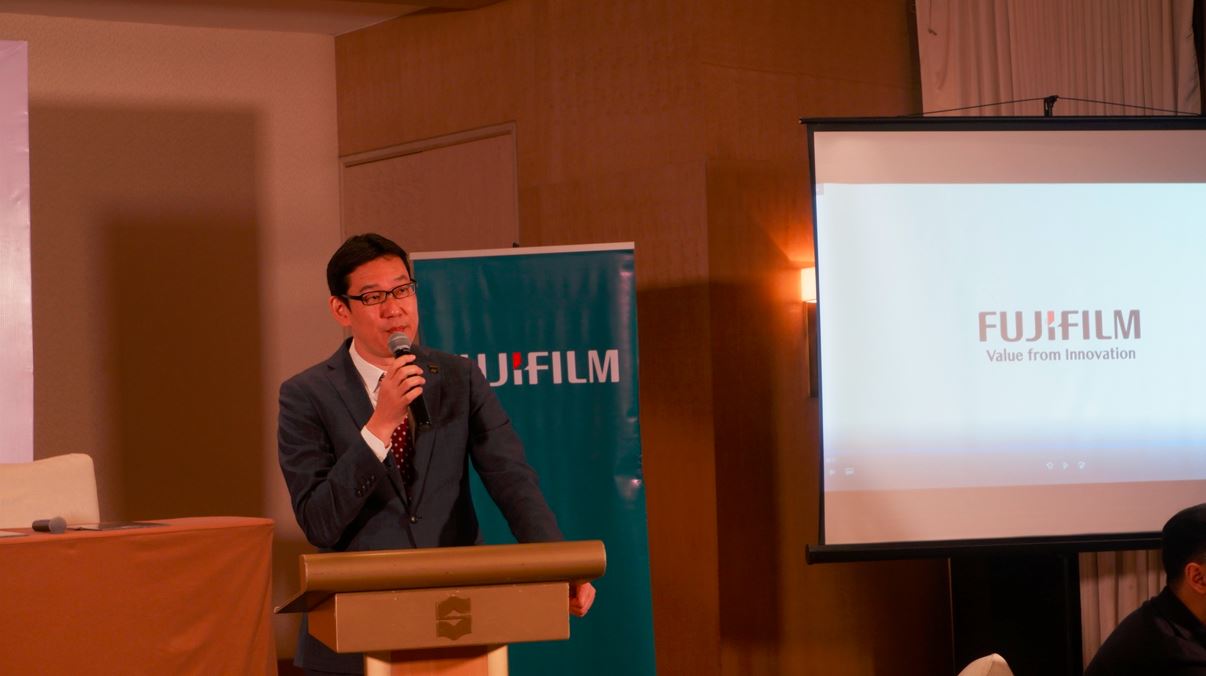
Fujifilm Philippines, a leading provider of digital imaging and healthcare solutions, will sign a memorandum of agreement today with Shinagawa Healthcare Solutions Corporation to bring advanced technology to patients.
Masahiro Uehara, Fujifilm Philippines President, said that through this partnership, the two companies aim to combine their strengths to deliver innovative and high-quality healthcare solutions to patients.
“We are thrilled to partner with Shinagawa Healthcare Solutions Corporation to provide better healthcare services to patients in the Philippines. Our advanced technology and expertise in the healthcare industry, combined with Shinagawa’s commitment to providing personalized care, will enable us to deliver innovative and high-quality healthcare solutions to patients in the Philippines,” he said.

Shinagawa Healthcare Solutions Corporation, a subsidiary of the country’s top Lasik provider, Shinagawa Lasik & Aesthetics Center Corporation, is set to open a diagnostic and preventive care center in Bonifacio Global City, Taguig, next month. It will be the first Japanese standard health facility in the Philippines that focuses on preventive care.
Through the collaboration, Uehara said Fujifilm will bring its innovative equipment to Shinagawa Diagnostic and Preventive Care Center to offer quick and comfortable procedures to patients.
These include the Eluxeo Lite 6000, an endoscopy machine that features Multi-Light Technology to deliver high-quality imaging and superior visibility for enhanced patient comfort through flexible scope options.
Another key instrument is the Supria 128 Slice CT Scan Machine, which offers painless and low-dose scanning capabilities. It also produces high-speed and top-notch quality images with lower power consumption.
The Amulet Innovality is a mammogram machine designed with ergonomic armrests to ensure patient comfort and secure positioning, producing quick image intervals of just 15 seconds.
Fujifilm’s FDR Smart X x-ray machine offers advanced functionality and compatibility with any X-ray system, delivering high image quality for precise and accurate results.
Meanwhile, the Arietta Series is an ultrasound machine renowned for its broad diagnostic capabilities and top-notch imaging quality, producing reliable results that help with immediate critical surgical decisions.
“Fujifilm Philippines’ commitment to quality and innovation aligns with their vision to provide exceptional healthcare services. We are thrilled to partner with them to bring their state-of-the-art imaging technology to our patients in the Philippines. Together, we can make a significant impact on the healthcare industry, revolutionizing the way healthcare is delivered and experienced,” he said.

Prevention is key
Masako Uemori, Shinagawa President, said the partnership will enable them to provide patients with the best possible care.
“We believe that investing in preventive care is not only a wise decision but also a responsible one. By breaking the social stigma of reactive care and shifting our mindset towards proactive prevention, we can help Filipinos achieve better health outcomes and ultimately lead more fulfilling lives,” she said.
Aside from Japanese standard health checkups, Shinagawa Diagnostic and Preventive Care Center will offer brain exams (MRI/MRA), full body exams (CT scan), digestive exams (ultrasound/endoscopy), health exams for women (mammography/ultrasound), laboratory, and allergy tests.
Uemori said Shinagawa will partner with health maintenance organizations (HMOs) in the country to provide accessible, affordable, and comprehensive medical services to Filipinos.
She also said they plan to promote health and wellness through events and seminars to raise public awareness about their overall well-being.
“Our success in the field of eye care has enabled us to build a reputation as a leader in the industry. Our commitment to the latest technologies and Japanese standards for medical services has helped us to earn the trust of our patients, and we are proud to continue to deliver exceptional care that exceeds their expectations,” Uemori added.
The future of healthcare
Uemori said Shinagawa’s new Diagnostic & Preventive Care Center is committed to providing comprehensive and personalized healthcare plans that contribute to the early detection and prevention of disease.
She said the company’s comprehensive medical examination process is designed to identify potential health issues before they become major problems, allowing for proactive intervention and treatment.
Combined with Fujifilm’s cutting-edge and high-performance machines, Shinagawa’s state-of-the-art facility will enable doctors and health professionals to perform procedures quickly, comfortably, and stress-free for patients. Diagnosis and analysis will also have double reading by their partner Japanese doctors who have extensive experience in the field of preventive care.
Shinagawa will also implement an efficient and streamlined operation using the Japanese Health Checkup Information System. With same-day results, patients can receive timely and accurate diagnoses and treatment plans without the added stress of waiting.
Innovative imaging technology
Fuji Photo Film Co., Ltd. (now FUJIFILM Holdings Corporation) was established in 1934 to produce high-quality photographic films. Within the first decade of its establishment, the company expanded its production to include motion pictures and X-ray films, in addition to its original focus on photographic films.
In 2012, Fujifilm Philippines was founded as a sales subsidiary of Fujifilm’s regional headquarters in the Asia Pacific. The company primarily focuses on providing high-quality products and services to the Philippine market in areas such as electronics, photo imaging, industrial products, graphic design, and medical systems. To meet the increasing demand for its offerings and ensure consistent quality, the company opened its first branch in Cebu in 2019. This move also enabled Fujifilm Philippines to better serve customers in the Visayas and nearby Mindanao provinces by providing them with more localized support.

During the height of the pandemic in 2020, Fujifilm Philippines supported local hospitals by installing the FDR Go PLUS, a digital mobile X-ray system that aided in diagnosing COVID-19 patients. The company also received FDA approval for the FDR nano and the FUJIFILM COVID-19 Ag Test Kit, which are expected to help healthcare workers diagnose and screen for COVID-19.
The company is committed to supplying various products and services to support the medical frontline and promote human health.
Reference:
Lariza Garcia