Category: Real Estate

  • Lamudi rolls out iOS App to Global Network

    Fast-growing property portal’s iOS app now available in 27 countries.

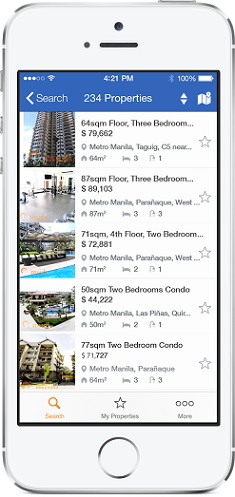
    International property portal Lamudi has rolled out its iOS app for property seekers in a further 11 countries, making the popular mobile application available across the company’s global network.

    The iOS app has been progressively rolled out in countries across Asia, Africa, the Middle East and Latin America since it was launched in June. The app, Lamudi: Real Estate for Sale & Rent, is now available for iOS users in 27 countries in the emerging markets.

    With the release of version 1.5, the Lamudi iOS app has been made available in the Middle East for the first time. The app is now available with right-to-left orientation for Arabic speaking house-hunters in Jordan and Saudi Arabia. Countries which already have the app will also benefit from improved speed and security for easier browsing.

    The iOS app was this week launched in: Algeria, Cameroon, Ethiopia, Madagascar, Mauritius, Mozambique, Rwanda, Zambia, Sri Lanka, Jordan and Saudi Arabia. Lamudi’s Android app was rolled out to 28 countries in the emerging markets earlier this year.

    Lamudi’s Global Co-Founder and Managing Director, Antonius Salis, said: “Our website now hosts more than 750,000 property listings around the world. All of these have been made available to iOS users through the updated Lamudi app.

    For existing users, we have also made several improvements to the overall experience. The app is now more secure and faster to use, making searching for real estate on the go even more convenient than before.”

    The app provides the perfect platform for house-hunters to rent, buy or sell property on the go. A key feature of the Lamudi app is its customised search function, which allows users to easily switch between the 27 countries available in the app.

    The app also provides match alerts, with users receiving a notification as soon as a property that suits their needs hits the market. House-hunters can bookmark their favourite properties to access at any time and on any device.

    All listings on the app feature high-quality photo galleries, detailed property information, maps, and multiple contact details for property owners or agents. Users can also share their favourite properties with family and friends via Facebook, Twitter or email.

    ABOUT LAMUDI

    Launched in 2013, Lamudi is a global property portal focusing exclusively on emerging markets. The fast-growing platform is currently available in 28 countries in Asia, the Middle East, Africa and Latin America, with more than 600,000 real estate listings across its global network. The leading real estate marketplace offers sellers, buyers, landlords and renters a secure and easy-to-use platform to find or list properties online. For more information, please visit http://www.lamudi.com.ph

    Visit Lamudi Philippines on Facebook, Twitter, Google+ and LinkedIn.

    REFERENCE & MEDIA CONTACT
    Rodel Ambas
    Content Editor, Lamudi Philippines
    Email: rodel.ambas@lamudi.com.ph
    Phone: +63 917 3015127

  • Pros and Cons: Foreign property ownership in the Philippines

    Lamudi takes a look at the advantages and disadvantages of allowing foreign property ownership in the Philippines.

    To say that Philippine real estate is fast becoming a favorite among buyers abroad is quite an understatement. In fact, an article published in ABS-CBNnews.com reported that Asian investors—from Malaysia to Japan—are snapping up condo units in bulk. These buyers are favoring the Philippines over Hong Kong and Singapore, where the authorities have put in place cooling measures to rein in property prices.

    “There has never been this strong interest in the Philippine property market,” said Colliers International’s David Young in an interview. But despite this, the Philippines still does not allow foreign ownership of real property; foreigners, however, can purchase condo units so long as foreign ownership in a single project does not exceed 40 percent.

    This may seem counterintuitive, because more established property markets allow freehold foreign ownership of real estate to attract investment and create more wealth. Hence, it makes sense for the Philippines to follow suit. By doing the opposite the Philippines may be thwarting its competitiveness.

    To look into this issue closely, Lamudi Philippines compiled a list of the pros and cons of allowing foreign ownership of real property in the country.

    PROS

    1. Foreign Investment on Real Estate Will Boost the Market

    The residential real estate market will get a boost if some of the restrictions imposed on foreigners are lifted, said David Leechiu, JLL Philippines Managing Director and Country Manager.

    In an interview with the Philippine Daily Inquirer, Leechiu said that the total worth of the Philippine real estate industry could jump from $48 billion reported in 2011 to $300 billion by 2031, if certain structural changes were made, such as relaxing rigorous rules on foreign ownership and longer lease terms.

    Although the Philippines’ macroeconomic fundamentals are sound, Leechiu said it could do so much better if it were less restrained.

    2. The Country May Benefit from More Substantial Investment

    According to Charlie Gorayeb, Chairman of the Chamber of Real Estate & Builders’ Association (CREBA), foreign investment into real estate will attract much-needed capital, which will unleash the multiplier effect of construction and real estate sectors into other industries. This multiplier effect will impact sectors closely related to real estate, and will provide additional opportunities for local businesses and employment.

    3. Benefits Will Spill Over to Other Sectors

    For many years the Philippines has lagged behind its neighbors in Southeast Asia when it comes to attracting foreign direct investment. According to experts, this is due in part to the country’s restrictive business climate, particularly when it comes to foreign ownership of properties. Allowing foreigners to own land for industrial and commercial purposes will benefit the manufacturing sector, which will boost employment opportunities for many Filipinos.

    Cons

    1. It May Cause Property Prices to Skyrocket

    In certain cases, allowing foreign money to come in freely is not entirely a good thing. For example, London has become too attractive to rich property buyers from Russia and the Middle East, which drove prices too high and priced locals out of the housing market. At the moment prices of houses and condos in Metro Manila are already beyond the reach of most Filipinos, so allowing foreigners to freely purchase may push prices even higher.

    2. It May Spur Speculative Purchases

    Speculative purchase of property—the kind that take large risks in the hope of making quick, huge gains—could be intensified when the gates are opened to foreign property buyers. This could pose danger to the real estate market, which could go through a period of irrational exuberance, fueling the formation of a real estate bubble.

    3. Lands Acquired by Foreigners May Be Converted for Another Purpose

    There are certain property types that if they get sold and converted into another use may do more harm than good to the local economy. Examples of these properties are agricultural land. According to Gorayeb, there should be some mechanisms of control to protect local interest. Agricultural lands, for example, should remain as such even when they are purchased by foreigners, and in order to protect our natural resources foreigners should only be allowed to purchase disposable or alienable land.

    REFERENCE & MEDIA CONTACT

    Rodel Ambas

    Content Editor, Lamudi Philippines

    Email: rodel.ambas@lamudi.com.ph

    Phone: +63 917 3015127

  • The Top 10 Haunted Places Around The World

    The Top 10 Haunted Places Around The World

    Prepare to be scared this Halloween

    From presidential palaces in Colombia to film centers in the Philippines, the most normal places are not always as they seem.In honor of Halloween, global real estate marketplace Lamudi guides you through the world’s top 10 haunted properties.

    1. Lawang Sewu, Indonesia

    A landmark of Semarang, Central Java, Lawang Sewu (which translates as “Thousand Doors”) is a former Dutch colonial era building, rumored to be haunted by headless ghosts. This large, deserted structure is open to the public 24 hours a day, so if you’re looking for a scare this Halloween, why not take a midnight visit?

    Image via Shutterstoc

    2. Manila Film Center, the Philippines

    A national building in Pasay City, Metro Manila, the Manila Film Center was built in 1981. During construction, on November 17th 1981, the construction collapsed, burying over 150 workers in quick-drying cement. It was believed that some of these workers were entombed alive in the concrete. However, records show that all bodies were retrieved from the site. Ghostlore says that those who died roam the film center to this day, making mysterious sounds.

    © Mike Gonzalez (TheCoffee) via Wikimedia Comm

    3. Mohatta Palace, Pakistan

    Located in Karachi, the Mohatta Palace is an elaborate, pink, and yellow stone building, consisting of 18,500 square yards. Legend has it that there is a superhuman presence at the palace, with guides believing the building is haunted. While on guard, workers are rumored to have felt the presence of spirits, and experienced objects moving without human touch.

    © Shahid A. Siddiqi via Wikimedia Commons

    4. The Tower of London, United Kingdom

    The former prison of some of England’s most renowned historical figures, the Tower of London is one of the most haunted places in the UK. Reportedly, the headless ghost of Anne Boleyn, one of the wives of King Henry VIII, still resides within the tower, following her execution in 1536. The oldest part of the building, the White Tower, is also home to the White Lady, who is said to have been seen standing at the window, waving to children in the opposite building.

    Image via Shutterstock

    5. Bhangarh Fort, India

    Legend has it that a black magic wizard named Singhiya, in love with the Princess of Bhangarh, cursed the fort with the death of all who lived there, following the Princess’s rejection of his love. The year following the curse, both war and famine broke out, leading to the death of the Princess. Tourists are unable to enter the building after sunset and before sunrise, so not to disturb the ghosts of Singhiya and other locals who haunt Bhangarh Fort.

    © Amlan Mathur via Shutterstock

    6. The Island of the Dolls, Mexico

    Xochimilco, a district just south of Mexico City, is home to a number of artificial islands and canals, one of which was owned by a caretaker named Julian Santana Barrera. When Barrera discovered the body of a young girl in one of the canals near his island, he began to collect dolls to hang around the island to ward off any evil spirits, and to make the young girl happy. The island, known as Isla de las Munecas (Island of the Dolls), is now visited by thousands of tourists a year, who bring dolls to carry on Barrera’s work.

    © Cordella Person via Flickr

    7. Eltz Castle, Germany

    A medieval castle hidden away in the hills of Western Germany, Eltz Castle is one of just a few haunted castles in Germany. Allegedly, ghosts of medieval knights roam the grounds of the great 12th century castle, which has been owned—and haunted—by the same family for 33 generations. One of the more famous ghosts, Agnes, apparently died defending her honor, and her specter remains in the castle to this day.

    Image via Shutterstock

    8. Edinburgh Castle, United Kingdom

    The vaults of Edinburgh Castle are famous for the unsettling noises and movements that come from within. Constructed in the 15th century, the underground maze makes up 120 rooms, which were used to quarantine and entomb victims of the plague. Visitors can expect to see Lady Janet Douglas, who was burned at the stake following accusations of witchcraft, the spirit of a headless drummer, dogs wandering around the cemetery, and numerous prisoners roaming the labyrinth.

    Image via Shutterstock

    9. Marroquín Castle, Colombia

    This stunning mansion, built in 1904 near the Colombian city of Chía, was an asylum for several years. Allegedly, the castle is haunted by the ghost of a nun who once worked there, numerous patients who met their demise in the asylum, and “La Zancona,” a mysterious woman dressed in all black, who roams the building.

    © Brian Daniel Leon Machado via Wikimedia Commons

    10. Port Arthur, Australia

    Port Arthur is allegedly the most haunted place in Tasmania. During its almost 50-year history as a convict settlement, hundreds of men died at Port Arthur. Furthermore, the massacre in 1006 led to the death of 35 men, women and children. Tourists visit the port with the hope of catching a glimpse of the Lady in Blue—the crying ghost of a young woman, who reportedly died in childbirth—as well as over 2,000 ghosts that have apparently been seen over the past 20 years.

    Image via Shutterstock

    ABOUT LAMUDI

    Launched in 2013, Lamudi is a global property portal focusing exclusively on emerging markets. The fast-growing platform is currently available in 28 countries in Asia, the Middle East, Africa and Latin America, with more than 600,000 real estate listings across its global network. The leading real estate marketplace offers sellers, buyers, landlords and renters a secure and easy-to-use platform to find or list properties online. For more information, please visit http://www.lamudi.com.ph

    Visit Lamudi Philippines on Facebook, Twitter, Google+ and LinkedIn.

    REFERENCE & MEDIA CONTACT

    Rodel Ambas

    Content Editor, Lamudi Philippines

    Email: rodel.ambas@lamudi.com.ph

    Phone: +63 917 3015127

  • Five Questions every OFW should ask before buying a property

    With the Christmas season fast approaching, many overseas Filipino workers are readying their hard-earned cash to purchase their first home.

    They say that Christmas is the season of giving. But for many overseas Filipino workers (OFW) returning home for the holidays, it is also the season for some serious home shopping.

    In fact, according to Enrique Soriano III, Program Director for Real Estate at the Ateneo de Manila University–School of Business, many OFWs spend all year saving enough down-payment cash for their first home, and they usually remit this cash by December when their purchase decisions are finally made.

    An observation Claro dG. Cordero, Head of Research, Consulting, and Valuation at JLL Philippines, shares: “More property transactions occur at the end of the year when many of these OFWs have performed oculars of the properties they’re looking into buying.”

    With the Christmas season fast approaching, a great number of OFWs are already researching on their home purchase, and come December, many of them would be ready to buy. However, since a home is perhaps the most important purchase any person can make, it only make sense that due diligence should be made.

    Lamudi Philippines has compiled the following questions to ask to make the decision easier for every OFW.

    1. What do I Intend to do with the Property?

    Will the property be used a primary residence for the OFW family or an income-generating asset? The OFW must first determine this in order to inform his or her decision on what type of property to buy, where to buy, and even when to buy.

    When looked from the financial perspective, a home purchase makes a lot sense if the property will be used as the primary residence of the OFW family. Hence, the property should meet the requirements of the OFW’s family (size, location, type, etc.). Buying a home will give the OFW and his family a sense of financial security and watch their investment grow in the long term through capital appreciation.

    However, buying property strictly as an income-generating asset presents a different challenge, which will be tackled in the next item.

    1. Who Will Manage the Property?

    If the OFW is buying a property to eventually have it rented out, then it is a different matter. A crucial question to ask should be, “who will manage the property while the OFW is out of the country.”

    If the property is in Metro Manila and the OFW’s family lives in the province, then it will make sense to hire an agent that will double as a property manager. They will take care of finding and screening prospective tenants, scheduling viewings, collecting rent, and overseeing the property’s upkeep, among many others. According to Angela Manese, Residential Division Manager at estate agent KMC MAG Group, it is very crucial who looks after the property while the OFW is away. After all, that person will be key to making the investment property a profitable one.

    1. Which Developer to Choose?

    They say that due diligence can go a long way, especially if the OFW is buying a preselling property. Hence the importance of choosing the property developer cannot be overemphasized.

    An OFW buyer can count on an established, publicly listed developer to deliver on its promise because it has a reputation to protect. In addition, established developers are generally well funded, so they are highly unlikely to default.

    1. Should I Inspect the Property?

    Whether it is a condominium in Makati or a house in Cavite, make sure that you have physically inspected the property before buying it.

    Although this may mean making a trip or two back home, but the cost would be worth it. A homebuyer who does not inspect the property runs the risk of discovering major defects at a point when the deed of sale has already been signed—and the property can no longer be returned.

    However, some OFWs will have to make do with asking someone they trust (a close relative, for instance) to do the inspection for them. If possible, make a to-do list for the appointed inspector, and even ask the person to send pictures or even videos of the property.

    1. Should I Ready Extra Cash for the Closing Costs?

    When buying a piece of real estate, the seller takes care of the capital gains tax and the broker’s commission, while the home-buyer takes care of the documentary stamps tax (1.5 percent of the property’s selling price), transfer tax (0.5–0.75 percent of selling price), registration fee (Php8,796 for properties whose selling price is Php1.7 million or lower, plus an additional Php90 for every Php20,000 in excess of Php1.7 million), and notarial fee (1–1.5 percent of the property’s selling price).

    For example, an OFW buying a Php1.7 million property needs to ready approximately Php59,800 for the closing costs.

    REFERENCE & MEDIA CONTACT
    Rodel Ambas
    Content Editor, Lamudi Philippines
    Email: rodel.ambas@lamudi.com.ph
    Phone: +63 917 3015127

  • Lamudi App Now Available On iOS

    Lamudi App Now Available On iOS

    Global property portal makes mobile app available for Apple users.

    Leading property portal Lamudi today, July 24, 2014, launched its iOS app in the Philippines as the company seeks to capture the growing smartphone market in the country. The launch of Lamudi’s iOS app follows the successful roll out of the company’s Android app in the Philippines last month. The app, Lamudi: Real Estate for Sale and Rent, is now available on
    iOS devices in 16 countries across Asia, the Middle East, Africa and Latin America.

    Lamudi’s Co-Founder and Managing Director, Antonius Salis, said: “The launch of Lamudi’s Android app last month was a great success. We saw huge demand from our customers in the Philippines and beyond, so we decided to keep the momentum going by moving our services on
    to iOS straight away.”

    The Lamudi app provides the perfect platform for house-hunters to rent, buy or sell property on the go. Both the iOS and Android apps are designed to meet the growing demand for mobile internet services in the emerging markets. In the Philippines iOS is the second most popular mobile operating system, with Apple devices accounting for nearly 25% of the local smartphone market, according to figures from Statcounter.

    A key feature of the Lamudi app is its customized search function, which allows users to easily filter results by country. The app also provides match alerts, with users receiving a notification as soon as a property that suits their needs hits the market. House-hunters can also bookmark their favorite properties to access at any time and on any device.

    Jacqueline van den Ende, Co-Founder and Managing Director of Lamudi Philippines, said: “The new iOS app puts thousands of global property listings from 16 countries in your pocket. It means your dream home is now just a tap away.”

    All listings on the app feature high-quality photo galleries, detailed property information, maps, and multiple contact details for property owners or agents. Users can also share their favorite properties with family and friends via Facebook, Twitter or email.

    The Lamudi iOS app is now available in Bangladesh, Pakistan, Indonesia, the Philippines, Peru, Mexico, Colombia, Morocco, Ghana, Kenya, Nigeria, Tunisia, Uganda, Ivory Coast, Tanzania and Zimbabwe.

    Lamudi.com.ph, which started operations in January this year, has over 57,000 residential and commercial property listings from developers and PRC-licensed brokers. The company has active offices in Manila, Cebu and Davao.

    Download the Lamudi iOS app in the App Store today!

    ABOUT LAMUDI

    Launched in 2013, Lamudi is a global property portal focusing exclusively on emerging markets.

    The fast-growing platform is currently available in 28 countries in Asia, the Middle East, Africa and Latin America, with more than 500,000 real estate listings across its global network. The leading real estate marketplace offers sellers, buyers, landlords and renters a secure and easyto-use platform to find or list properties online.

    Visit Lamudi Philippines on Facebook, Twitter, Google+ and LinkedIn.

    REFERENCE AND MEDIA CONTACT:

    Elsie Cansino
    PR Manager, Lamudi Philippines
    Email: elsie.cansino@lamudi.com.ph
    Phone: +63 927 3313501

    NOTES: Top 8 Mobile Operating Systems in the Philippines: Statcounter, June 2013-14 figures

  • Five Smartphone Trends that may change the Filipino Real Estate Market in 2015

    The rise of smartphones will change the real estate game is played in the Philippines in 2015.

    It goes without saying that the Philippines’ mobile Internet landscape is fast evolving. Smartphone penetration, although relatively low at 15 percent, has been growing over the last couple of years. It is expected to leap to 50 percent in 2015.

    Filipinos do not leave home without their smartphones. We book taxis, check road traffic conditions, and purchase gadgets and shoes using our smartphones. Mobile apps even proved very useful when Typhoon Haiyan (Yolanda) struck the Visayas Region in late 2013, mobilizing an army of volunteers and a massive relief drive.

    Indeed, smartphones have become the place where Filipinos research everything, including real estate. This presents a huge opportunity for the industry.

    With these developments, Lamudi has compiled a list of smartphone trends that could stand to change Filipino real estate in 2015.

    1. Half of Smartphone Users Have Spending Power

    Research conducted by mobile market research firm On Device Research found that 44 percent of all mobile Internet users in the Philippines are between 25 and 44 years. This age bracket is when people have stable incomes, start to think about settling down, and are strongly considering purchasing a property for their families.

    This is a huge opportunity for the real estate industry. Not only are these people determined to finally own a home, more and more of them are starting their research on their smartphones, making mobile presence a must for any real estate player.

    2.Almost Half Are Women

    The same research found that 44 percent of Filipino smartphone users are female, higher than Southeast Asia’s average of 37 percent. This is exciting news for the real estate industry, as research conducted by Lamudi earlier this year found that women in emerging countries, including the Philippines, are driving the house-hunting process. Mobile advertising targeted at female home-buyers may make or break a successful real estate marketing campaign.

    3. Filipinos Are on Their Smartphones Longer

    We use our smartphones everywhere and for longer durations. In fact, 40 percent of all Filipino smartphone users spend more than five hours per day on their phone, according to On Device Research. This is approximately 30 percent of our waking hours.

    This means people sitting in a restaurant or waiting at the supermarket checkout are highly likely to be browsing for properties using their smartphones. Hence, targeting these potential buyers at the Zero Moment—the precise moment when they have a need, an intent, or a question they want answered—will be crucial for the industry.

    4. Filipinos Spend More Time on Social Media

    The Philippines is the world’s social media capital. Filipinos spend four hours per day on social media, and a whopping 94 percent of Filipino Internet users have Facebook accounts. Compared this to 54 percent in the United States, the birthplace of Facebook. Therefore, marketing utilizing Facebook (or any social networking site for that matter) will effectively complement any offline campaign.

    5. Apps Are Extremely Popular

    Thirty-two percent of Filipino smartphone users download six or more apps per month, and 45 percent of these people have shelled out some money for these app installs or made purchases using any of these apps.

    But what’s more noteworthy is the popularity of mobile messaging apps. Eighty-two percent of mobile users have Facebook Messenger app, 27 percent use Viber, and 27 percent have Skype. The latter two offer free international calls, which Filipinos utilize fully to call immediate family members working abroad. Since up to a third of OFW remittance to the Philippines is spent on real estate, there is a huge opportunity for the industry to target OFW families looking into buying their first home.

    ABOUT LAMUDI

    Launched in 2013, Lamudi is a global property portal focusing exclusively on emerging markets. The fast-growing platform is currently available in 28 countries in Asia, the Middle East, Africa and Latin America, with more than 600,000 real estate listings across its global network. The leading real estate marketplace offers sellers, buyers, landlords and renters a secure and easy-to-use platform to find or list properties online. For more information, please visit http://www.lamudi.com.ph

    Visit Lamudi Philippines on Facebook, Twitter, Google+ and LinkedIn.

    REFERENCE / MEDIA CONTACT:
    Rodel Ambas
    Content Editor, Lamudi Philippines
    Email: rodel.ambas@lamudi.com.ph
    Phone: +63 917 3015127

  • Christmas Decorations Around The World

    Take a world tour of how different countries prepare for Christmas.

    Trees covered in tinsel and baubles. Stockings hanging from the fireplace. Elaborate outdoor light displays popping up all over the neighborhood.

    Think of decorating your home for Christmas and at least one of these traditions will likely spring to mind. Yet all over the world, countries celebrating Christmas have their own set of customs for decorating their homes for the holidays.

    In Mexico, nativity-themed Christmas decorations are carved from radishes. In chilly Antarctica, fish heads hang in doorways to replace mistletoe. And in Ghana, palm trees decorated with candles replace traditional Christmas trees to suit the tropical climate.

    As the festive season approaches, global real estate portal Lamudi takes you on a tour of Christmas decorations to be found in houses the world over.

    Africa

    In Africa, Christmas dinners after the church ceremony are prepared on tables out the front of homes, inviting people’s family and close friends to share a meal together. For this reason, outdoor decorations are more important than the interior. You may see fake snow decorating store fronts in Nairobi, oil palms loaded with bells in Liberia, or palm trees laden with candles in Ghana.

    In Zimbabwe, Christmas is far from being a casual celebration. It is tradition for people to set up their biggest speakers in front of their house and play their favourite music as loud as they can. But don’t expect only Christmas tunes. You will likely hear everything from the latest pop tunes to more traditional African favourites.

    Latin America

    Christmas is the most important holiday of the year for most countries in Latin America. Cities are loaded with spectacular, colourful decorations, including lots of fairy lights. In Colombia, December 7 is Dia De Las Velitas (Day of the Little Candles) where the night is spent decorating all public spaces with paper lanterns and candles. Each household lights approximately 100 candles and places them outside their home in honour of the Virgin Mary.

    On December 23, just before Christmas, farming folk in Mexico celebrate Noche de rábanos, or the Festival of the Radishes. They carve the vegetables into human figures, including those from nativity scenes. On Christmas Day, children can be found in Mexican living rooms attempting to and break apart decorated clay piñata using a stick – while blindfolded. Inside are small presents and sweets.

    Asia

    Because fir trees are not common in India, mango trees are often decorated instead. In addition, the whole house is decorated with mango leaves in order to brighten up homes. Large star-shaped paper lanterns are also very popular.

    In the Philippines cities shine in colorful lights during Christmas. People decorate their homes with buntings, candles, and wreaths. The most popular decoration in the Philippines is parol (pah-role). This is a bamboo pole with a bright star on top. The pole represents the guiding star of Bethlehem. People also put numerous Christmas cards in the living room for family and friends.

    But one of the most original Christmas traditions comes from Antarctica. With mistletoe being in seriously short supply, residents will often hang up a fish head instead.

    ABOUT LAMUDI

    Launched in 2013, Lamudi is a global property portal focusing exclusively on emerging markets. The fast-growing platform is currently available in 28 countries in Asia, the Middle East, Africa and Latin America, with more than 750,000 real estate listings across its global network. The leading real estate marketplace offers sellers, buyers, landlords and renters a secure and easy-to-use platform to find or list properties online. For more information, please visit http://www.lamudi.com.ph

    Visit Lamudi Philippines on Facebook, Twitter, Google+ and LinkedIn.

    ABOUT ASIA PACIFIC INTERNET GROUP

    Asia Pacific Internet Group (APACIG) is a joint venture of Rocket Internet and Ooredoo. The group’s network consists of 11 e-commerce and online marketplace companies, operating across 15 countries. Since it was founded in 2014, APACIG has become the leading online platform in Asia, building top internet companies in the region. For more information, please visit www.asiapacificinternetgroup.com

    REFERENCE & MEDIA CONTACT

    Rodel Ambas
    Content Editor, Lamudi Philippines
    Email: rodel.ambas@lamudi.com.ph
    Phone: +63 917 3015127

  • Crosswinds Swiss Luxury Resort is the  dog-friendly resort in Tagaytay

    Crosswinds Swiss Luxury Resort is the dog-friendly resort in Tagaytay

    Pet lovers who wish to share a peaceful, beautiful environment with their canine companions would do well to visit Crosswinds Swiss Luxury Resort, which is 100-hectares of lush green residential resort property set in one of the highest and breeziest areas of Tagaytay, with more than 23,000 pine trees filling the air with their fresh, sweet scent. The architecture of Crosswinds takes inspiration from the picturesque chalets of Switzerland. This haven of fresh breezes, pine trees, and breath-taking views hosted an event exclusive for dog lovers and their four-legged friends belonging to the Cavite Canine Club.

    Participants at the dog show organized by The Cavite Canine Club get their entries in the Group 6 –Beagle category ready for competition. The dog show was held at the Crosswinds Swiss Luxury Resort in Tagaytay.
    Dog show officials_Maribel S; Ekarat Sangkunakup (Thailand); Dr. Jose Mendiola (Phl); and Dr. Andi Hudono (Indonesia) pose for posterity during a break from the competition. The event was organized by The Canine Club of Cavite and held at the Crosswinds Swiss Luxury Resort in Tagaytay.

    The Cavite Canine Club held its all-breeds dog shows—the 123rd, 124th, and 125th–at the Crosswinds, with more than 250 dogs participating in each show. Participants from all over the Philippines joined the shows, which were officiated by Mr. Ekarat Sangkunakup from Thailand; Dr. Andi Hudono from Indonesia; and Dr. Jose Mendiola from the Philippines.

    Different canine breeds were featured in the competition including American Cockers; Golden Retrievers; Labrador Retrievers; Jack Russell Terriers; Beagles; Chihuahuas; Pekingese; French Bulldogs; Pugs; Shih Tzus; Boxers; Bulldogs; Dobermans; Great Danes; Minipins; Chowchows; Pomeranians, and Siberian Huskies.

    This glamorous Standard (Not French)Poodle received the BIS3 prize in the dog show organized by The Canine Club of Cavite. Also in the photo are Maribel Sy; Dr. Andi Hudono; Handler JR; and Dr. Jose Mendiola. The event was held at the Crosswinds Swiss Luxury Resort in Tagaytay.

    Amid the verdant, picturesque setting provided by Crosswinds and the fellowship, goodwill, and camaraderie among the participants, everyone had an enjoyable, memorable time during the event, which lasted from 10 am to 8 pm. The success of the dog shows was made possible through the support of Senators Manny and Cynthia Villar, as well as Mr. Martin John Lim of Crosswinds Resort Suites and Ms. Joan Patricia Dial, Division Head of Brittany Corporation.

    The winner in the Beagle category category of the Cavite Canine Club’s dog show is presented to the audience. Dog show officials Dr. Andi Hudono (Indonesia)(left) and Dr. Jose Mendiola (Phl)(right) were on hand to give out the prizes. The dog show was held at the Crosswinds Swiss Luxury Resort in Tagaytay.
    A Siberian Husky won the Best in Show prize in the event organized by The Canine Club of Cavite. Also in the photo are Maribel Sy; Dr. Andi Hudono; Handler JR; and Dr. Jose Mendiola. The event was held at the Crosswinds Swiss Luxury Resort in Tagaytay.

    The Cavite Canine Club was organized in the year 2000. Since then, it has been organizing dog shows in Cavite as well as conducting seminars for dog owners and exhibitors to teach them the proper way to ensure proper nutrition and good health for their canine friends. The Club is also an accredited LGU by the Municipality of Kawit. It is presently under the leadership of its Club President, Mr. Eduardo Sy.

    REFERENCE:

    Judy Ann Teo
    Insight.Publicity Corp.
    Mobile No. 0917-5608050