Author: WILMAR NICOLAS DULDULAO

  • Asia Leaders Awards 2026 Manila: Celebrating Asia’s Visionaries on November 25, 2026 at Bellevue Hotel

    Asia Leaders Awards 2026 Manila: Celebrating Asia’s Visionaries on November 25, 2026 at Bellevue Hotel

    Who else will join the Asia Leaders Awards 2026 Manila?

    Just celebrated the Asia Leaders Awards Indonesia last October 17, 2026 with Alfamart, Cimory, Orang Tua and Minister of Trade among the leaders in Indonesia with BIR Commissioner Atty. Charlito Mendoza, Comelec Chairman Atty. George Erwin M. Garcia, Philanthropist Glenda Hufano, Korean Japanese Entrepreneur Samuel Cho, Tycoon Mikee Romero, Camp John Hay President Manjit Reandi with the presence of incoming Embassy of Indonesia Ambassador Josef Nae Soi, Asia Leaders Awards Chairman Robert Laurel Yupangco and Asia Leaders Awards President Engr. Grace Bondad Nicolas.

    The Asia Leaders Awards 2026 returns this year with another celebration of leadership, innovation, entrepreneurship, and excellence, bringing together distinguished business leaders and changemakers in Manila, Philippines, on November 25, 2026.

    As we look forward to this year’s awards, we also look back at some of the remarkable personalities and organizations who have been recognized in previous editions.

    Among them is Ernesto Tanmantiong, President and CEO of Jollibee Foods Corporation, whose leadership has helped transform a homegrown Filipino brand into one of Asia’s most recognizable food-service companies.

    Another distinguished awardee is Kevin Tan, Executive Director of Megaworld Corporation and President and CEO of its parent company, Alliance Global Group, Inc. (AGI), whose work reflects the continuing growth and global competitiveness of Philippine business.

    From Indonesia, Kopi Kenangan, known globally as Kenangan Coffee, represents the remarkable rise of Southeast Asian homegrown brands. Co-founded in 2017 by Indonesian entrepreneur Edward Tirtanata, who serves as CEO, the company has grown into a major coffee brand with approximately 1,400 branches globally.

    The awards have also recognized leaders who play important roles in shaping Indonesia’s retail and business landscape, including Budihardjo Iduansjah, the current General Chairman of HIPPINDO, the Indonesian Association of Retailers and Shopping Center Tenants.

    These past awardees embody what the Asia Leaders Awards seeks to celebrate: individuals and organizations that create opportunities, build industries, inspire communities, and contribute to the economic and social progress of Asia.

    This year, the journey continues.

    Join us as we bring together leaders, entrepreneurs, innovators, and visionaries in Manila for the Asia Leaders Awards 2026.

    Do you know a leader, entrepreneur, organization, or changemaker who deserves recognition?

    Nominate today: www.asialeadersawards.asia Email: president@asialeadersawards.asia Let us celebrate the leaders who are shaping the future of Asia.

    #ALA2026 #AsiaLeadersAwards

    REFERENCE: Asia Leaders Awards President Engr. Grace Bondad Nicolas.

  • SUCERE Bambino Banana Cookies: A Little Taste of Every Merienda Matters

    SUCERE Bambino Banana Cookies: A Little Taste of Every Merienda Matters

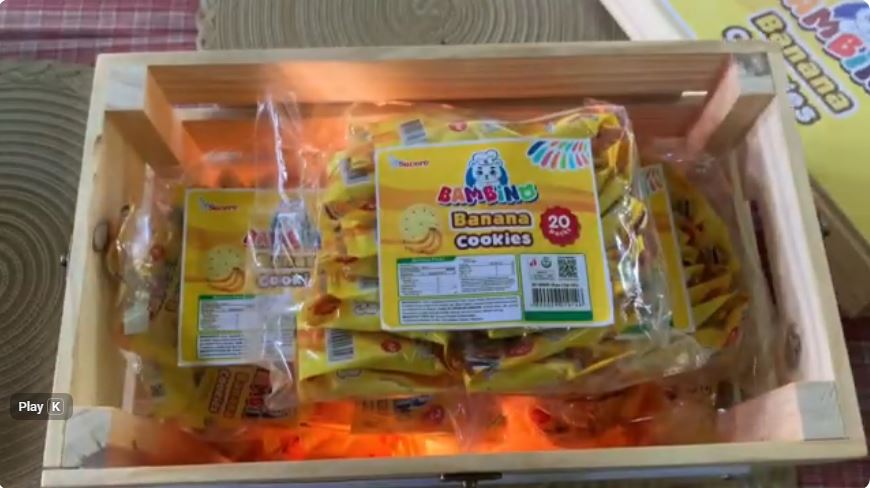
    SUCERE FOODS CORPORATION has launched BAMBINO BANANA COOKIES in September 2026. Bambino Banana Cookies is a crunchy banana-flavored cookies from SUCERO Foods.

    BAMBINO brings back a familiar favorite with its new BANANA COOKIES to the community celebrating SUCERE’s promise to “Live a Sweet Life.” It’s a crunchy banana-flavored cookies, 3 cookies per pack, golden flower-shaped cookies, perfect for baon, perfect for merienda and affordable.

    A Little Taste of BAMBINO BANANA COOKIES of “Every Merienda Matters” as an everyday expression of care, delivering comfort, convenience, and value for Filipino familes.

    First taste impression last. For me, Bambino Banana Cookies is delicious banana-flavored cookies, crunchy, and pleasantly sweet. Perfect for baon. A familiar banana flavor for everyday snack. Filipino love for banana-flavored snacks.

    Consider BAMBINO BANANA COOKIES as part of an everyday snack for Work-from-home merienda, school baon, afternoon coffee, family merienda, and sharing with friends. A budget-friendly snack. A childhood nostalgia. “This banana flavor brings back childhood merienda memories…” Banana lovers and Cookie lovers will consider BAMBINO BANANA COOKIES will consider it as part of everyday snack.

    Every Merienda Matters. SUCERO Foods considers Bambino Banana as an everyday expression of care, delivering comfort, convenience, and value for Filipino families. Let’s celebrate SUCERE’s promise to “Live a Sweet Life”, this day & beyond!

    ABOUT BAMBINO

    Bambino is a brand under Sucere Foods Corporation, a company specializing in chocolate and confectionery products. Through Bambino Banana Cookies, the brand seeks to bring a familiar Filipino flavor into an affordable, enjoyable, and
    convenient everyday merienda experience.

    REFERENCE & MEDIA CONTACT:

    MARK “MARQUEE” F. EMBINO
    MARKETING MANAGER

    Sucere Foods Corporation
    Marketing Department
    Email: marketing@sucerefoods.com
    Website/Social Media: https://www.sucerefoods.com/⁠

  • Whatcha Saying? Stage Adaptation of Deaf Artist CJ Reynaldo’s Comic Opens in Quezon City and La Union This November

    Whatcha Saying? Stage Adaptation of Deaf Artist CJ Reynaldo’s Comic Opens in Quezon City and La Union This November

    Metro Manila and La Union, Philippines – Apothecary Productions presents Whatcha Saying? – A Stage Adaptation, a one-act play written and directed by Heart Romero. The play runs from November 4 to 7, 2026 at Thames International Auditorium, 27 Calle Industria Street, Quezon City, and from November 14 to 16, 2026 at Lorma Colleges AVR, MacArthur Highway, Brgy. Carlatan, City of San Fernando, La Union. Tickets are ₱800 in Quezon City and ₱500 in La Union, and are sold through Ticketnation Philippines.

    The play follows CJ, a Deaf freshman student, as he goes about his life in a hearing world. When he meets his schoolmates Liam and Sarah, the three must find new ways to understand each other. Along the way, they explore love, friendship, identity, and college life. It is a warm and funny story that shows how being heard can begin with the hands.

    The play is based on the comic book by Deaf Filipino artist CJ Reynaldo (Caldatelier). The comic is published by Komiket and was a finalist at the 39th National Book Awards. It uses humor to teach Filipino Sign Language (FSL) and to share the daily realities of living in a hearing world.

    The cast is led by Deaf actor Cocoy Quiambao as CJ, Nathan Molina and Raymond Lance Aguilar, alternating as Liam, and Onix Valerio as Sarah. The ensemble is Aura Payawan, Bev Palileo, Lucky Charles Historia, and Wayne San Juan. Deaf & Terp Corporation is the community and consultancy partner and guides the production on FSL and Deaf culture.

    The production is presented with Thames International and Lorma Colleges, together with the National Development Company and the Philippine Innovation Hub.

    Show Details

    Quezon City – Thames International Auditorium, 27 Calle Industria Street, Quezon City, Philippines 1110
    November 4 (Wednesday), 5 PM and 8 PM; November 5 (Thursday), 8 PM; November 6 (Friday), 8 PM; November 7 (Saturday), 5 PM and 8 PM. Tickets: ₱800

    San Fernando, La Union – Lorma Colleges AVR, MacArthur Highway, Brgy. Carlatan, City of San Fernando, La Union 2500, Philippines
    November 14 (Saturday), November 15 (Sunday), and November 16 (Monday), each at 3 PM and 7 PM. Tickets: ₱500
    Language: Filipino Sign Language, Tagalog, and English
    Running time: 45 to 60 minutes

    About Apothecary Productions

    Apothecary Productions is a theatre and performing arts company based in Manila and La Union. It was founded by Heart Romero, and its first project was Emulsyon – A Twinbill in November 2024. The company makes inclusive, community-rooted theatre, where Deaf culture, Filipino Sign Language, and accessibility are part of the artistic work.

    Reference & Media Contact:

    Chelsea Residuo, Assistant Production Manager for Public Relations Email: admin@apothecaryprods.com | Phone: 0966 184 2106
    Address: Apothecary Productions, Jabbit Armitage, 3/F, West Wing, Philippine Innovation Hub – Marikina Enterprise Center, 34 Russet corner Rainbow Streets, Brgy. Concepcion Dos, Marikina City, Metro Manila, Philippines
    Facebook: Apothecary Productions | Instagram: apothecaryproductions
    Hashtags: #WhatchaSaying2026 #ApothecaryProductions #WhatchaSayingManiLaUnion

  • Cebu Catches its Breath as Davao Braces for a Decade’s Worth of Offices in Three Years

    PRIME’s 2026 Q3 data show Cebu’s office market navigating new supply while rents remain resilient, as Davao’s tight office and industrial markets continue to see demand running ahead of available space.

    The country’s two largest markets outside Luzon are moving through different stages of growth. PRIME Philippines’ 2026 Q3 Real Estate Market Briefing find Cebu’s office market absorbing new supply while maintaining rental resilience, and Davao preparing for its biggest wave of new office in a decade.

    Cebu Office: Slack, Not Slump – Catching its Breath, Not Losing Momentum

    Cebu’s office occupancy eased to 81.1 percent in the third quarter from 84.0 percent in the first, as net take-up turned negative by 29,400 square meters of new space was completed.

    Rents tell a more resilient story. The average office lease rate rose 3.1 percent from the first quarter to PHP 665 per square meter, above the PHP 650 recorded in 2019. Roughly 120,000 square meter of new space is slated for 2026 and 133,000 square meters for 2027, the market is entering a period where the ability to differentiate space, location, and quality will become increasingly important.

    Office Occupancy and Average Rents in Cebu and Davao, 2026 Q3

    Davao Office: A Decade in Three Years

    Davao’s office market remains one of the tightest in the country, with occupancy at 93.2 percent. Developers have noticed. From 2027 to 2029, the city will receive 145,000 square meters of new offices, nearly matching the 166,000 square meter it added over the previous nine years. this represents a major shift in the market’s supply profile. The key question will be how quickly new Grade A space is absorbed and how it changes the choices available to occupiers.

    New Office Supply in Davao City

    Demand is already running ahead. Office requirements reached 19,000 square meters from January to September, up 73 percent from 11,000 square meters a year earlier, with 15,300 square meters recorded in the third quarter alone. Corporate occupiers accounted for 63 percent of requirements, ahead of outsourcing firms and government agencies. The average rent eased 4.7 percent from the first quarter to PHP 610 per square meter as the lowest asking rate fell to PHP 330, but with quality space still limited relative to demand, PRIME expects rental levels to remain resilient as the market moves toward the arrival of new Grade A supply. The opportunity in Davao is therefore not simply about adding more office space. It is about bringing the right product to a market where established occupiers are already expanding, upgrading and evaluating their long-term requirements.

    Warehouses: Logistics leads in Both Hubs

    Cebu’s industrial vacancy edged up to 3.2 percent, yet average rents rose 3.4 percent year on year to PHP 261 per square meter. Top-end warehouse rents jumped 60 percent, from PHP 350 to PHP 560, as higher-grade facilities came online, while the floor held at PHP 100. Third-quarter requirements of 22,150 square meter were the strongest in nearly two years, led by transportation and storage firms at 79 percent of demand.

    In Davao, occupancy stands at about 95.5 percent, and the higher-grade stock has lifted the average rent to PHP 160 square meter. Requirements reached 79, 300 square meters in the first nine months, up 3 percent year on year, with transportation and storage firms accounting for 63 percent and manufacturers 27 percent. The industrial pipeline relatively lean. About 16,600 square meters is expected to come online in 2026, followed by limited new supply in 2027 and about 40,400 square meters in 2028.

    Warehouse Requirements in Cebu and Davao, January to September

    “Cebu is not slumping; it is catching its breath,” the briefing states. “Davao will get almost a decade’s worth of offices in just years, and demand is already running ahead.”

    Different Markets, Shared Opportunity

    Across VisMin, the broader story is one of continued demand meeting an evolving supply landscape. Cebu is absorbing new office and industrial space as growth expands beyond established locations, while Davao continues to operate in a tighter environment where quality supply remains highly sought after.

    For both markets, the opportunity is not simply about adding more space. It is about bringing the right product to the right locations in response to where occupiers are expanding and how their requirements are evolving.

    About PRIME Philippines

    PRIME Philippines is the country’s fastest growing and most disruptive commercial real estate advisory firm. Established in 2013, PRIME has redefined the brokerage industry by replacing outdated practices with innovation, data intelligence, and relentless execution. With full-service offices in Manila, Cebu, and Davao, PRIME has completed over 300 high-impact projects nationwide. Backed by a team over 100 professionals, PRIME is multi-awarded and trusted by the country’s top developers, investors, and occupiers. It is involved in big ticket office transactions and holds the No. 1 position in industrial leasing nationwide.

    REFERENCE: PRIME Philippines

  • Twice the Trucks, Half the Cranes: Luzon Warehouse Demand as Industrial Rents Climb in Every Market

    PRIME Philippines records 292,000 square meters of industrial requirements in 2026 Q3, up 102 percent year on year, as occupiers weigh total operating costs and developers take a more cautious approach to new supply.

    Luzon’s industrial property market strengthened in the third quarter of 2026, with PRIME Philippines recording approximately 292,000 square meters of industrial requirements, up 102 percent from about 145,000 square meters in the same quarter of 2025.

    Demand has now strengthened for two consecutive quarters after reaching approximately 116,000 square meters in 2026 Q1, signaling renewed expansion activity among industrial occupiers.

    Transportation and storage remained the largest source of classified demand at approximately 47 percent, followed by wholesale and retail trade at 19 percent and manufacturing at 18 percent. PRIME also recorded requirements from food and beverage, construction, power generation, and other service activities.

    However, PRIME sees a more important shift beyond the increase in volume occupiers are becoming more strategic and specific about the industrial properties they require.

    “Industrial demand has doubled, but what is equally important is that occupiers now have a much clearer understanding of what they need,” said Rosario, Executive Vice President for Industrial Tenant Representation at PRIME Philippines. “The decision is no longer simply about rent per square meter. Companies are looking at the total cost and efficiency of operating from a location from transportation and logistics to manpower, utilities, supply-chain access, and the technical specifications of the facility.”

    This is resulting in increasingly specific requirements for warehouse size, clear height, loading configurations, truck circulation, power capacity, accessibility, and future expansion capability.

    For many occupiers, a warehouse expansion is therefore no longer simply a real estate transaction. It is becoming a strategic supply-chain and operating decision.

    Quarterly Warehouse Demand in Luzon

    Rents Rise Across the Board

    Landlords in supply-constrained areas are raising rates as demand returns and modern facilities reach completion. Average rents year on year in all six markets PRIME tracks. Metro Manila led with a 11.8 percent increase to PHP 259 per square meter, followed by Pampanga at 5.2 percent to PHP 163 and Bulacan at 1.6 percent to PHP 180. Rents in Cavite reached PHP 248, Laguna PHP 225, and Batangas PHP 257.

    Average Industrial Lease Rates by Province, 2025 Q3 versus 2026 Q3

    Across the Luzon markets PRIME monitors, occupied industrial space stands at 40.5 million square meters, with 2.1 million square meters unoccupied, an occupancy rate of about 95 percent. Unoccupied space continues to build in Central Luzon as new completions arrive, but the market keeps absorbing them gradually.

    A Pipeline Moving Inside the Gates

    About 118,000 square meters of new warehouse space is scheduled for completion in 2017 and 268,000 square meters in 2028. Bulacan leads the 2017 pipeline 89,835 square meters as expansion spread north from Meycauayan, while Batangas accounts for 150,000 square meters in 2028. Of the 2027-2028 pipeline, 56 percent will be built inside industrial park, reflecting occupiers’ preference for quality space and the fiscal benefits of accredited parks.

    New Demand Drivers on the Horizon

    Beyond logistics, PRIME sees fresh demand from the electronics supply chain and from retailers following consumers out of the capital, as the value of production for electronics, computer, and optical products has grown by double digits year on year since October 2025, rising 17.2 percent in July 2026.

    The Philippines is fast becoming the back office of the global AI chip boom. Semiconductor exports surged 73.5 percent year on year to USD 5.2B in August 2025. They now make up roughly 85 percent of the country’s major electronic export categories. Production value for electronics, computer, and optical products has grown by double digits year on year every month since October 2025. The growth is narrow but deep, and its flavors ecozone facilities with cleanroom-ready space and reliable power over generic warehouses.

    Retailers, meanwhile, are following consumers out of Metro Manila. In 2025, CALABARZON and Central Luzon each recorded more approved construction floor area than the capital, at 8.6M and 7.9M sqm against 6.8M sqm. Central Visayas, fourth nationwide at 3.2M sqm, is emerging as the next frontier. Discount grocers and convenience chains are placing distribution centers to match. Alfamart supplies over 2,300 Luzon stores from hubs in Pampanga, Cavite, and Quezon. DALI has is a new tier of warehouse demand in secondary nodes, well beyond the traditional Metro Manila logistics belt.

    “Warehouse demand in Luzon doubled in a year as logistics firms move closer to the consumer,” the briefing states.

    Upcoming Warehouse Supply by Province, 2027-2028

    About PRIME Philippines

    PRIME Philippines is the country’s fastest growing and most disruptive commercial real estate advisory firm. Established in 2013, PRIME has redefined the brokerage industry by replacing outdated practices with innovation, data intelligence, and relentless execution. With full-service offices in Manila, Cebu, and Davao, PRIME has completed over 300 high-impact projects nationwide. Backed by a team over 100 professionals, PRIME is multi-awarded and trusted by the country’s top developers, investors, and occupiers. It is involved in big ticket office transactions and holds the No. 1 position in industrial leasing nationwide.

    REFERENCE: PRIME Philippines
  • Room to Recover: Metro Manila Tenants Return as Supply Dries Up

    PRIME logs 528,000 square meters of net take-up in 2026 Q3, lifting occupancy to 85 percent while new completion shrink to a fraction of their pre-pandemic pace.

    Metro Manila’s office market is absorbing space faster than developers are delivering it. PRIME Philippines’ 2026 Q3 Real Estate Market Briefing recorded 528,000 square meters of net take-up in the third quarter, well above the 289,000 square meters of new supply completed in the same period. Occupancy climbed to 85.0 percent from 83.2 percent in the first half of the year, although it remains one point below the 2025 level.

    Occupied office space reached a record 13.4 million square meters, surpassing the 13.3 million square meters recorded in 2024. The rebound comes despite a difficult macroeconomic environment, with inflation at 7.2 percent in September and the Bangko Sentral ng Pilipinas lifting its policy rate to 5.0 percent.

    A Thin Pipeline Hands Landlords Leverage

    The bigger story lies ahead. Only 154,000 square meters of new office space are scheduled for the fourth quarter of 2026 and 149,000 square meters for 2027. Between 2017 and 2025, Metro Manila added an average of 667,000 square meters a year. With construction costs rising and developers holding back new launches, occupiers who delay decisions may find fewer options and firmer rents.

    A Two-Speed Capital

    Performance remains uneven across business districts. Bonifacio Global City commands the highest average rent at PHP 1,157 per square meter, up 4.2 percent year on a year. Makati’s average slipped 12.3 percent to PHP 1,008, while Ortigas eased 3.3 percent to PHP 735. Alabang posted the sharpest rent increase at 8.7 percent, to PHP 761, while the Bay Area rose 4.4 percent to PHP 710 even as vacancies there continue to pile up. Quezon City gained 1.4 percent to PHP 720.

    Annual New Office Supply, Net Take-Up, and Occupancy in Metro Manila

    Average Lease Rates and Year-on-Year Change by Business District, 2026 Q3

    CBD Buildings With Confirmed Pending PEZA Application, 2026 Q3

    Reopening Metro Manila to PEZA IT Parks

    Policy is also turning in the market’s favor. Administrative Order No. 45, signed on July 23, 2026, lifted the seven-year moratorium on new information technology parks and centers in Metro Manila. The exemption covers only IT parks and IT centers, and new developers do not receive fiscal incentives, but it allows qualified building to market themselves as PEZA locations again. PRIME expects higher occupancy in projects with pending applications, including Arca South 1 in Taguig, Yuchengco Centre and Altaire in Makati, Parqal in the Bay Area, and One Trium Tower in Alabang.

    Monthly Cost Per Agent

    Wages, Not Rent, Decide Where BPOs Grow

    PRIME’s cost model shows why outsourcing firms weigh talent and wages above rent. Occupancy costs PHP 2,523 per agent each month in Metro Manila, just 7.5 percent of an agent’s wage. In Cebu and Davao, that share falls to about 6 percent, and the combined cost of wages and occupancy is 8.1 percent lower in areas outside Metro Manila, 10.8 percent lower in Cebu, and 15.7 percent lower in Davao. most of the savings come from wages.

    Annual Revenue per FTE by Sector and IT-BPM Revenue Share

    The industry’s growth is also shifting toward higher-value work. Information technology (IT) and digital services generate USD 33.3K in annual revenue per full-time employee (FTE), and global capability centers (GCCs) USD 32.3K, compared with USD 20.1K for contact center and business process services. Healthcare services sit in between at USD 22.4K, while game development and animation trail at USD 14.9K and USD 10.1K.

    Contact centers still dominate the USD 53.4B industry, accounting for 63.5 percent of revenue. GCCs follow at 16.3 percent, IT digital services at 11.4 percent, and healthcare services at 8.4 percent. The productivity gap has direct implications for office demand. Each dollar of GCC of IT revenue requires roughly 40 percent fewer seats than a dollar earned by a contact center, so growth led by these segments will lift revenue faster tan headcount. The shift is already visible in leasing, with IT-BPM firms accounting for 20.1 percent of Metro Manila office demand in 2026 Q3, up from 16.2 percent a year earlier. PRIME expects the next wave of demand to favor capability over headcount, with landlords competing for fewer but higher-value seats.

    “Metro Manila is building a fraction of the offices it used to,” the briefing states. “Tenants who wait will pay more.”

    About PRIME Philippines

    PRIME Philippines is the country’s fastest growing and most disruptive commercial real estate advisory firm. Established in 2013, PRIME has redefined the brokerage industry by replacing outdated practices with innovation, data intelligence, and relentless execution. With full-service offices in Manila, Cebu, and Davao, PRIME has completed over 300 high-impact projects nationwide. Backed by a team over 100 professionals, PRIME is multi-awarded and trusted by the country’s top developers, investors, and occupiers. It is involved in big ticket office transactions and holds the No. 1 position in industrial leasing nationwide.

    REFERENCE: PRIME Philippines

  • Bigger Bills, Busier Buildings: Philippine Real Estate Holds Its Ground as a Deficit Spiral Tightens

    PRIME’S 2026 Q3 Real Estate Market Briefing finds landlords, occupiers, and investors squeezed by rising costs, even as offices, warehouses, and regional hubs kepp absorbing space.

    The Philippine economy entered the second half of 2026 under heavier strain than at midyear. The pesos closed at a record low of PHP 62.86 to the U. S. dollar on September 14, 2026. Inflation, while running at 6.1 percent in August 2026, prompted the Bangko Sentral ng Pilipinas (BSP) to raise its policy rate to 5.0 percent. The newly released September inflation reached 7.2 percent in the second quarter, and household spending rose 2.8 percent, its weakest pace since 2010 outside the pandemic.

    Yet PRIME Philippines’ 2026 Q3 Real Estate Market Briefing finds that the property market’s pain is concentrated on the cost side of the ledger, not in a collapse of demand.

    A Deficit Spiral Takes Shape

    PRIME describes the macroeconomic backdrop as a deficit spiral with three reinforcing loops. The national government’s deficit reached PHP 1.05 trillion from January 2026 to August 2026, up 21 percent year on year, as interest payments climbed 17.5 percent to PHP 686.5 billion while revenue grew only 4.27 percent. Debt reach 66 percent pf GDP at the end of June 2026, the highest since 2004. The trade deficit widened 26 percent to $41.6 billion in the first eight months as fuel imports grew costlier, foreign direct investment fell 17.8 percent in the first half, and Fitch moved its outlook on the country to negative.

    Costs, Not Demand

    PRIME’s own stakeholder survey shows where the pressure lands. Forty-eight percent of landlords name operating and financing costs as their top competitive threat, and 43 percent of occupiers cite the same costs as the war’s main effect on their business, investors rank high development cost as the number deploying capital.

    The Deficit Spiral: Three Loops Feeding a Wider Gap

    Rising Costs Top of the List of Stakeholder Concerns

    Office: Tenants Return as Supply Dries Up

    Metro Manila’s office market posted 528,000 square meters of net take-up in the third quarter, outpacing 289,000 square meters of new supply and lifting occupancy to 85.0 percent from 83.2 percent in the first half. Occupied stock reached a record 13.4 million square meters. With only 154,000 square meters due in the four quarter and 149,000 square meters in 2027, against yearly average of 667,000 square meters from 2017 to 2025, landlords are regaining leverage.

    Industrial: Warehouses Keep Moving

    Luzon warehouse requirements reached 292,000 square meters in the third quarter, more than double the 145,000 square meters a year earlier. Average rents rose in all six markets PRIME tracks, led by Metro Manila at 11.8 percent, and 65.8 percent pipeline will rise inside industrial parks.

    Visayas and Mindanao: Slack, Not Slump

    Cebu’s office leasing softened, with net take-up turning negative in the third quarter and occupancy easing to 81.1 percent, yet average rents of PHP 665 per square meter now exceed pre-pandemic levels. Davao, meanwhile, will receive 145,000 square meters of offices from 2027 to 2029, nearly the 166,000 square meters it added over the previous nine years, as office requirements jumped 73 percent in the first nine months.

    Adapting to the Squeeze

    PRIME advises consumers not to leave savings idle while inflation erodes cash, investors to consider locking in fixed-rate financing related ahead of further rate hikes, and landlords to prioritize tenant retention, since occupiers are currently absorbing the brunt of higher prices.

    “The war hit the cost of doing business, not the appetite for space,” the briefing states. “The players who adapt early will be the ones who come out ahead.”

    PRIME Philippines’s full 2026 Q3 findings, including sector breakdowns for office and industrial real estate in Metro Manila, Luzon, Cebu, and Davao, are available through PRIME Philippines Research & Advisory.

    About PRIME Philippines

    PRIME Philippines is the country’s fastest growing and most disruptive commercial real estate advisory firm. Established in 2013, PRIME has redefined the brokerage industry by replacing outdated practices with innovation, data intelligence, and relentless execution. With full-service offices in Manila, Cebu, and Davao, PRIME has completed over 300 high-impact projects nationwide. Backed by a team over 100 professionals, PRIME is multi-awarded and trusted by the country’s top developers, investors, and occupiers. It is involved in big ticket office transactions and holds the No. 1 position in industrial leasing nationwide.

    REFERENCE: PRIME Philippines

  • PRIME Philippines’ 2026 Q3 Philippine Property Market Report Media Briefing, themed “Chasing the Storm: Tracking Philippine Real Estate’s Second Wind”

    PRIME Philippines’ 2026 Q3 Philippine Property Market Report Media Briefing, themed “Chasing the Storm: Tracking Philippine Real Estate’s Second Wind”

    PRIME Philippines has presented the 2026 Q3 Philippine Property Market Report Media Briefing, themed “Chasing the Storm: Tracking Philippine Real Estate’s Second Wind” on October 7, 2026 at 32nd Floor, Mega Tower, Ortigas Center, Mandaluyong City.

    The Third Quarter Report has focused on the Office and Indusrial Sectors, as well as highlighted the Visayas and Mindanao markets.

    PRIME Philippines’ experts and speakers of the program include: Sean Chua, Manager, Research and Advisory; Mervyn Valenzuela, Vice President, Office Tenant Representation; Joy Rosario, Executive Vice President, Industrial Tenant Representation and Hannah Yoshida, Senior Head, Visayas-Mindanao.

    Dissecting the Deficit Spiral: Investigating the Threat that Defines the Next Few Years

    Sean Chua has presented this topic that is relevant to the Macroeconomy in the Philippine real Estate Market with Key Highlights that include: Elevated Fuel Cost & Headline Inflation; Declining Peso and Purchasing Power; Weaker Spending Overall; Tighter Money Environment; and Concerning Debt-to GDP Ratio.

    Room to Recover: Steady Demand Meets Stalling Supply

    Mervyn Valenzuela has shared the Office demand and supply with Key Highlights: Landlord Cut Rents to Fill Space; Professional Services Lead Office Demand; Take-up Outpaces New Supply; and Slower Pipeline Amidst High Inflation.

    Office Outlook: Vacancy to Narrow Gradually; Flight to Quality Will Split Rents; PEZA Reopening Will Support Absorption; and IT-BPM Will Shift to Higher Value.

    Twice the Trucks, Half the Cranes Industrial Demand Doubles as Developers Pull Back

    Joy Rosario has discussed the Industrial with Key Highlights that include: Explosive Growth of Semiconductor Manufacturing Fuels Industrial Demand; Wholesale and Retail Trade Will Move Outside of NCR, Following Urbanization; Lease Rates Will Appreciate From Increased Locator Appetite in NCR; and Forecasted Pipeline for 2027 declined by 72% YOY.

    Industrial Outlook: Rates to Grow by 8% to 10% in a Year; Development Pipeline to Remain Tempered; Requirements from Semiconductor Manufacturing Will Drive Industrial Growth; and Securing Present Lease Rates as Prevalent Strategy.

    Close Enough: Right Timing, Off-center for Cebu’s New Offices

    Hannah Yoshida has shared that the floodgates are opening for Cebu’s office market. The demand drivers 80% Business Process Outsourcing, 12% Traditional and 8% Gov’t for the Cebu’s Office Market. Besides, new supply will take pressure off Cebu’s core office districts, Cebu’s next wave of offices is built to go green, and Cebu’s lease rates have recovered to onset-pandemic levels.

    Slack, Not Slump: Cebu Rents Rise Through a Softer Market

    Cebu’s warehouse rents hold as vacancy edges up to 3%. The demand drivers of the Cebu’s Industrial Market are 86% Transportation & Storage; 10% Utilities; and 4% Manufacturing. Higher-end facilities lift Cebu’s average rates as the rent band holds firm. While warehousing demand maintained its pace in Cebu.

    The Next Prime Office Hub: Davao City

    More developers (SM, MEGAWORLD, GAISANO, ROBINSONS LAND CORPORATION & DAMOSA LAND) are racing to construct offices in Davao with the demand drivers of 63% Traditional, 20% BPO, and 17% Gov’t. Davao will receive nearly a decade’s worth of offices in 3 years. Davao last available offices will only get pricier from here, IT-BPM remains as the key anchor of Davao’s office market, and the scramble for Davao offices goes beyond BPO’s.

    Mindanao’s Logistics Anchor: Demand for Davao Runs Ahead of New Supply

    Davao warehouse rents sit still at PHP 160 (in sqm); Davao City remains as top location for upcoming completions in Davao Del Sur; Davao’s rent ceiling jumped to PHP 300 per sqm; and Davao’s demand show no sign of slowing down.

    Reference: PRIME Philippines