VIVA Entertainment, Inc. owner Vic del Rosario, Jr. sealed partnership with iconic food brand GoodAh!!!, the quick service restaurant (QSR) chain that pioneered the all-day, all-night, “25-hour” food service concept in the country.
Del Rosario, Jr., popularly known as “Boss Vic,” decided to buy into GoodAh!!! and contribute in growing the brand further. He sees GoodAh!!! opening more branches to give the new generation of Pinoy fast food diners the opportunity to enjoy great-tasting, Filipino comfort food.
Shown in photo are (L-R), Timothy James Yang, President of GoodAh!!!; Vicente Del Rosario Jr., VIVA Entertainment, Inc. owner; and GoodAh!!!directors Richard Yang, Jose Antonio Soler and Andrew Mendiola, during the contract signing.
For more information about GoodAh!!!, visit their Facebook page at www.facebook.com/goodahopen25hours
Vibal Foundation, the non-profit arm of Vibal Publishing House, Inc., and the Catholic Educational Association of the Philippines (CEAP) are inviting educators, students, scholars, publishers, and policy makers to the forthcoming “The Future of Education” Conference slated on August 28, 2012.
The conference, scheduled from 7:30 am to 3 p.m, will be held at the SMX
Convention Center in the Mall of Asia complex, Pasay City. It has a prestigious roster of speakers including Department of Education Secretary Bro. Armin Luistro, FSC; CEAP President Fr. Greg Bañaga, LitWorld Executive Director Dr. Pam Allyn, who will talk about “Universalizing the US Common Core State Standards”, Philippine Normal University President Dr. Ester Ogena who will discuss “A New Culture of Teaching” and Vibal Publishing House President Mr. Gaspar A. Vibal who will give a presentation on “Life-long Learning”.
This momentous gathering will discuss the present state and future directions of Philippine education at the height of global innovations in learning. It is also a ground-breaking venue for Filipino educators to cull insights, experiences, and issues relevant to coping with dramatic digital transitions in education around the world.
Locally, the latest manifestation pertaining to the digital shift is the adoption of tablet education and e-textbooks by different major schools all over the
Philippines. Starting out as a pilot class or experimental program in pioneering schools like Foundation University in Dumaguete and La Salle Green Hills in Mandaluyong, the practice has now expanded to full implementation across different learning institutions, not only within Manila but also in the provinces.
One of the purveyors of digital learning is Vibal Publishing House, which has, to date, deployed 18,000 e-textbooks at the start of the 2012-2013 schoolyear. As an innovator in the industry, Vibal has produced the latest version of the etextbook called ePub 3.0, which makes it possible for e-books to come embedded with audio and video clips and enables true user interactivity. Students can answer self-scoring quizzes and generally benefit from the enhanced user experience for more effective learning.
The Future of Education conference is also a fitting prelude to the CEAP
National Convention to be held from August 29 to 31, 2012 also at the SMX
Convention Center.
To register for the Future of Education conference, please go to http://www.vibalpublishing.com/future-of-education.html
For questions, please call tel. no.: +63(2) 712-9156 to 59 loc 343 to 344 or fax: +63 (2) 4168460. Email questions and feedback to inquire@vibalpublishing.com.
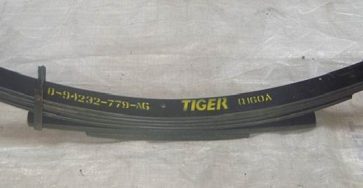
Rarely does it happen that a vehicle owner, manufacturer, mechanic, or service dealer makes a profession of loyalty to a car part—much less to one hidden under a vehicle’s frame. But a brand of leafsprings developed by Roberts Automotive and Industrial Parts Manufacturing Corporation (Roberts AIPMC) has set an entire industry abuzz as it received nods of acclaim and approval from a rapidly growing clientele both in the Philippines and abroad.
Tiger Leaf springs was launched by Roberts AIPMC in 1994 under the same German brand that served Europe for over 120 years. Since then, Tiger has not only established itself as the country’s leading line of leaf springs; it has also expanded to include conventional multi-leaf to parabolic (mono-leaf) types, each built to outlast the lifespan of a vehicle. Stamped with cutting-edge technology, strengthened by a world-class manufacturing process, designed with rock-solid durability and heavy-duty power, these leaf springs deliver the kind of enhanced performance suspension that customers are looking for, as well as a reliable, comfortable ride no matter how rough the road, or how heavy the load.
Leaf springs, or molye in Tagalog, serve as one of the most commonly used vehicle suspension technologies today. Taking the form of slender, arc-shaped spring steels, typically attached between the frame and axle of a car, these parts help spread load more widely over the vehicle’s chassis—thus ensuring steering stability, easy handling, and maximum passenger comfort.
While leaf springs are meant to bend, flatten, extend, then return to their original shape, some easily falter under the weight of an overloaded vehicle; others deteriorate quickly after weeks, months, years of use; still others buckle simply under the stress of tough terrains and rough roads. In each case, the affected system parts pop, squeak, bounce, or clunk—exhibiting all the sounds and symptoms of poor, faulty suspension.
Roberts AIPMC distinguishes itself from the competition by making sure that none of the above happens, and by making Tiger Leaf springs as strong and as durable as possible. The process begins at the company’s state-of-the-art 1,300-sqm. manufacturing plant at the Canlubang Industrial
Estate in Cabuyao, Laguna, where each Tiger Leaf spring is manufactured from imported raw materials and developed to meet the international standards of original equipment manufacturers (OEMs).
Fatigue tests determine the durability, elasticity, and fatigue life of leaf spring assemblies; hardness tests, meanwhile, ensure that the leaves have been properly manipulated by the heat treatment process and hardened for maximum strength. Shot peening, a process in which steel shots are propelled at the tension side of each leaf, is also performed to increase the fatigue life of the springs and smoothen the surface of the leaves. And to verify that all the component parts, materials, and base fixings are fit for the application and vehicle for which the leaf springs are designed, load tests are performed. Throughout all these processes and tests, Roberts AIPMC conducts rigid quality control inspections, which are always guided by the company’s ISO 9001:2008-certified quality management system. Tiger Leaf springs are further backed up by excellent after-sales services, delivered by a specialized support group formed to respond to the various needs of Roberts AIPMC customers.
It is thus hardly a surprise that Tiger is the only leaf springs brand trusted by Mitsubishi Motors Philippines, Toyota Motors, Isuzu Philippines Corporation, Nissan/Universal Motors Corporation (manufacturer and distributor of Nissan light utility vehicles) and Pilipinas Hino, among many others in Roberts AIPMC’s list of OEM clients. More and more individual vehicle owners, mechanics, and service dealers are also recognizing the value-driven performance of world-class Tiger Leaf Springs.
Tiger Leaf springs are currently manufactured at a rate of approximately 600 tons a month. The rare loyalty that the brand has won, however, makes Tiger primed for even bigger growth: something that, judging by the way its leaf springs work, Roberts AIPMC will also be more than equipped to handle. For more information about Tiger Leaf springs, visit www.roberts.com.ph.
UNIQLO opened its first store in the Philippines last June 15 in SM Mall of Asia, one of the largest shopping malls in the world, occupying a waterfront site on Manila Bay spanning 407,000 square meters. This massive shopping complex hosts a wide range of retail tenants, including a number of major fashion brands, and is a major draw for both tourists and local residents. The new UNIQLO Mall of Asia Store will be one of SM Mall of Asia’s largest tenants.
Asia offers enormous growth potential for UNIQLO and is a key regional focus of the brand’s global expansion strategy. By January 2012, UNIQLO’s network of stores included 851 locations in Japan and 234 in other global markets, of which 214 are throughout the rest of Asia. UNIQLO started opening its first stores in Thailand in September 2011, following its successful expansion into Singapore and Malaysia, increasing its lineup in Southeast Asia to 11 retail locations. Now, as the brand continues to accelerate its regional expansion efforts, the UNIQLO Mall of Asia is set to offer the joy of truly great clothing to shoppers in the Philippines.
UNIQLO Official Facebook Page and Website goes online on February 9
We will be releasing the latest information and regular updates through the following sites. So please “Like” www.facebook.com/uniqlo.ph and visit www.uniqlo.com/ph.
About UNIQLO and Fast Retailing
UNIQLO is a brand of Fast Retailing Co. (FR), a leading global Japanese retail holding company that designs, manufactures and sells clothing under five brands: Comptoir des Cotonniers, g.u., Princesse Tam Tam, Theory, and UNIQLO. With global sales of 820 billion yen for the 2011 fiscal year ending August 31, 2011, FR is the world’s fourth largest apparel retail company and UNIQLO is Japan’s leading specialty retailer.
Today UNIQLO has more than 1,000 stores worldwide, namely in the U.S., U.K. France, Russia, China, Hong Kong, Taiwan, Singapore, Malaysia, Thailand and Korea, as well as Japan. UNIQLO continues to open large-scale stores in some of the world’s most important cities and locations, as part of its ongoing efforts to solidify its status as a truly global brand. UNIQLO operates an integrated business model under which it designs, manufactures, markets and sells high-quality, casual apparel in line with its ‘Made for All’ philosophy.
New UNIQLO store in the works–You saw this same wall a few months before the June opening of UNIQLO, Japan’s No. 1 Fashion Brand, at the SM Mall of Asia. Now where is this new one located? Block off your calendars and go North one of these days to have an ide
With a corporate statement committed to changing clothes, changing conventional wisdom and change the world, FR is dedicated to creating great clothing with new and unique value to enrich the lives of people everywhere.
With water fast becoming almost like liquid gold, especially in drought-prone regions like coastal areas with growing populations, an obvious solution is to take the salt out of seawater. After all, desalination technology has been around for thousands of years already.
Tantalizing as desalinated water sounds, the energy costs in producing fresh drinking water out of seawater have made it rather unpalatable—until now.
“Until recently, seawater desalination was a very expensive water source solution,” said Jose Antonio Soler, president of Solerex Water Tecnologies, Inc.
Drinking seawater straight is a bad idea. You may think you have expelled the salt by urinating but you are actually losing more water than salt. Seawater contains roughly 130 grams of salt per gallon. With desalination, this technology can reduce salt levels to below 2 grams per gallon, which is the limit for safe human consumption.
Currently, between 10 to 13 billion gallons of water are desalinated worldwide per day. That’s only about 0.2 percent of global water consumption, but the number is increasing.
Aristotle’s efforts
Though Greek philosopher Aristotle envisioned the idea of removing salt from seawater through the use of “filters” arranged consecutively, he was not the first one to do it. The first duly recorded desalination practice was done by collecting freshwater steam out of boiling seawater. Sailors back in around 200 A.D. practiced desalination through the use of simple boilers in their ships. It was that simple.
However, in today’s environment, desalination on a large scale has become unbelievably expensive because of energy requirements. This meant that only countries rich in oil but lack enough water supply are those that can afford “thermal desalination.”
But advancements in technology saw researchers working on filters to take out the salt from seawater, just like how Aristotle saw it. The technology, which employs the use of “membranes,” now called “reverse osmosis,” needs a smaller amount of energy and costs around half the price of current saltwater distillation techniques used today.
Energy is the key
But even with membranes, large amounts of energy are needed to generate the high
pressure that forces the water through the filter. In the 80’s and 90’s, the technology required about 14 kilowatt-hours of energy to produce 1,000 liters per cubic meter of desalinated seawater. However strides in energy recovery have decreased the energy requirement from 4.8-5.5 kilowatt-hours to 2.5-2.75 kilowatt-hours to produce 1,000 liters of desalinated seawater.
An island resort development, Balesin in Quezon province is currently enjoying the savings from installing the new generation Solerex Desalination Units introduced by Solerex Water Technologies whose water brand, Crystal Clear, is the leader in the home and office water delivery market. “All our Desalination Units now are equipped with PX Pressure Exchanger, an energy recovery device that basically recycles pressurized water that does not pass through the RO filters back into the high pressure loops at a 98% efficiency, reducing the amount of energy required by 60 percent,” shares Soler.
Hotels, resorts and communities that rely on producing their own water will benefit from the maximum savings and reliability as the energy recovery unit is built to last a lifetime – of no less than 25 years. “As a result the PX technology offers the best economic solution to all stakeholders,” Soler adds.
For more about Crystal Clear and Solerex Water Technologies, Inc., visit www.crystalclear.com.ph or www.solerex.com.ph.
About Solerex Water Technologies, Inc
Solerex is a recognized leader in the Reverse Osmosis Technology in the Philippines where it has the largest base than any entity. It is a local firm that has been responsible for the design, full or partial fabrication, erection and/or assembly of the majority of the seawater reverse osmosis desalination plants currently installed in the country today.